112 companies urge governments to make electrification an economic priority
112 companies with $1.5 trillion in revenue are pressing governments to treat electrification as economic strategy, not just climate policy. They want grids, permits and market rules fixed fast.
More than 100 companies including Nestle, Uber and Ikea are pressing governments to make electrification central to economic strategy, in a move that reads less like a climate plea than a coordinated push for industrial policy. Backed by 112 businesses across industrials, consumer goods and healthcare, the open statement carries combined annual revenue of about $1.5 trillion, giving the effort real commercial and political weight. The companies want governments to improve electricity market design, invest in grids and speed up permitting so firms can switch faster and with more certainty.
The signatories also include Iberdrola, Volvo Cars, Mahindra Group, Nikon Corporation and Levi Strauss. Their case is built around immediate economic exposure: fossil-fuel dependence leaves companies and governments vulnerable to price shocks, supply-chain disruption and weaker investment. Electrification, by contrast, is being framed as a route to lower operating costs, more competitive manufacturing and a faster conversion of fleets, factories and buildings to electric systems.
The timing is deliberate. The statement was coordinated by the We Mean Business Coalition and the Global Renewables Alliance and is set to launch June 23 at the Global Energy Transition and Electrification Summit during London Climate Action Week, which runs June 20-28. The summit is co-hosted by the UK Government, We Mean Business Coalition, the Global Renewables Alliance and E3G, placing the message directly in front of policymakers, investors and executives already gathered in London. It also aligns with Turkey’s COP31-hosting agenda and its proposal for a global target for electricity to meet 35% of world energy demand by 2035.
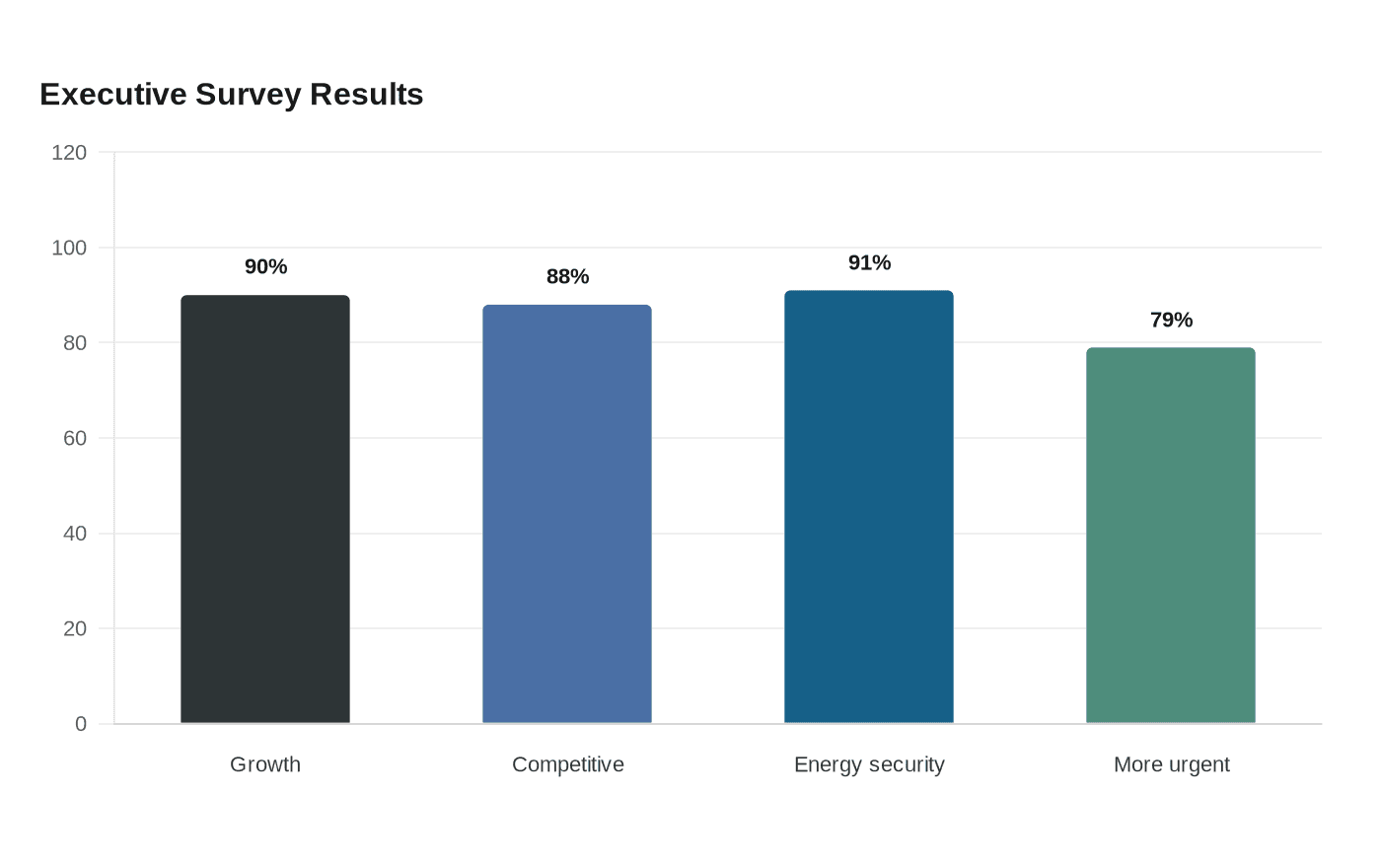
The policy push is backed by polling of 1,994 executives and senior managers across 18 countries. Ninety percent said a renewables-based electricity system in their country would boost economic growth, 88% said electrifying their operations would make their business more competitive, 91% said it would improve energy security and 79% said geopolitical instability has made the shift more urgent. IRENA added more momentum on May 20, 2026, saying its updated 1.5°C roadmap targets 35% global electrification by 2035. We Mean Business Coalition says electrification replaces fossil-fuel-powered technologies and processes across the economy with electric alternatives powered increasingly by clean electricity, underscoring how corporate demand is now pushing governments toward faster grids, clearer rules and a bigger role for state-backed infrastructure.
This article was produced by Prism’s automated news system from verified source data, official records, and press releases, then run through automated quality and moderation checks before publishing. The system is built and supervised by the people who set the standards it runs under. Read our full AI policy.
Know something we missed? Have a correction or additional information?
Submit a Tip