16-Minute Vinyasa Flow to Sharpen Focus and Reduce Brain Fog
A 16-minute vinyasa flow practiced January 8, 2026, used single-leg balances and breath-driven transitions to sharpen focus and reduce brain fog.
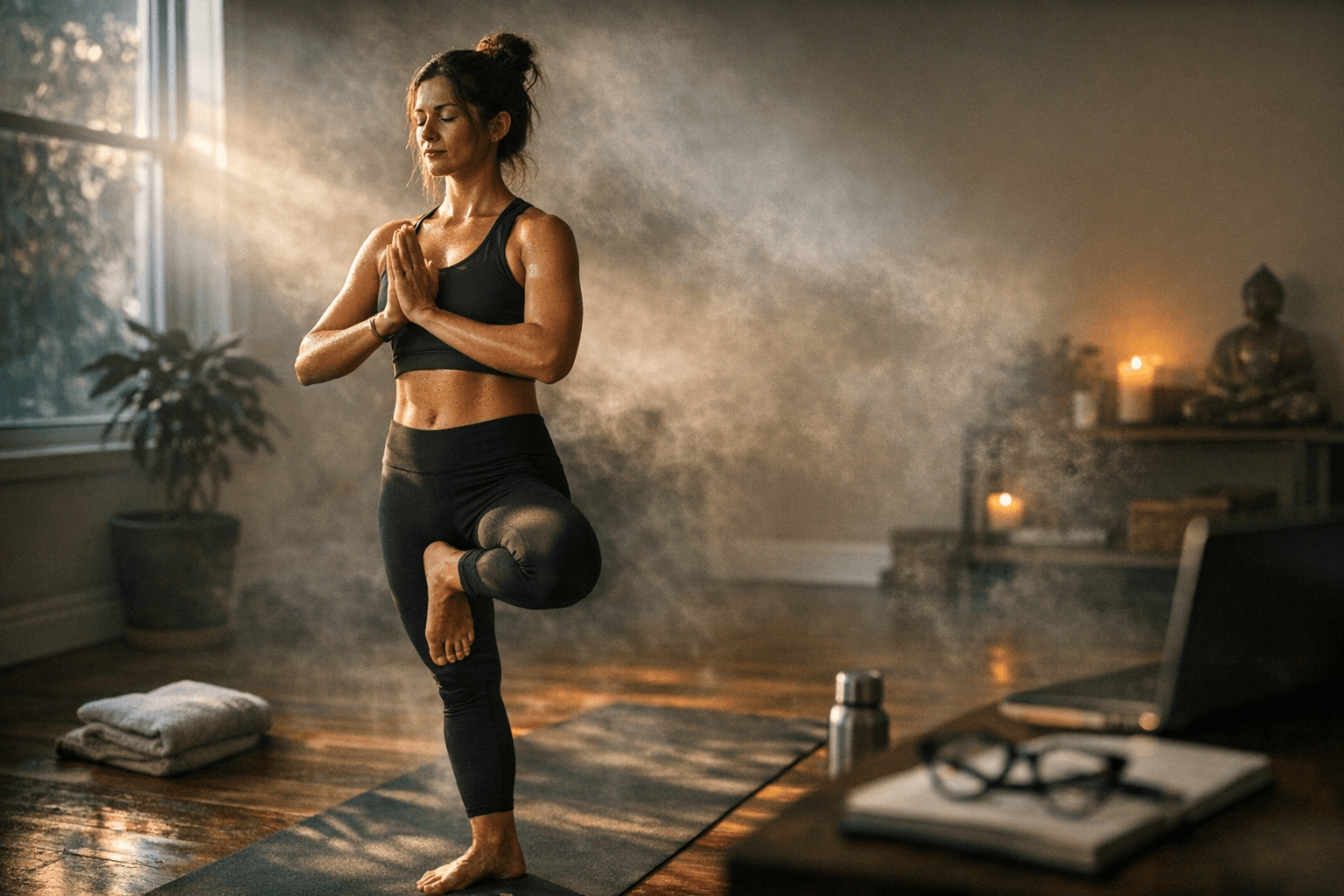
On January 8, a concise 16-minute vinyasa-style sequence landed as a practical tool for anyone dealing with distraction and mental fatigue. The flow centered on single-leg balances, mindful movement, and breath-driven transitions designed to hone concentration and build mental resilience in a short window of practice.
The sequence opens with simple mobility and breath work to prime attention. Transitions are intentionally breath-led so the inhale and exhale become anchors for the mind, keeping students present between poses. From there the class moves into a progression of single-leg balances, examples include variations that challenge steadiness while keeping the practice accessible. Instructors used targeted cueing for steadiness: find a drishti (gaze point), engage the standing leg from the inner arch through the hip, microbend the knee to avoid locking, and soften the breath rather than holding it when wobble appears. These cues are meant to translate mental steadiness into physical balance.
A single yoga block was recommended as the only prop. Practitioners could place the block under the standing hand for supported half-lift balances, against the inner thigh for stability in tree pose variations, or under the lifted foot to reduce range while training proprioception. The block is presented as a versatile tool to scale poses immediately, small adjustments with one prop preserve the flow’s brevity while widening access.
Intensity options were threaded throughout the short practice. For beginners, the suggestions were to shorten holds, keep toes of the lifted foot down for extra contact, or skip a full vinyasa between standing sequences. For more experienced movers, longer balance holds, slower breath counts, or adding a gentle tuck to the lifted knee increase demand without lengthening class time. These scalable choices make the flow useful whether you have 16 minutes between meetings or want to plug a focused mini-practice into your morning routine.
Short breathing practices close the sequence to help carry focus off the mat. Simple counts, equal inhale and exhale, or a three-count in and out with a pause, reset attentional muscles and can be practiced seated, at a desk, or standing in line. The goal is portable clarity: brief, repeatable techniques that interrupt rumination and re-center attention.
Our two cents? Treat this as a pocket tool: commit to the 16-minute progression three times a week, use the block to meet yourself where you are, and practice the short breath drills whenever brain fog creeps in. It’s compact, repeatable, and built to make focus feel like a skill you can train.
Know something we missed? Have a correction or additional information?
Submit a Tip