1920s Spanish Revival Southern Pacific Depot Restored as Del Rio Amtrak Center
The restored Southern Pacific Passenger Depot now serves as the Del Rio Amtrak/Regional Transportation Center, boosting downtown access and anchoring heritage-led revitalization.
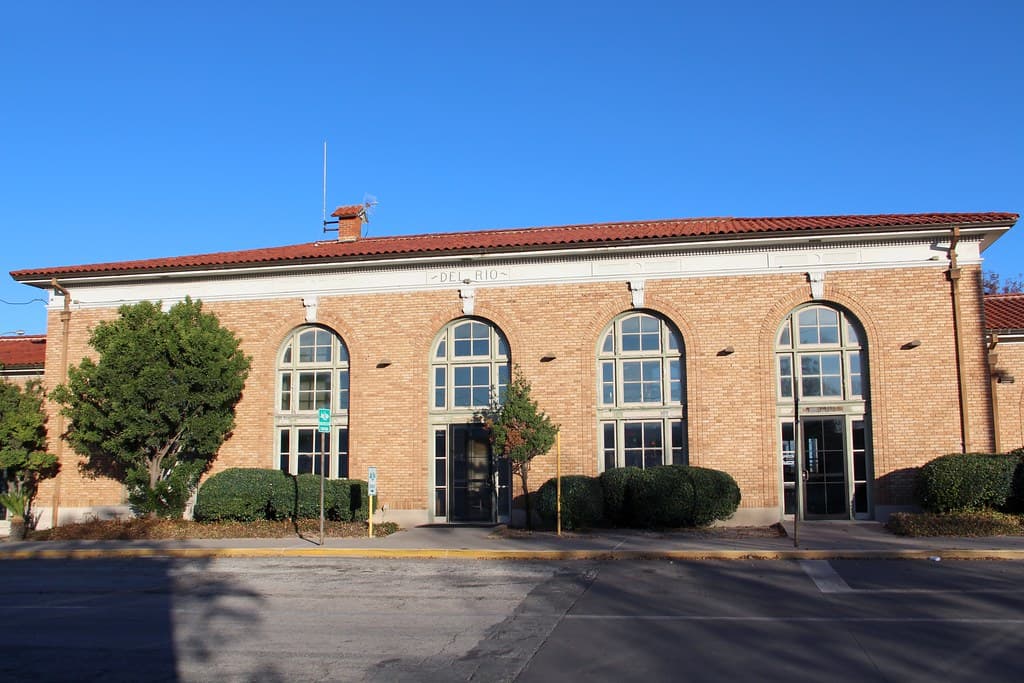
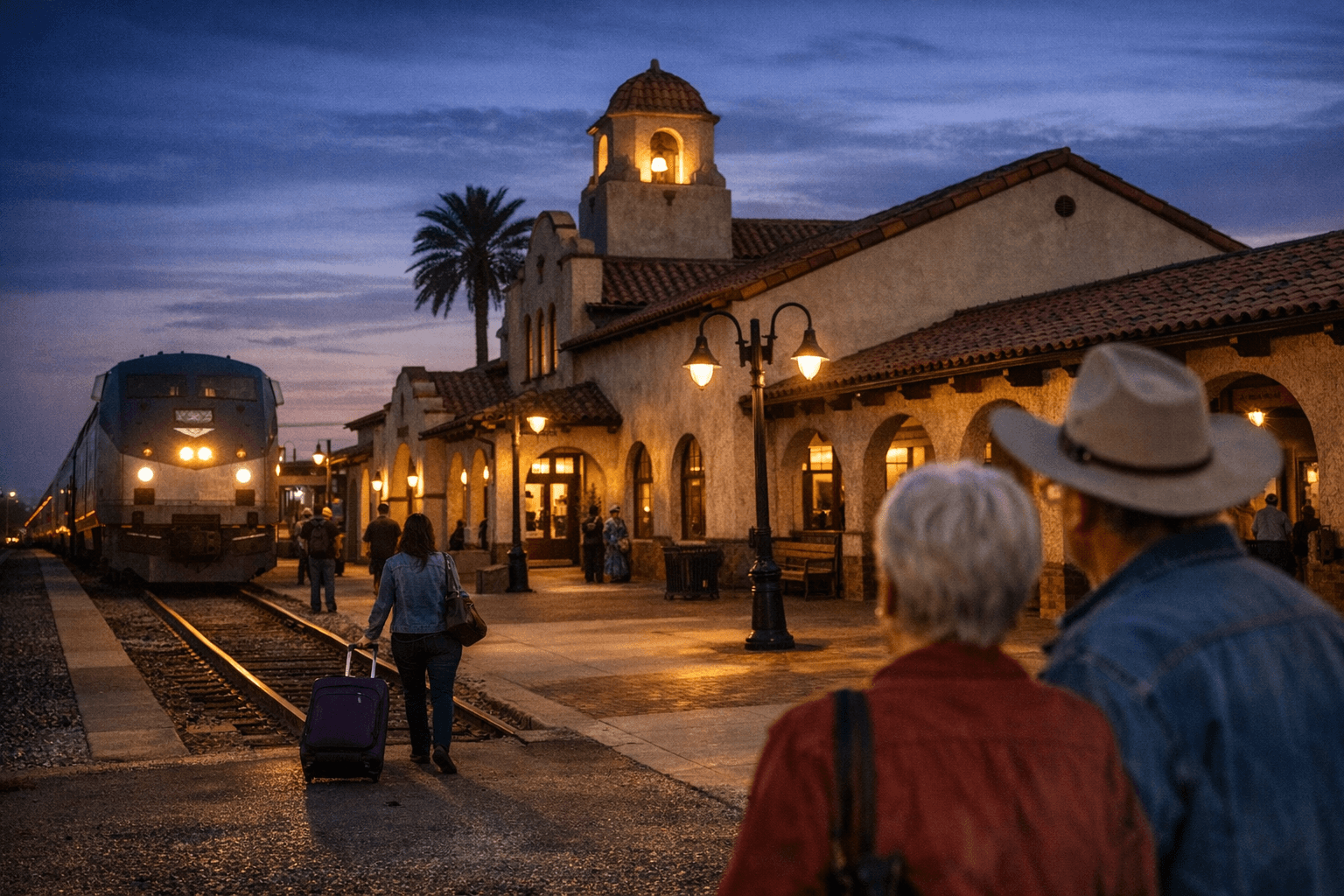
The restored Southern Pacific Passenger Depot (now serving as the Del Rio Amtrak/Regional Transportation Center) sits at the heart of downtown Del Rio, returning a 1920s Spanish Revival/Spanish Mediterranean style landmark to public use and tying rail access to local economic and cultural activity. The depot’s restoration strengthens transit connections while reinforcing the downtown corridor as a destination for residents and visitors.
With the railroad dividing the city, visitors will find more commercial developments in the north, while the southern part of town harbors historic attractions, like South Main Street, which is being revitalized with new shops. Garfield Avenue “runs through the middle of downtown between the railroad-oriented, industrial portion of downtown and the locally-oriented, commercial retail portion of downtown to the south.” North of Garfield was warehouses, hotels, & the railroad facilities; south of Garfield was (and is) a retail and service business area. That historic pattern frames how the depot functions as a mobility hub and a spur for nearby storefronts and cultural sites.
Walking tours and downtown exploration now center on the depot and adjacent highlights. Facing Garfield on the 100 block east, the Old City Hall Building now houses the Del Rio Council for the Arts. Built in 1924 as city hall, mayor’s office, tax office, fire station, police department and jail, the building is used for art exhibitions and classes. The First United Methodist congregation “dates to 1882, as the community was going with the arrival of the railroad from San Antonio.” Its third chapel on Spring Street was constructed in 1931, and “(The cornerstone from 14A is next to the cornerstone of this chapel.)”
Civic assets concentrated on Spring Street include the Val Verde County Library. “The County Library at 300 Spring Street is housed in a 1964 structure that replaced an old chapel that had served the Presbyterian Church before being recycled into the Library.” The Library circulates books in English and Spanish, provides computers with internet access, and houses a local history collection, offering practical services for residents and visitors planning to explore downtown.
South Del Rio retains distinct historic claims and visitor attractions. “The Winery is the oldest, continuously operating winery in Texas.” Located on the corner of Hudson and Qualia, the Val Verde Winery “is open to the public for purchases and tasting,” and a marker stands in front of the business. The Brinkley story remains a notable curiosity: “Dr. John R. Brinkley may well be the most famous person in Del Rio history.” “In the 1930s, he operated the world’s most powerful radio station, Radio XERA, which was heard nationwide and in many other countries.” “The broadcasting facilities were in Villa Acuña,” and “Brinkley made his reputation implanting goat gonads into men for ‘rejuvenation’ purposes.” The Brinkley Mansion stands in South Del Rio on Qualia Drive and “Two historical markers stand in front of 512 Qualia.”
Dining and recreation tie into the downtown loop. “Memo’s Restaurant opened in 1936 by Guillermo Calderón, this family-owned restaurant located near historic Brown Plaza features views of the San Felipe Creek greenbelt.” See live music on Thursday nights, a tradition started by Guillermo’s late son Blondie Calderón, who was the pianist and bandleader for country music legend Ray Price for more than 30 years. Fed by prolific springs that are the city’s main water source, San Felipe Creek flows through the southern part of town. Find popular swimming holes at Horseshoe Park and Lions Park, as well as a public swimming pool at nearby Moore Park. Walkers and joggers love the paved Mayor Dora Alcala Hike and Bike Trail that follows the creek through parkland and picnic areas.
The depot restoration reconnects Del Rio’s transportation legacy, from the Southern Pacific arrival in the 1880s through the 1920s depot, to present-day economic development and cultural stewardship. For residents, the change means easier Amtrak access and a stronger downtown foot traffic pattern that supports local businesses, museums, the Del Rio Council for the Arts, and civic services at 300 Spring Street. Policymakers and planners will need to align signage, schedules, and pedestrian improvements so the depot’s potential as a catalyst translates into measurable gains for Val Verde County.
Sources:
Know something we missed? Have a correction or additional information?
Submit a Tip