1988 Mine Strike on USS Samuel B. Roberts Triggered Massive U.S. Retaliation Against Iran
A mine costing an estimated $1,500 blew a 15-foot hole in USS Samuel B. Roberts in 1988, nearly sinking a ship that cost tens of millions to repair — and triggered the largest U.S. naval battle since World War II.
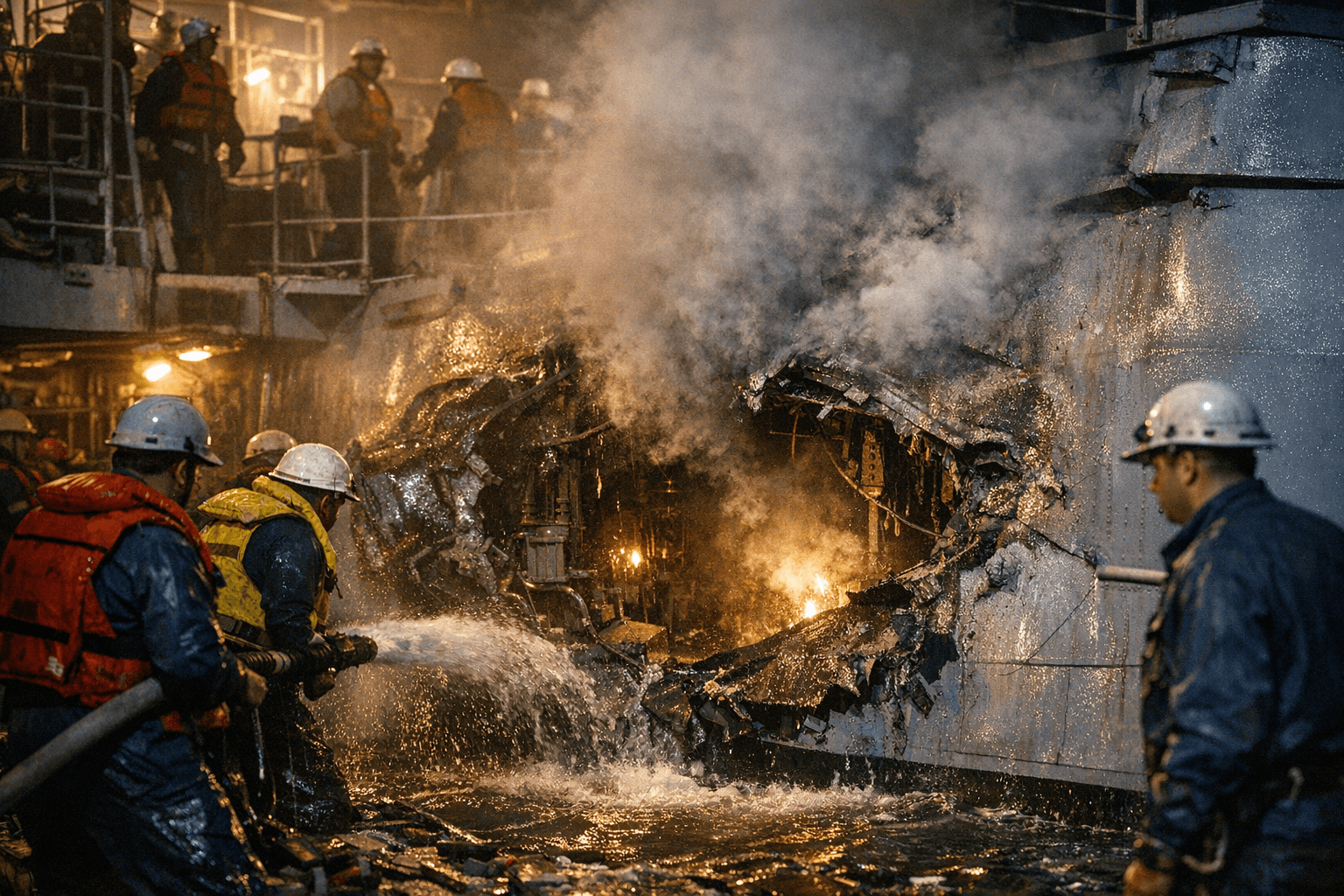
The explosion hit just before 5 p.m. on April 14, 1988. A moored Iranian contact mine blew a 15-foot hole in the hull of the USS Samuel B. Roberts (FFG-58), knocked both gas turbines from their mounts, flooded the engine room, and snapped the ship's keel — structural damage that is, by any conventional measure, fatal to a vessel. Fires burned across four decks. Flooding filled two main spaces; a third would have sent the frigate to the bottom of the central Arabian Gulf.
The crew fought fire and flooding for five hours and saved the ship. The damage was extensive, breaking the keel, starting a severe fire, and flooding two main spaces. That only ten crewmen were injured enough to require medical evacuation, and no one was killed, was credited to the alertness of the lookouts, the initiative of the Officer of the Deck, and sound decision-making by the commanding officer. Among the crew's improvised fixes: sailors cinched cables on the cracked superstructure in an effort to stabilize it. Naval historians have since called it one of the most exceptional damage control efforts in the annals of U.S. naval history.
The Samuel B. Roberts was on her first deployment, escorting reflagged Kuwaiti oil tankers through the Persian Gulf as part of Operation Earnest Will, heading from her homeport in Newport, Rhode Island, where she had departed in January 1988. She was not the only American ship navigating a hostile maritime environment. Iran had been covertly mining the transit routes used by U.S. warships returning from convoy duty.
The forensic case against Iran assembled itself quickly. When U.S. divers recovered several unexploded mines, they found that their serial numbers fit into the sequence on mines seized the previous September aboard an Iranian mine-layer named Iran Ajr. That match gave U.S. military officials the predicate they needed.
Four days later, U.S. forces retaliated against Iran in Operation Praying Mantis, a one-day campaign that was the largest American surface engagement since World War II. Under the operational command of Rear Adm. Anthony A. Less, with Iranian forces led by IRIN Commodore Mohammad-Hossein Malekzadegan, the U.S. Navy destroyed two Iranian oil platforms, sunk one frigate and a missile boat, crippled a second frigate, destroyed at least three armed speedboats, and drove off Iranian F-4 Phantom jets with missile fire.
The centerpiece of the engagement was the Iranian frigate Sahand. All of the Harpoons, three of the Skippers, one Walleye, and several 1,000-pound bombs scored direct hits. The Sahand sank a few hours later. The sinking marked the largest warship put down by the U.S. Navy since 1945. The Iranian frigate Sabalan was heavily damaged as well — an A-6 dropped a 500-pound bomb down the ship's exhaust stack, leaving it dead in the water. Top U.S. defense officials in Washington decided not to sink a third Iranian warship. They told U.S. ships and aircraft to lay off Sabalan, and Iranian tugs eventually towed the damaged frigate back to the Bandar Abbas naval base.
The sole U.S. fatalities were two Marine Corps aviators, Captains Stephen Leslie and Kenneth Hill of HMLA-167, killed when their AH-1T Sea Cobra attack helicopter crashed into the Persian Gulf after dark while conducting a reconnaissance mission in pursuit of Iranian speedboats approximately 15 nautical miles from the main task force. Navy officials later said the wreckage showed no sign of battle damage.
Faced with a series of spectacular defeats at the hands of Iraq on land and hemmed in by the United States at sea, senior Iranian leaders met in July to discuss ending the seemingly endless war. On 20 July 1988, Ayatollah Ruhollah Khomeini made his final decision in favor of peace.
The episode is now being invoked directly in 2026 as the United States confronts a parallel crisis. Iran has effectively halted tanker traffic through the Strait of Hormuz, a waterway that carries roughly 20 million barrels of oil per day, approximately one-fifth of global consumption. The U.S. military announced it had destroyed 16 Iranian mine-laying vessels near the strait, releasing unclassified footage of some of the vessels. President Trump posted a warning on Truth Social: "If Iran has put out any mines in the Hormuz Strait, and we have no reports of them doing so, we want them removed, IMMEDIATELY! If for any reason mines were placed, and they are not removed forthwith, the Military consequences to Iran will be at a level never seen before."
The U.S. Navy has been weighing escorts for commercial ships through the strait, a mission that would return American frigates to precisely the kind of threat environment that nearly destroyed the Samuel B. Roberts. Joint Chiefs Chairman Gen. Dan Caine told Fox News: "We're looking at a range of options there and will figure out how to solve problems as they come to us."
The cost asymmetry has not changed since 1988. The mine that nearly sank Samuel B. Roberts had an estimated cost of $1,500. The repairs to the ship were completed at a cost of $89.5 million. Mine-laying operations are often conducted covertly at night using small vessels such as fishing dhows or fast-attack craft, allowing mines to be deployed with little warning. The crew of the Samuel B. Roberts demonstrated that exceptional damage control can survive such an attack. Whether a 2026 escort mission would get the chance to find out is the question now confronting the Pentagon.
This article was produced by Prism’s automated news system from verified source data, official records, and press releases, then run through automated quality and moderation checks before publishing. The system is built and supervised by the people who set the standards it runs under. Read our full AI policy.
Did this article answer your question?