2026 Engagement Ring Trends Favor Quiet Luxury, Bezels, Hidden Halos
Quiet luxury wins: bezel frames, hidden halos, east‑west mounts, step cuts and bespoke design top shoppers’ lists and gemologist requests.

1. Hidden halos — the “solitaire 2.0” that keeps a clean top line
Hidden halos lead editors’ lists and gemologist consultations because they preserve the clean, solitaire profile while adding secret sparkle; an advisory guide published Feb. 27, 2026 described hidden halos as “solitaire 2.0” that “preserves a clean top‑down profile but add” (the excerpt cuts off mid‑sentence). Retail guidance from VRAI groups hidden halos under “Hidden Details,” recommending a solitaire hidden halo or a cathedral setting with pavé for extra shimmer, a configuration that reads as everyday-wearable but delivers surprise brilliance from the side. Designers favor hidden halos because they maintain a low, elegant silhouette for durability while giving more perceived carat and light without a top‑down halo ring. In short: you get the restraint of a solitaire with the visual lift of a halo — discreet on the finger, dramatic at once‑up angles.
2. Bezel-set solitaires — quiet luxury and practical protection
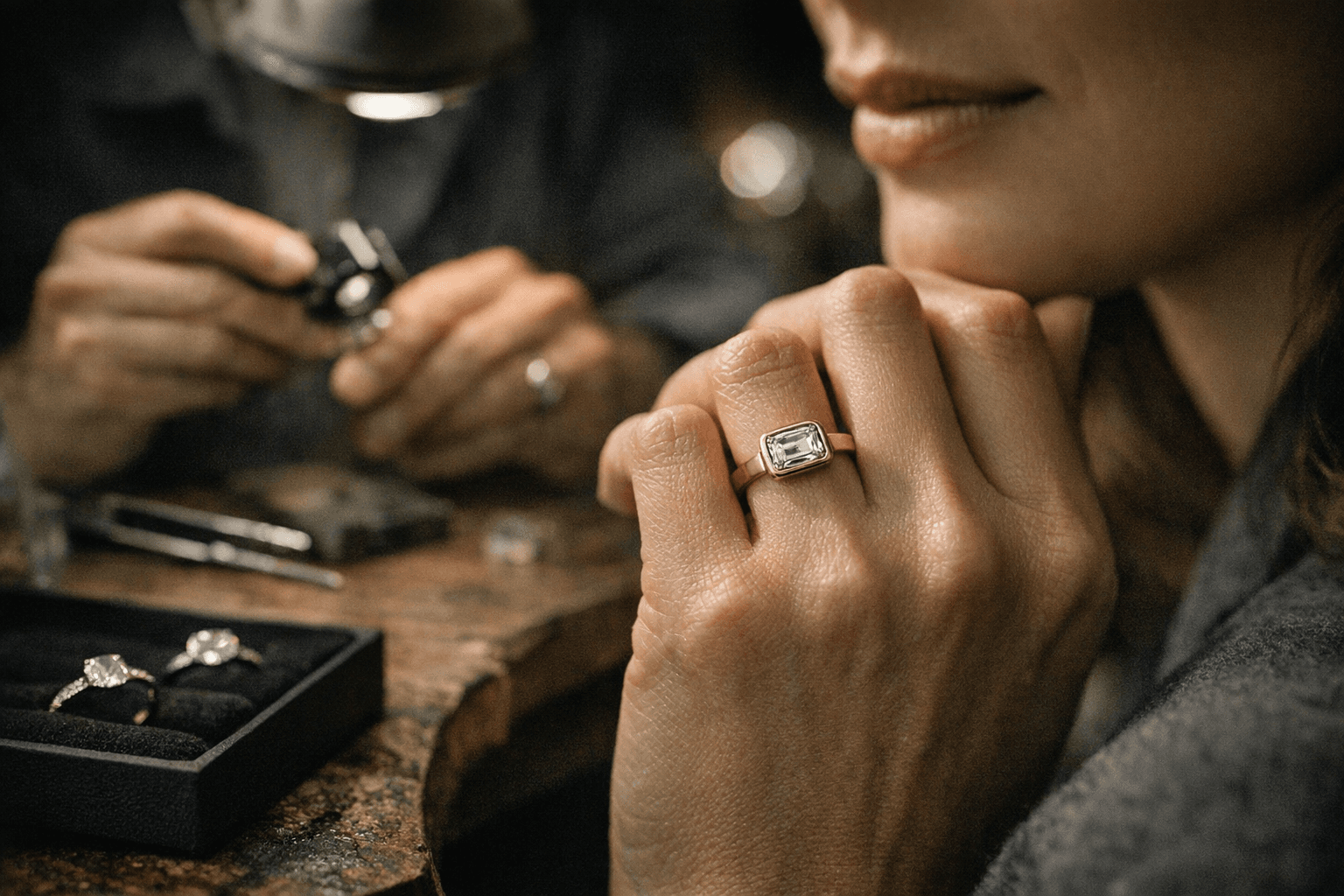
Bezel settings have become shorthand for “quiet luxury”: “Minimalist yet striking, bezel settings (where the metal completely surrounds the stone) are the new ‘quiet luxury’ standard,” writes an editorial source that curated bezel favorites such as Cullen’s Billie — Cathedral Bezel Set Elongated cushion, The Zoe, Goodstone and Penumbra. Designers and jewelers emphasize bezel rings for daily life: Melissa Tyson Designs markets bezels as “not flashy. Not overly ornate. Just timeless and beautifully intentional,” adding that “a bezel ring isn’t loud — it’s confident. It’s clean. Intentional. Elevated in the subtlest way.” Forbes notes that “gold bezel frames also highlight the stones beautifully, adding a contemporary contrast while still allowing them to feel wearable for everyday life,” and an industry voice named Walter adds, “People seem to be drawn to their romantic proportions.” Beyond aesthetics, bezel rims physically protect girdles and points — a reason Zuvelio and other trend writers link bezels to the practical‑luxury movement that prizes durability and comfort.
3. East‑West orientation — celebrity moments that shift searches
East‑west settings are among the most‑requested styles going into 2026, driven in part by high‑profile examples: Zendaya’s reported 5‑carat cushion‑cut diamond set east‑west is credited with instantly spiking searches for “east west engagement ring.” Editorial guides recommend choosing elongated shapes — Elongated Cushion, Emerald, Marquise — for the most striking east‑west effect; product examples include an East West Half Bezel Solitaire with a marquise center. The orientation reads architectural and quietly bold from the top, and many stylists suggest pairing it with hidden halos or pavé shoulders to add shimmer without compromising the modern silhouette. For shoppers who want a modern twist on a classic stone, east‑west delivers an unexpected profile that photographs sharply and wears comfortably.
4. Step cuts and Art Deco geometry — calm, transparent beauty
Step‑cut diamonds — Emerald and Asscher — are trending for their “calm, transparent beauty,” a phrase VRAI uses to recommend modern solitaires or multi‑stone settings like five‑stone rings. Anna Byers observes, “People are enjoying playing with different cuts of diamonds such as emeralds and asscher (step‑cut) cuts,” and also flags an uptick in “Art Deco‑inspired cluster rings,” adding that “One‑halo and double‑halo ‘target’ rings feel especially relevant right now, whether they be crafted entirely of diamonds or accented with color.” Examples in market imagery include a 77 Diamonds Art Deco ring centered on an Asscher cut with smaller Asschers on the shoulders. Step cuts read refined and architectural — they reward top‑down clarity and pair naturally with bezel frames or architectural shoulders that reinforce the period reference while keeping the ring robust enough for daily wear.
5. Bespoke and custom design — practical luxury over logos
Custom engagement rings have moved from niche to dominant: VRAI and Zuvelio both identify bespoke as a front‑of‑mind preference, with VRAI noting that bespoke allows rings to be “intentionally designed to reflect their unique love story” and offering its Cut for You™ process: “VRAI offers the unmatched Cut for You™ process, where a rough VRAI created diamonds is precisely cut to the client's exact specifications.” Zuvelio’s thesis — “Bespoke Over Branded: Custom Engagement Rings Define 2026” — links this shift to practical luxury: comfortable band thickness, secure settings like bezels, and durable metals that maintain finish and structure. Brands such as Melissa Tyson Designs underscore materials claims — “Every MTD ring is hand‑crafted in recycled gold, designed to be lived in, loved, and eventually passed down” — but shoppers should still ask for specifics: when a label or retailer uses the word “sustainable,” request details on recycled content, chain‑of‑custody, and any third‑party certification rather than relying on marketing language alone. The net effect: couples are prioritizing control over story — stone cut, orientation, hidden details and responsible materials — and are willing to pay for makership and provenance rather than logos.
Conclusion Practicality and provenance are shaping 2026 rings: hidden halos refresh the solitaire, bezels marry protection with understatement, east‑west mounts give a modern twist, step cuts bring architectural calm, and bespoke work ties the design to material claims and life‑long wear. For buyers seeking beauty without compromise, the smart move this year is to prioritize the intersection of wearability, verifiable materials (ask for recycled‑metal receipts or cut‑for‑you documentation) and designers who can translate these trends into a ring built to be lived in and handed down.
Know something we missed? Have a correction or additional information?
Submit a Tip