2026 Investment-Grade Diamonds: Fancy Colors, Type IIa/IIb, D/FL Whites, Provenance, Certification
Zizovdiamonds and Zahradiamonds say liquidity now concentrates in D–F, 1.01–2.50 ct stones with GIA provenance; Freeport storage and auction provenance are reshaping after‑tax returns.
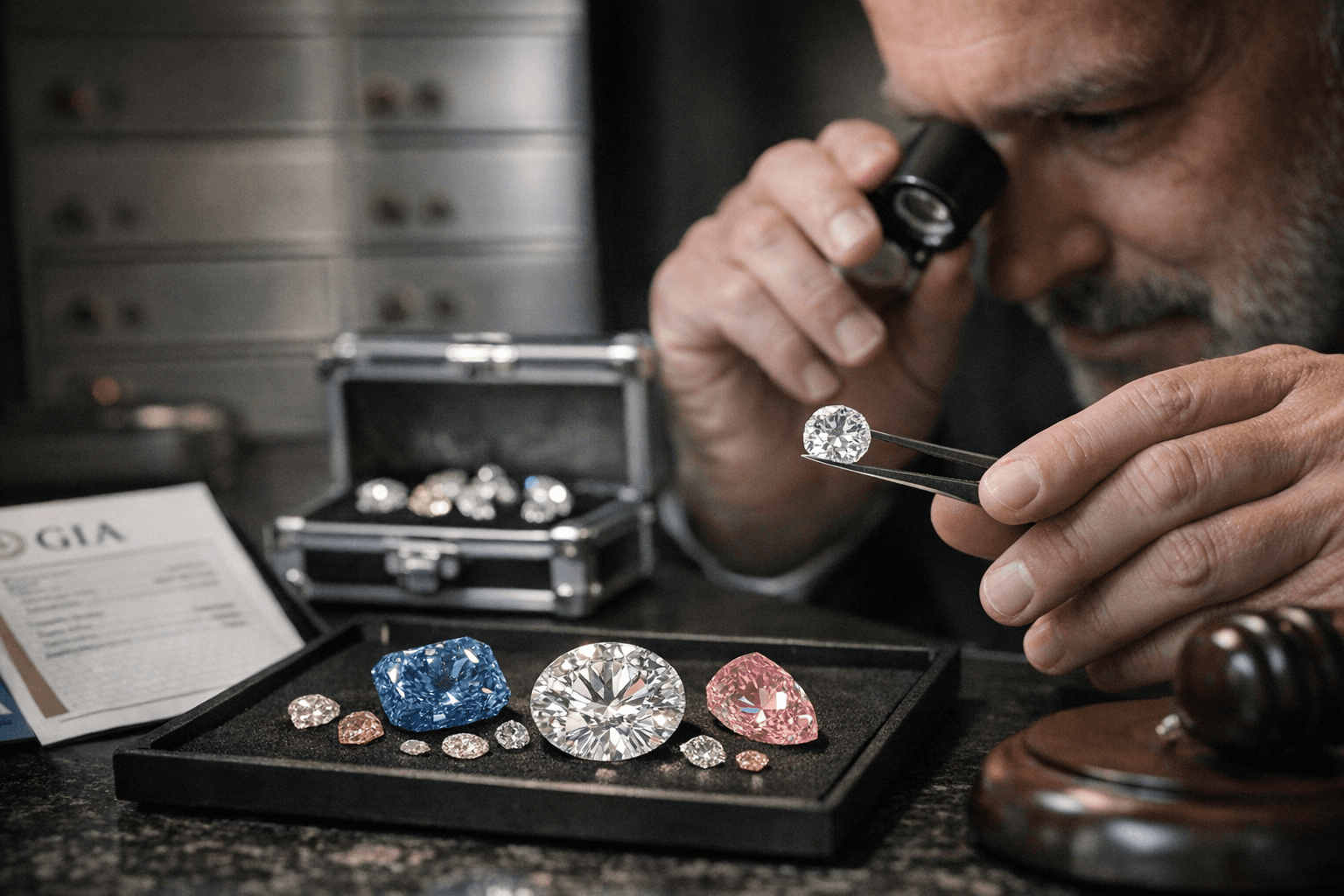
When dealers and advisers talk about diamonds as an asset, the conversation has shifted from romance to rules. Original Report captures the shift plainly: “Investment‑grade diamonds remain a specialist asset class: buyers and advisors look at stone rarity (color — especially fancy colors, type IIa/IIb stones, and large D/FL whites), provenance and certification (auction provenance, independent lab reports.” That sentence frames what follows: collectors are buying with a checklist, and that checklist is changing how stones trade, where they sit, and how they’re taxed.
What counts as rare: color, type and the D/FL canon Color remains the single most decisive attribute. Dealers speaking on the high end put D, E and F at the top of the pyramid: Zizovdiamonds calls them “the ‘Blue Chip’ stocks of the diamond world,” and Zahradiamonds repeats the prescription: “Color Grade: D, E, or F only. These are ‘Colorless.’” Fancy colored diamonds occupy the separate trophy lane; Zizovdiamonds notes that “Rare fancy colored diamonds continue to break auction records,” a reminder that unique hues can leapfrog conventional grading into headline‑making valuations. Type IIa and IIb stones and large D/FL whites are singled out in the Original Report fragment as specially prized by buyers and advisers.
Size and resale velocity: the practical sweet spot Liquidity lives where buyer pools are largest. Zahradiamonds identifies a narrow band as the market’s “sweet spot”: “Carat Weight: 1.01ct to 2.50ct. While 5ct+ stones are rare, their buyer pool is tiny. The 1–2.5ct range offers the highest ‘velocity of resale’ globally.” In other words, the stones most likely to move without heroic patience are modest by trophy standards but excellent in the conventional buyer market. Five‑carat-plus stones sit at the summit: scarce, collectible, and much slower to trade.
Clarity and a split in market advice Advisers diverge on how flawless a stone must be. Zizovdiamonds takes a conservative line: “Clarity: FL (Flawless) to VVS2. These grades ensure the stone is pristine.” Zahradiamonds is broader, allowing “Clarity Grade: IF (Internally Flawless) to VS2,” but adds an important caveat: “Focus on ‘Eye‑Clean’ stones. If a stone is VS2, ensure the inclusions are ‘marginal’ and not on the table (the center of the stone).” Presenting both positions reflects a live market tension: some collectors insist on the near‑perfect spectrum, while experienced advisers will accept lower graded stones only when they are genuinely eye‑clean.
Cut is non‑negotiable Across the board, cut and finish are treated as decisive. Zizovdiamonds calls it “non‑negotiable. A poorly cut diamond is ‘dead weight.’” Zahradiamonds codifies this into market math: “Cut/Symmetry/Polish: Triple Excellent (3EX). Anything less than ‘Excellent’ in all three categories results in a 15–25% liquidity discount.” The consequence is clear—investors pay a premium not simply for the raw parameters of color and clarity but for craftsmanship that unlocks brilliance.
Certification and provenance: what to insist on Certification is the ledger for value. Zizovdiamonds is unequivocal: “Certification: GIA only. An investor would never buy stock without an audited report; never buy a diamond without a GIA certificate.” The Original Report highlights auction provenance and independent lab reports as part of the due diligence that underwrites a stone’s market story. Zahradiamonds adds a dealer practice worth noting: they “refuse to sell stones without proper certification and actively educate you about grading differences between labs.” Auction provenance—Sotheby’s and Christie’s sales in particular—can elevate a stone into the trophy category and provide the provenance narrative collectors prize.
Tax, storage and the Freeport play Tax treatment and cross‑border storage are active strategies on the high end. Zizovdiamonds lays out what it calls “The ‘Freeport’ Advantage”: “Many of our international clients choose not to take immediate physical delivery. Instead, they store their investment‑grade stones in ‘Bonded Warehouses’ (Freeports) in Geneva or Antwerp.” The firm stresses the tax mechanics in blunt terms: “As long as the diamond remains in the Freeport, it is technically ‘in transit.’ No VAT (Value Added Tax) is due. You can buy, hold for 10 years, and sell the asset within the Freeport system without ever triggering a 21% VAT event. It is 100% efficient capital allocation.” That pathway changes after‑tax returns materially and explains why some buyers treat diamonds as both a wearable object and a portable, tax‑efficient store of wealth.
Trophy assets vs mainstream investment stones The market is bifurcated. At the apex, “Trophy Asset” lots—unique fancy colors, historically important D/FL stones—are auction theatre: “These are diamonds so rare they don't just follow market trends; they make history,” and auction houses set the terms. Below that plane are the resale‑friendly blue chips Zahradiamonds described: 1.01–2.50 ct, D–F, excellent cut, eye‑clean clarity that move in the retail and private‑dealer circuits. Zizovdiamonds’ asset comparison underlines the contrast: density of value is striking—Gold at “Low (€60k/kg)” versus Investment Diamond at “Extreme (€5M+/gram)”—while liquidity is “Instant (Commodity)” for gold and “Moderate (Specialized)” for diamond. The calculus for a buyer is clear: diamonds concentrate value but demand patience and market knowledge.
Natural vs lab‑grown: investment framing Jewelry‑appraisal‑denver frames the trade‑off succinctly: “If budget is the primary concern, lab‑grown diamonds will offer significant carat weight for a lower price. If rarity, heritage, and long‑term value are paramount, natural diamonds remain the choice, though at a higher price point due to tariffs. Always ask retailers about the origin of the diamond and any associated duties.” Brands and advisers are packaging these choices differently—natural stones sell heritage, traceability and investment appeal, while lab‑grown stones sell accessibility, sustainability and size.
What to demand from the seller Given the stakes, Zahradiamonds suggests a set of seller behaviors that separate professionals from opportunists: transparent pricing tied to market benchmarks; an unwillingness to sell uncertified stones; and frank counsel—even the willingness to say “no” to a sale if a stone is not investment‑grade. Jewelry‑appraisal‑denver lists retailer responsibilities in practical terms: “Clearly communicate pricing adjustments due to tariffs,” “Educate consumers on the differences between natural and LGD options,” and “Offer flexible financing options to mitigate higher price points.”
- Preferred carat band: “1.01ct to 2.50ct”
- Color: “D, E, or F only”
- Clarity: “IF to VS2; focus on ‘eye‑clean’; VS2 inclusions must be marginal and not on the table”
- Cut: “Triple Excellent (3EX); Anything less = 15–25% liquidity discount”
- Certification: “Refuse to buy/sell without proper certification; educate on lab differences”
- Pricing behavior: “Transparent pricing; explain methodology relative to market benchmarks”
- Sales ethics: “Quality focus over profit — tell you when a stone isn’t investment‑grade”
A compact checklist for resale‑minded buyers
Final word For investors and collectors, diamonds in 2026 are not jewelry alone but a set of technical choices: which lane—trophy or mainstream—fits your timeframe, which tax and storage pathways you will use, and which certificate will anchor resale. As Zizovdiamonds puts it, “Stability through the ages: Diamonds have weathered every major financial storm.” That resilience is real, but realizing it depends on disciplined selection, documented provenance, and a clear understanding of the market mechanics that turn a beautiful stone into an investment.
Know something we missed? Have a correction or additional information?
Submit a Tip