400,000 Year Hearth in Suffolk Rewrites Origins of Fire Making
Archaeologists report a roughly 400,000 year old open air hearth at Barnham in Suffolk, presenting the earliest direct evidence that human ancestors deliberately made fire. The finds, published in Nature and anchored by heated clay, fractured flint and spark producing pyrite, could transform understanding of early pyrotechnology and Neanderthal capabilities worldwide.
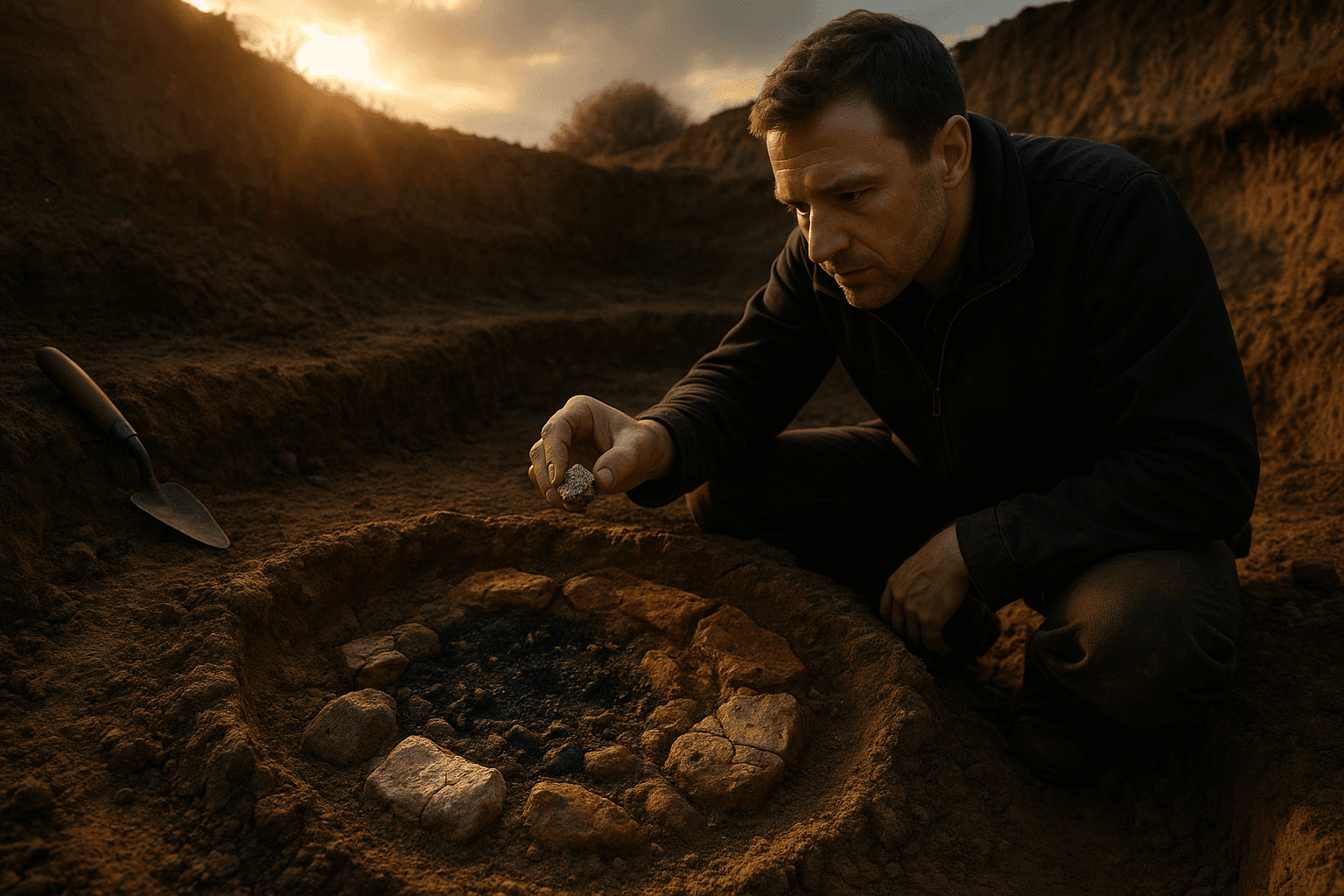
Archaeologists working at the Barnham clay pit in eastern England say they have uncovered a roughly 400,000 year old open air hearth that provides the earliest direct evidence of deliberate fire making by human ancestors. The discovery, described in a paper published in Nature and summarized by museum specialists, rests on a cluster of heat altered materials and spark producing minerals found together within repeated hearth deposits.
Excavations recovered shattered flint tools and baked clay that show clear signs of intense heating, alongside tiny flecks of pyrite and two larger pieces of iron pyrite. The association of flint and pyrite is central to the authors interpretation because pyrite can produce sparks when struck against flint. The researchers argue that the pyrite was brought to the site and used to ignite fuel rather than representing accidental association with natural wildfires.
Nick Ashton, curator of Palaeolithic Collections at the British Museum and a co author of the study, framed the significance in sweeping terms, saying, “This is a 400,000 year old site where we have the earliest evidence of making fire, not just in Britain or Europe, but in fact anywhere else in the world.” Museum colleagues stressed the repeated nature of the feature, noting that the deposits suggest people returned to the same firesites and maintained burning activity rather than briefly exploiting an opportunistic blaze.
Dr Silvia Bello of the Natural History Museum emphasized the interpretive weight of the pyrite finds, saying that “the presence of pyrite was an unmistakable sign” and that “the fact that there are the pyrites shows not just that they could maintain the fire, but they were making fire.” That combination of spark producing stones and heat damaged tools is what separates the Barnham evidence from older traces of human interaction with naturally occurring fires, which have long been present in the archaeological record but do not demonstrate intentional ignition.
Before Barnham, the oldest widely accepted direct evidence for deliberate fire making had been dated to roughly 50,000 years ago at sites attributed to Neanderthals in what is now northern France. If the Barnham interpretation holds, it pushes the confirmed timeline for controlled fire making back by roughly 350,000 to 360,000 years and suggests that the cognitive and cultural capacities to produce fire emerged far earlier than previously documented.
Researchers and commentators are calling the find potentially transformative but cautious. The Nature paper and contemporary media coverage frame the discovery as a game changer while noting that further excavations, experimental replication and geochemical analysis will be required to consolidate the claim. For now Barnham adds a significant new chapter to the story of how early human relatives mastered one of the most consequential technologies in human history, and it invites a global reassessment of when and where fire making became part of human lifeways.
This article was produced by Prism’s automated news system from verified source data, official records, and press releases, then run through automated quality and moderation checks before publishing. The system is built and supervised by the people who set the standards it runs under. Read our full AI policy.
Did this article answer your question?


