50,000 Bees Swarm Smithsonian Gallery Near the White House
A colony of 50,000 bees claimed the Smithsonian Renwick Gallery's exterior Thursday, drawing a beekeeper who relocated the swarm to a Maryland farm.
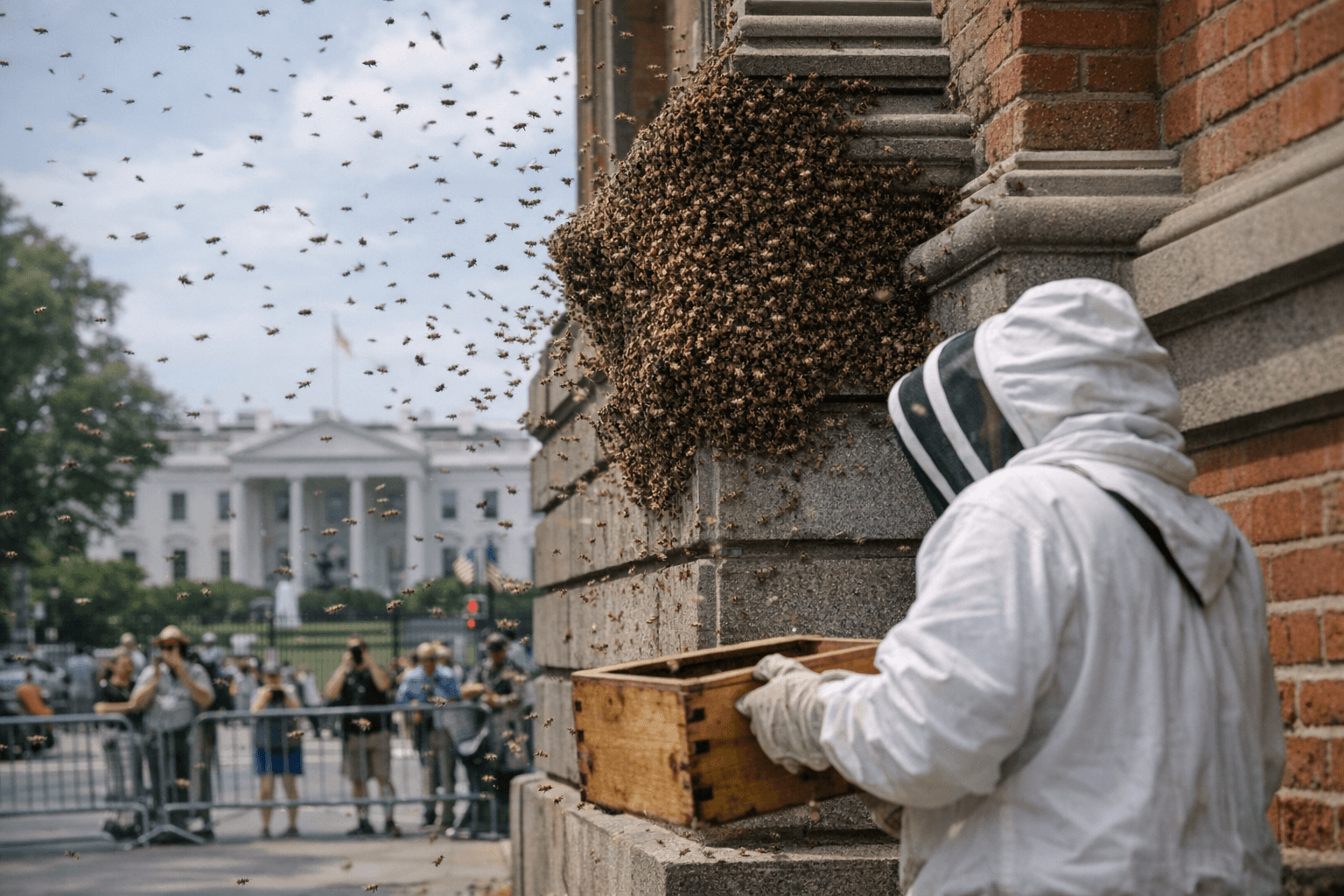
A cluster of roughly 50,000 honeybees settled onto the exterior of the Smithsonian's Renwick Gallery on Thursday, turning one of Washington's most recognizable museum facades into an impromptu hive just steps from Lafayette Park and the White House.
The swarm drew the attention of tourists, passersby, and local workers before museum officials and federal property managers called in beekeeper Billy Mullenax to handle the removal. Mullenax estimated the colony at approximately 50,000 bees and outlined a plan to relocate the swarm intact to a farm in suburban Maryland, a standard approach among professional beekeepers that preserves the colony rather than exterminating it.
Using smoker tools to calm the bees and frames to capture and transfer them, Mullenax worked through the removal without injury to the public or museum staff. Officials cordoned off the immediate area around the affected section of the building's cornice while the operation proceeded.
The timing was not unusual. Spring is peak swarming season for honeybee colonies, when an established hive splits and a new queen leads a portion of the population to find a fresh nesting site. Swarms in transit are generally not aggressive toward humans if left undisturbed; the bees carry no hive, no honey stores, and no brood to defend. What appears alarming at 50,000 strong is, in biological terms, a colony in a vulnerable and temporary state.
The Renwick incident underscores a growing reality in American cities. Feral honeybee colonies have become more common as urban green spaces provide forage and shelter, even as overall pollinator populations face persistent pressure from pesticides, parasites like Varroa mites, and the continued loss of native habitat. Conservationists and municipal wildlife managers increasingly favor relocation over extermination, viewing intact swarms as assets to agricultural ecosystems.
By directing the colony toward a Maryland farm, Mullenax's approach aligned with that philosophy: a working hive contributes to crop pollination and genetic diversity in commercial beekeeping operations. The broader pattern points to a city wildlife management challenge with no clean solution, where the same habitat pressures pushing bees into dense urban corridors also make humane removal the only ecologically defensible response.
The Renwick Gallery, home to the Smithsonian American Art Museum's craft and decorative arts collection, returned to normal public access once the cordon was lifted.
This article was produced by Prism’s automated news system from verified source data, official records, and press releases, then run through automated quality and moderation checks before publishing. The system is built and supervised by the people who set the standards it runs under. Read our full AI policy.
Know something we missed? Have a correction or additional information?
Submit a Tip