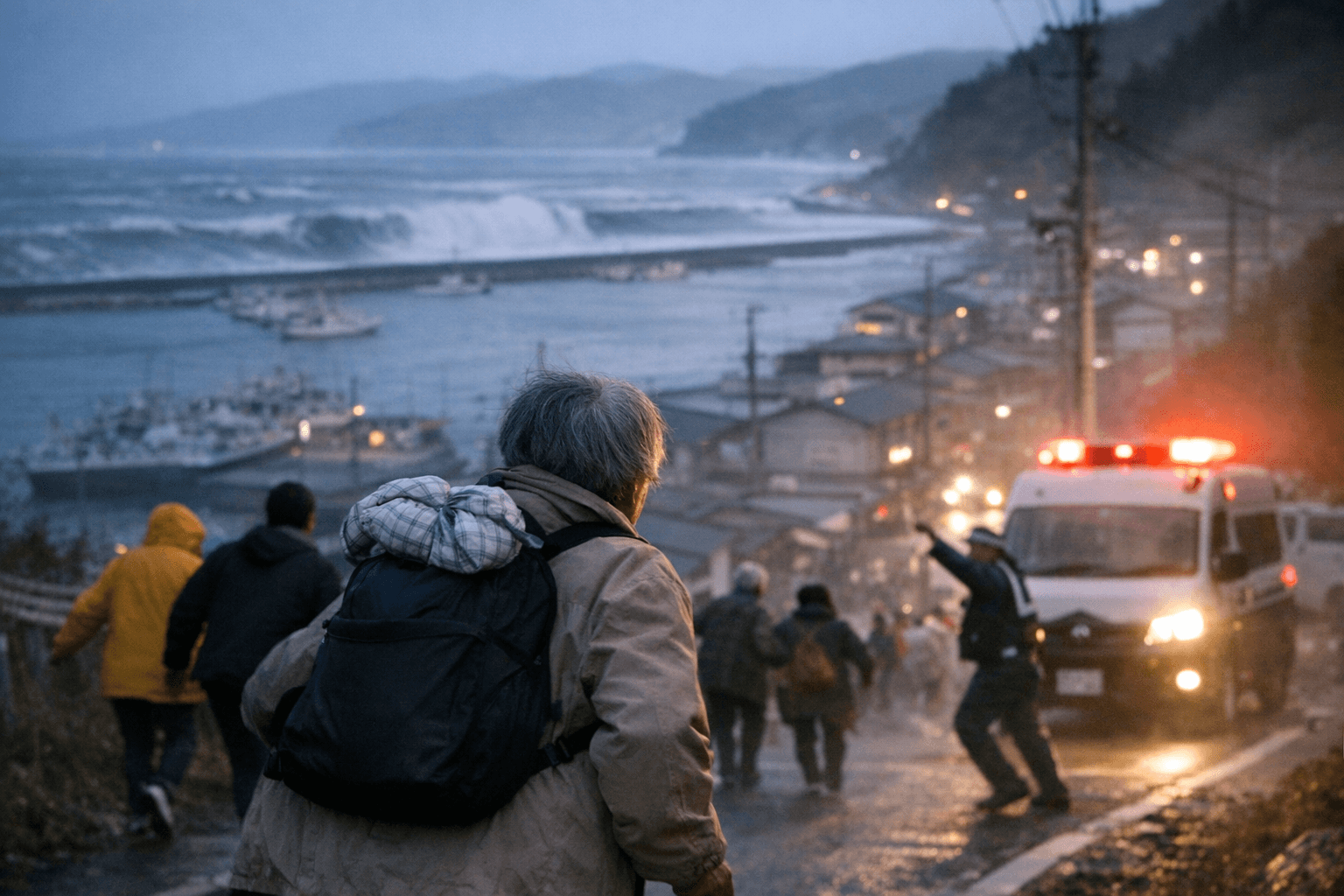
7.7-magnitude quake off Japan’s Iwate coast triggers tsunami warnings
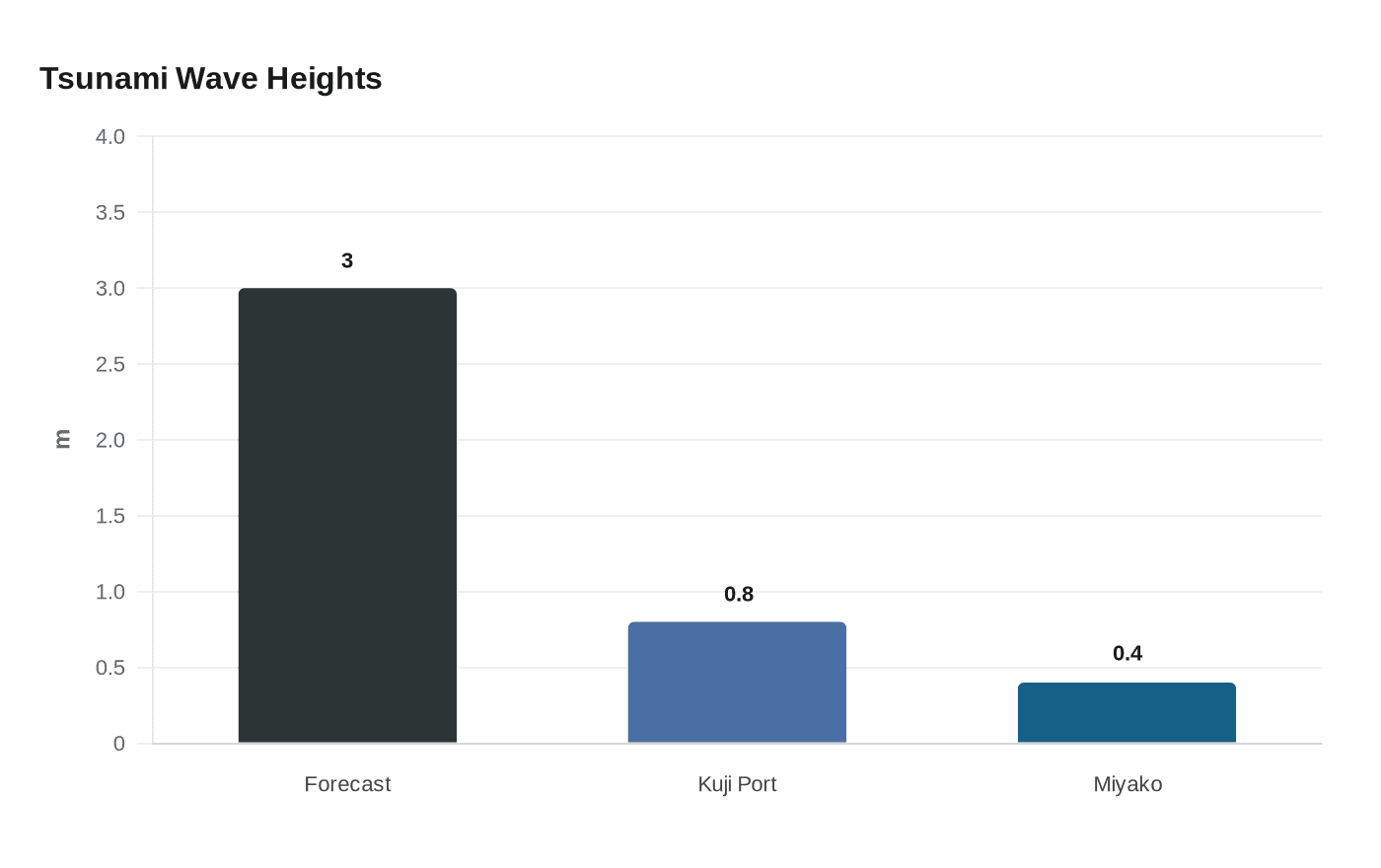
Japan’s warning system swung from tsunami alerts to an advisory as a 7.7 quake off Iwate sent waves of 0.8 meters to Kuji and 0.4 to Miyako.
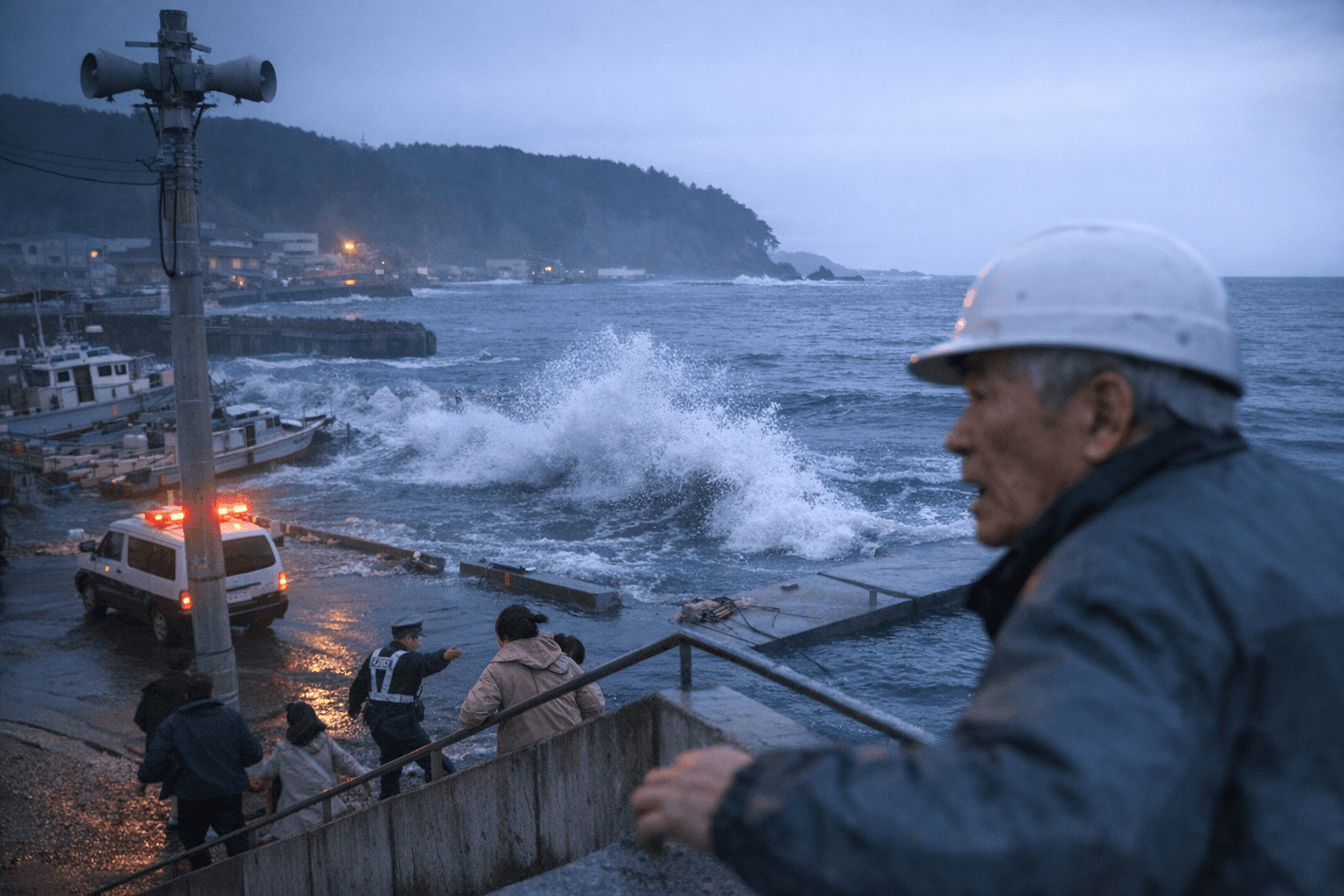
Japan’s tsunami warning system moved in stages after a powerful offshore quake struck off the Sanriku coast near Iwate Prefecture at 4:53 p.m. local time on Monday, April 20, 2026. The Japan Meteorological Agency first put the earthquake at magnitude 7.5, then upgraded it to 7.7 as more data came in, and issued tsunami warnings for parts of Iwate, Aomori, Hokkaido and other coastal areas, with possible waves of up to 3 meters.
Officials told residents to stay away from the coast and rivers and move to higher ground as the undersea quake, about 10 kilometers below the sea surface, sent alerts across northeastern Japan. The Pacific Tsunami Warning Center also tracked the event. The shaking was strong enough to rattle large buildings in Tokyo, hundreds of kilometers away, underscoring how far the impact spread even before the coastal threat fully took shape.
The waves that arrived were smaller than the worst-case forecast. A 0.8-meter tsunami was detected at Kuji Port in Iwate Prefecture, and a 0.4-meter wave was recorded at Miyako Port. As those readings came in, the warning was later downgraded to an advisory, reflecting the difference between a major offshore earthquake and the actual water rise that follows it. In practical terms, the system did what it is designed to do: warn early, then adjust as evidence narrowed the threat.
Authorities also checked nuclear power plants in the region, including the Onagawa plant in Miyagi Prefecture, as precautionary monitoring continued across the northeast. The quake revived memories of the March 11, 2011 magnitude 9.0 earthquake and tsunami, which killed more than 22,000 people and forced nearly half a million people from their homes. That history is why even a downgraded alert carries national weight, especially along the same coastline where the 2011 disaster left a deep institutional and public imprint.
The response on Monday showed a country still calibrated to react fast, warn broadly and then refine the message as the sea itself gives up more information. On Japan’s northeastern coast, that sequence can make the difference between panic and preparedness.
Sources:
Know something we missed? Have a correction or additional information?
Submit a Tip