A decade after Brexit, what happened to the UK economy?
Brexit did not bring the instant shock some feared, but the slower drag on trade, investment and productivity has proved real, and it took years to show.
The 23 June 2016 referendum produced a 51.9% Leave vote, and the economic consequences have unfolded through trade, investment, productivity and migration rather than a single dramatic break. The result announced by David Cameron on 24 June 2016 set up a new trading relationship with the European Union that has steadily become more visible in the numbers.
What the forecasts got right
The strongest early warnings focused on friction, not collapse. The Office for Budget Responsibility built Brexit into its post-referendum forecasts through assumptions on trade, productivity, investment and migration, then revisited the trade assumptions in March 2024. The economic damage has shown up where those models said it would: in the cost of doing business across borders, in weaker capital formation, and in slower growth that compounds over time.
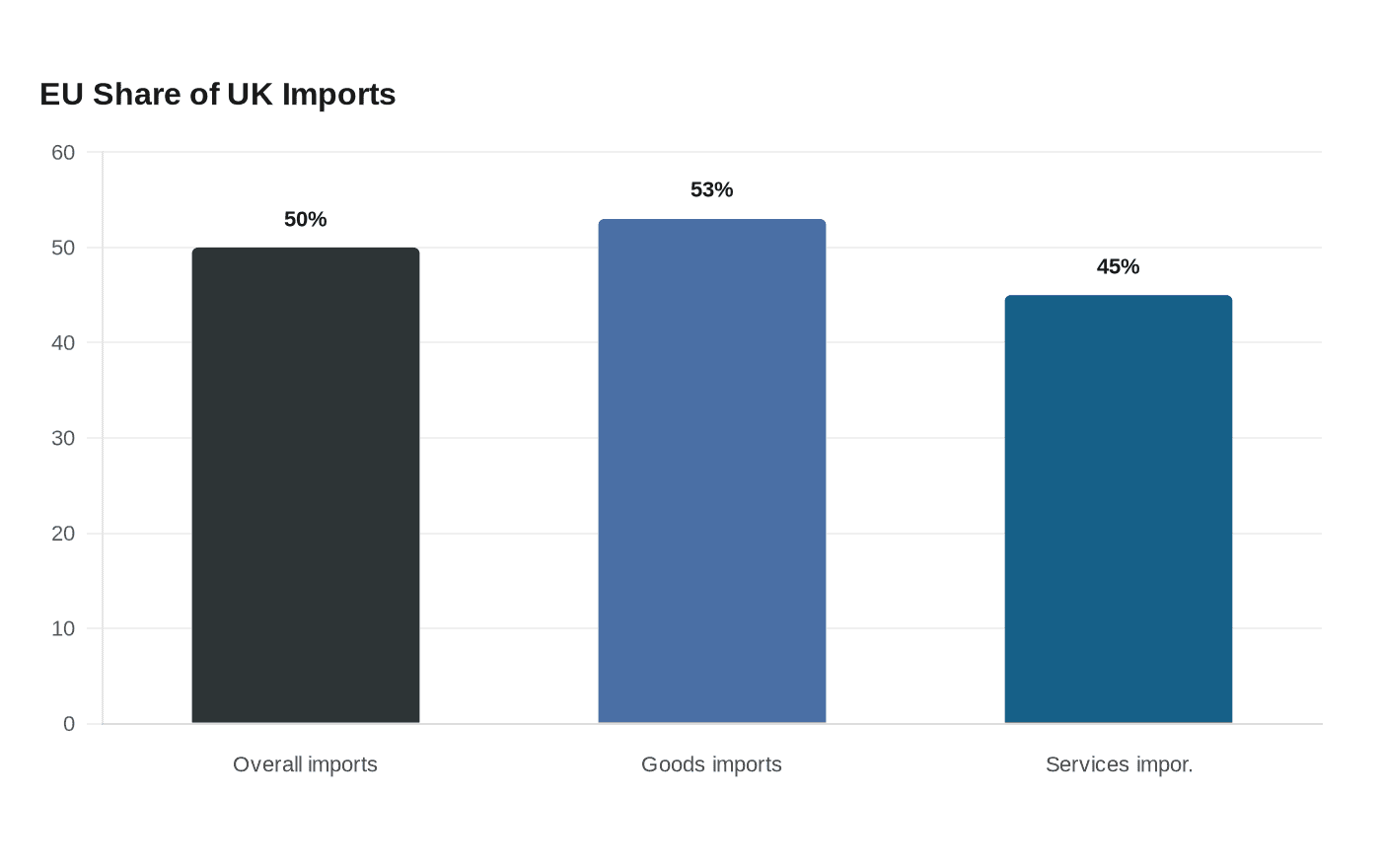
The old hope that the United Kingdom could leave the EU without paying a long-run economic price never really survived contact with the data. Even now, the EU remains the UK’s biggest trading partner, and the House of Commons Library says it accounted for 50% of UK imports in 2025, including 53% of goods imports and 45% of services imports. That is not the profile of a country whose links with Europe have faded into the background.
Trade became more expensive, not irrelevant
Brexit did not end UK-EU trade, but it made it harder. The EU-UK Trade and Cooperation Agreement was agreed on 24 December 2020, provisionally applied from 1 January 2021 and entered into force on 1 May 2021, creating a new framework that preserved commerce while introducing more formal barriers than membership had allowed. The European Commission describes it as a preferential trade and cooperation arrangement covering goods, services, digital trade, procurement, transport, energy, fisheries, security and more.
The numbers show that the warnings about non-tariff barriers were well founded. A 2025 National Institute of Economic and Social Research paper estimated that higher non-tariff trade costs after Brexit reduced UK-EU imports by 23.7% and exports by 18.6%. That helps explain why the overall export picture looks mixed rather than disastrous: government trade statistics put UK exports at £941.0 billion in the 12 months to April 2026, with goods exports down 2.0% and services exports up 6.7% year on year. Services strength has offset some goods weakness, but it has not erased the frictions that now shape the UK’s trade with its nearest market.
Investment and productivity took longer to weaken
One reason the Brexit effect took years to become visible is that investment does not vanish overnight. Firms adjust plans, delay decisions and wait for the policy environment to settle, which is why the longer-term hit can be harder to see in the first few years than in later ones. The recent London Assembly research says Brexit has undermined London’s performance since 2016, including flat output growth, reduced job creation and limited capital deepening in London-facing sectors.
Capital deepening is one of the clearest signs that investment is not keeping pace with the needs of the economy. When businesses do not add enough machinery, equipment or productive capacity, output growth slows and wages eventually feel the drag. The London evidence shows the forecast about weaker productivity was not an abstract macroeconomic worry; it became visible in the places and sectors most exposed to Europe-facing activity.
Labour shortages and living standards came through the side door
Labour supply was always part of the Brexit forecast, and the OBR has treated migration as one of the main channels through which Brexit could affect the economy. That does not show up only in headline labour market statistics; it also appears in reduced job creation and in the difficulty firms have hiring for the roles that keep services and supply chains moving. The effect is often indirect, which is one reason it has taken so long to register clearly.
For households, that slower-burn damage matters because weaker trade and productivity ultimately shape pay, prices and the range of goods and services the economy can support. Brexit did not deliver a clean, immediate break in living standards, but it did create a less dynamic economy than the one promised by its advocates. The warnings that proved most accurate were the ones about gradual erosion: less trade with Europe, more friction in business planning, and lower productive momentum over time.
The new relationship is durable, but not frictionless
Government implementation reports continue to treat the Trade and Cooperation Agreement as the cornerstone of the UK-EU relationship, and that is the right description of the settlement now in place. It is broad enough to keep trade and cooperation functioning, but it is no substitute for the integration that existed before Brexit. The result is a relationship that is stable, yet structurally more costly than membership.
This article was produced by Prism’s automated news system from verified source data, official records, and press releases, then run through automated quality and moderation checks before publishing. The system is built and supervised by the people who set the standards it runs under. Read our full AI policy.
Know something we missed? Have a correction or additional information?
Submit a Tip