A decade into Vision 2030, Saudi Arabia faces financial strains
Saudi Arabia hit a fiscal wall, pairing a 165.4 billion-riyal deficit with cancellations at NEOM’s Trojena project.
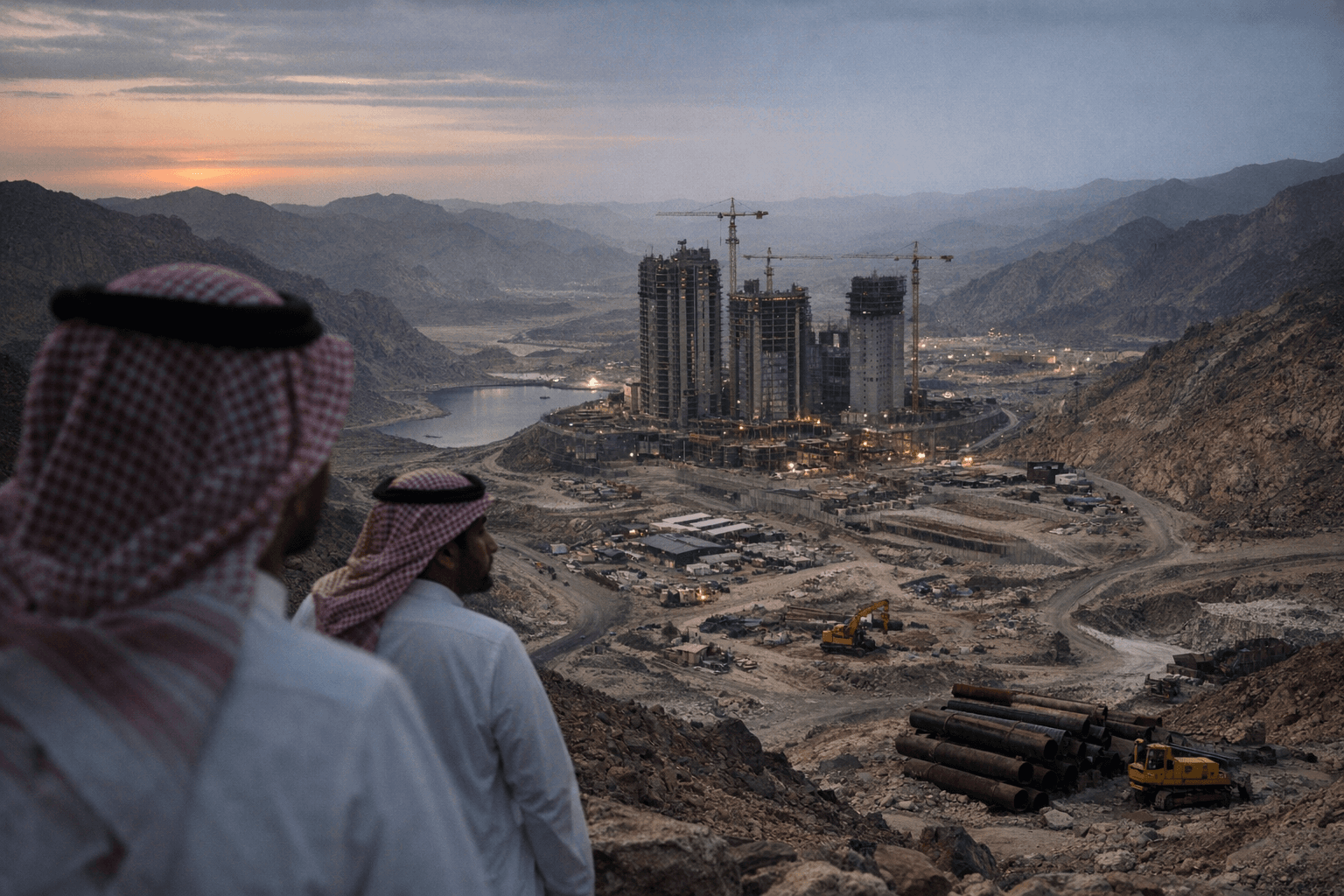
Saudi Arabia’s 2026 budget put a number on the slowdown: spending was set at 1.313 trillion riyals, revenues at 1.147 trillion riyals, and the deficit at 165.4 billion riyals, or about 3.3 percent of GDP. Riyadh still described the plan as expansionary, but the scale of the gap showed a state moving from broad ambition to tighter triage.
A decade after Crown Prince Mohammed bin Salman announced Vision 2030, the kingdom is no longer funding every showcase project at full speed. Public Investment Fund governor Yasir al-Rumayyan said no NEOM projects had been canceled “so far,” but he also said spending priorities were being reassessed, The Line was only one part of NEOM, and Oxagon remained central. In practice, contractors have already been told otherwise: NEOM terminated Webuild’s Trojena contract for three dams, a freshwater lake and The Bow, with the work about 30 percent complete, and Hyundai said NEOM canceled a roughly $1 billion tunneling package at the heart of The Line.
What survives is the part of Vision 2030 that can be defended as faster, leaner and more investable. PIF approved a new 2026-2030 strategy on April 15 that centers on competitive domestic ecosystems, stronger links across sectors, strategic assets, higher returns, better investment efficiency and a larger private-sector role. Finance Minister Mohammed al-Jadaan has also singled out tourism, manufacturing, logistics and technology as the areas that will get more attention, signaling that Riyadh is favoring industrial capacity, supply chains and digital bets over open-ended megastructures.
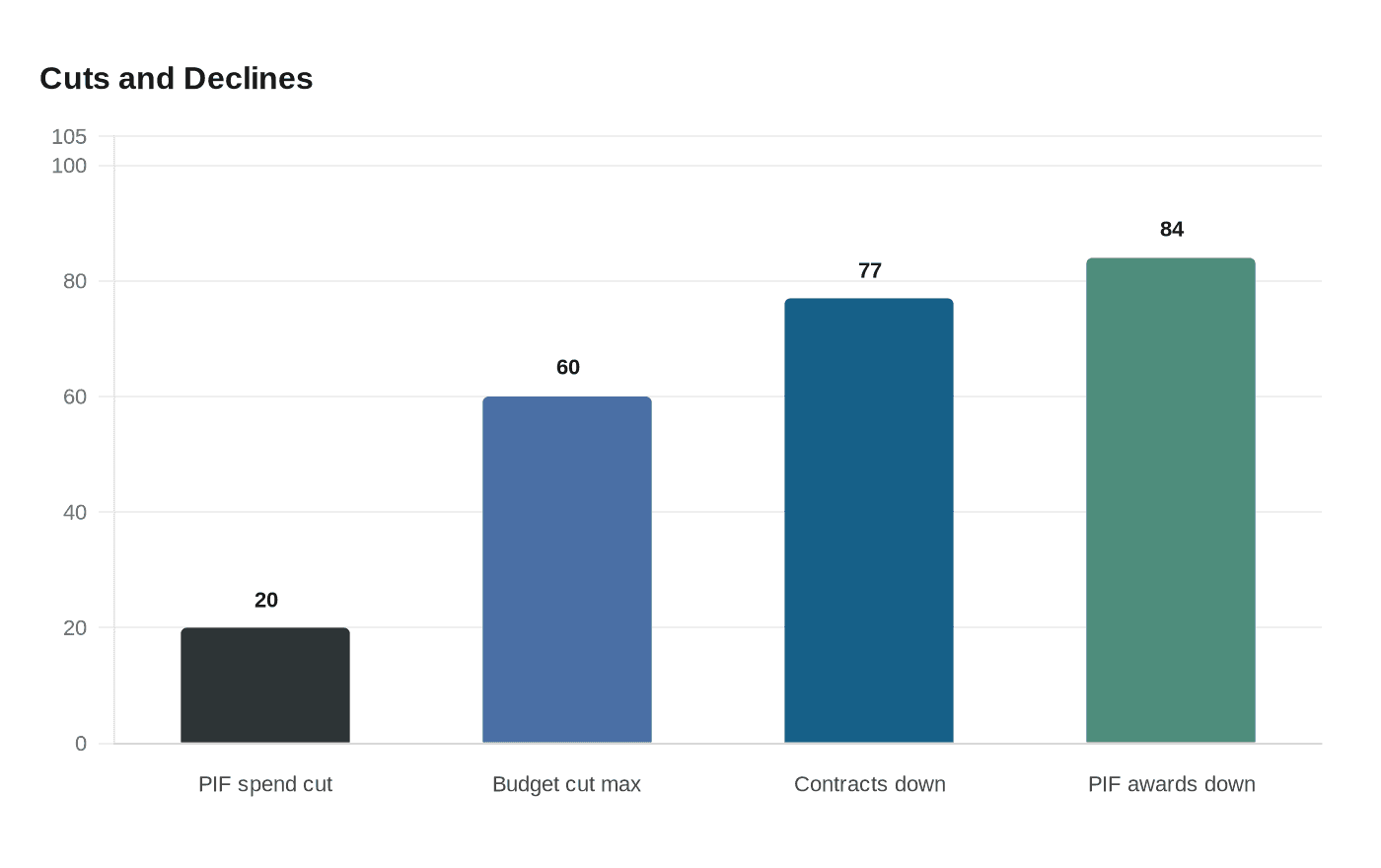
That retrenchment has consequences beyond the balance sheet. PIF was ordered to cut spending by at least 20 percent across more than 100 companies in 2025, with some budgets reduced by as much as 60 percent, a pullback that slowed giga-projects and triggered layoffs. New large-scale infrastructure contracts issued in the first five months of 2025 fell 77 percent to 36 billion riyals, while PIF-backed awards dropped 84 percent, a sharp sign that the construction boom that carried many contractors, consultants and workers is being replaced by a much thinner pipeline.
The reality check for Vision 2030 is not a retreat from modernization, but a narrower definition of it. Saudi Arabia is still spending, still building and still trying to diversify away from oil, yet the center of gravity has shifted toward projects that can show returns sooner, absorb private capital and fit a more cautious fiscal model. The kingdom’s next phase will be judged less by spectacle than by whether it can turn restraint into durable growth.
This article was produced by Prism’s automated news system from verified source data, official records, and press releases, then run through automated quality and moderation checks before publishing. The system is built and supervised by the people who set the standards it runs under. Read our full AI policy.
Did this article answer your question?