A new book traces the long history of vaccine opposition
A new book argues vaccine opposition endures by fusing ideology, profit, and distrust into a durable coalition, not a single movement.
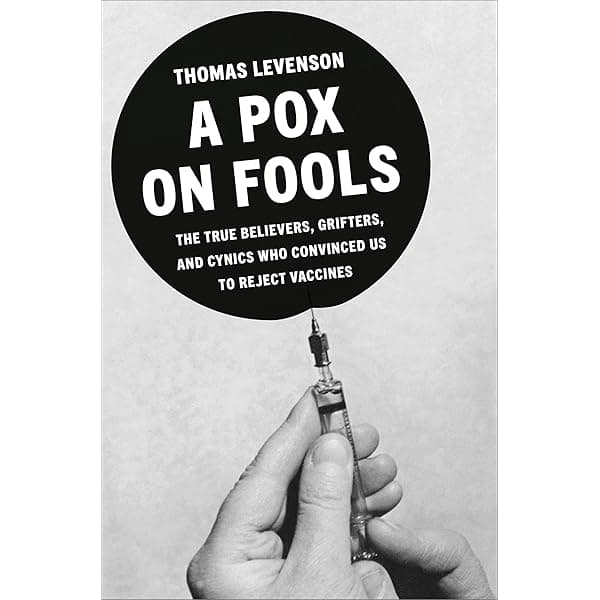
The book’s core insight
Thomas Levenson’s *A Pox on Fools: The True Believers, Grifters, and Cynics Who Convinced Us to Reject Vaccines* treats vaccine opposition as an ecosystem, not a slogan. The book is scheduled for release on June 8, 2026, and its subtitle does important analytical work: it splits anti-vaccine politics into overlapping motives, showing how conviction, money, and opportunism reinforce one another.
That framing matters because vaccine resistance has never depended on one kind of actor alone. Some opponents are driven by sincere belief, others by profit, and others by the strategic value of stoking distrust. Levenson’s lens helps explain why these alliances survive across generations, even as the diseases, the technologies, and the media channels change.
A history that starts at the beginning of inoculation
The roots of vaccine opposition in the United States reach back to the earliest days of inoculation. In Boston in 1721, during a smallpox epidemic, Cotton Mather and physician Zabdiel Boylston promoted inoculation, and the backlash was fierce. Later accounts even describe an assassination attempt by bomb targeting Mather, a reminder that medical controversy could quickly spill into outright violence.
That first wave of resistance already contained the themes that still define the debate. People objected on religious grounds, sanitary grounds, scientific grounds, and political grounds. By the early 1800s, Edward Jenner’s smallpox vaccination had spread, but it was met with immediate criticism that mixed fear of the unknown with suspicion of authority.
The historical lesson is blunt: vaccine opposition is not a modern aberration created by social media. It is a recurring response to public health intervention, one that resurfaces whenever vaccination becomes a symbol of power, coercion, or social control.
How opposition became organized politics
By the late 19th century, vaccine resistance had moved from scattered objection to organized activism. The Anti Vaccination Society of America was founded in 1879, after British anti-vaccinationist William Tebb visited the United States. Anti-vaccination leagues and journals multiplied in response to compulsory vaccination laws, giving the movement institutions, editors, and a language of rights.
That shift is significant because it shows how opposition sustains itself. The movement did not survive only through fear; it also survived through infrastructure. Newspapers, pamphlets, meetings, and alliances turned isolated skepticism into a durable political identity.
Leicester, England, became a major center of anti-vaccine activity and rallies, illustrating how local organizing could harden into a broader culture of resistance. Once opposition gains a place to gather, publish, and recruit, it becomes more than a reaction to a single vaccine. It becomes a standing political habit.
The legal line that still shapes mandate fights
A central turning point came in 1905, when the U.S. Supreme Court decided *Jacobson v. Massachusetts* and upheld the authority of states to require vaccination. That decision remains foundational because it established that individual liberty claims do not automatically override public-health powers during outbreaks.
The ruling still echoes through modern debates over mandates, exemptions, and emergency powers. In practical terms, it gave governments legal cover to treat vaccination as part of the state’s duty to protect the public when disease threatens to spread. In political terms, it also gave vaccine opponents a lasting target: the claim that the state should not have that power.
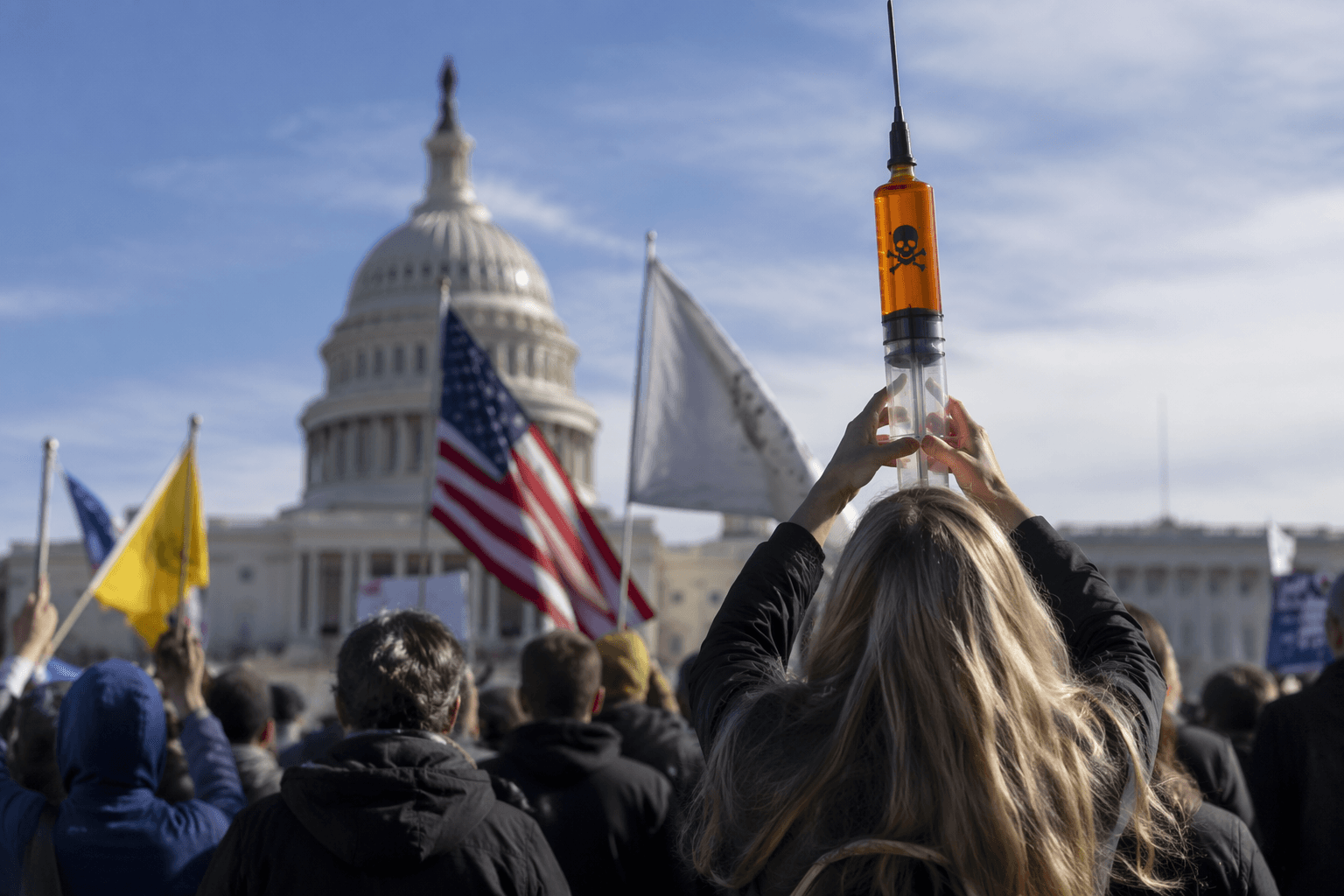
That tension has never gone away. Every new mandate debate revisits the same question, how much collective risk justifies a limit on individual choice? *Jacobson* remains important precisely because it set the terms of the argument more than a century ago.
Why the old arguments keep returning
A recent peer-reviewed history finds that vaccine hesitancy has been present since at least the 1721 Boston smallpox epidemic. Another study of U.S. vaccination efforts against smallpox, polio, and measles says the same drivers recur across eras: fear, mistrust, apathy, and political conflict. Those patterns help explain why anti-vaccine rhetoric can migrate from one disease to the next without losing force.
The point is not that every generation repeats the exact same arguments. It is that the emotional machinery stays recognizable. Fear makes the threat feel immediate, mistrust turns institutions into suspects, apathy lowers the social cost of delay, and political conflict transforms medical advice into a loyalty test.
That is where Levenson’s taxonomy becomes especially useful. True believers give the movement moral energy. Grifters monetize fear. Cynics use the issue to gain leverage, attention, or power. Together, they create a coalition that is larger, stickier, and harder to defeat than any single ideology would be on its own.
The public-health stakes are still global
The stakes are not theoretical. In 2015, the World Health Organization said vaccine hesitancy was a growing challenge for immunization programs, and it warned that globally, 1 in 5 children still did not receive routine life-saving immunizations. The organization also estimated that 1.5 million children died each year from diseases preventable by existing vaccines.
Those numbers show why vaccine opposition cannot be dismissed as a niche cultural quarrel. Hesitancy affects coverage rates, and coverage rates determine whether outbreaks remain contained or spread. When enough people delay or refuse vaccination, the gap is not private, it is epidemiological.
The warning has only sharpened since then. In 2019, the World Health Organization listed vaccine hesitancy among the top global health threats. More recently, the World Health Organization, UNICEF, and Gavi have warned that misinformation, humanitarian crises, population growth, and funding cuts are helping drive outbreaks of vaccine-preventable diseases and threatening years of progress.
What this history means now
Levenson’s book arrives at a moment when vaccine politics still travel along old fault lines. The numbers are stark, the legal structure is familiar, and the messaging ecosystem is more sophisticated than ever. That combination makes the anti-vaccine movement resilient, because it can draw strength from ideology, income, and institutional distrust at the same time.
The deeper lesson is that public health does not just fight pathogens. It also fights narratives, incentives, and power structures that reward doubt. By tracing vaccine opposition from Boston in 1721 to the present, *A Pox on Fools* shows why the struggle persists, and why the alliances behind it still shape the reach of modern medicine.
This article was produced by Prism’s automated news system from verified source data, official records, and press releases, then run through automated quality and moderation checks before publishing. The system is built and supervised by the people who set the standards it runs under. Read our full AI policy.
Know something we missed? Have a correction or additional information?
Submit a Tip