A Practical Roadmap to Collecting Reggae Vinyl Records
This guide explains how to start and grow a reggae vinyl collection, covering formats to prioritize, era by era collecting goals, condition grading, cleaning and storage, and where to buy. It matters because clear choices about format, provenance, and care preserve audio quality and value, and help collectors build historically meaningful sets that reflect Jamaica sound system culture.
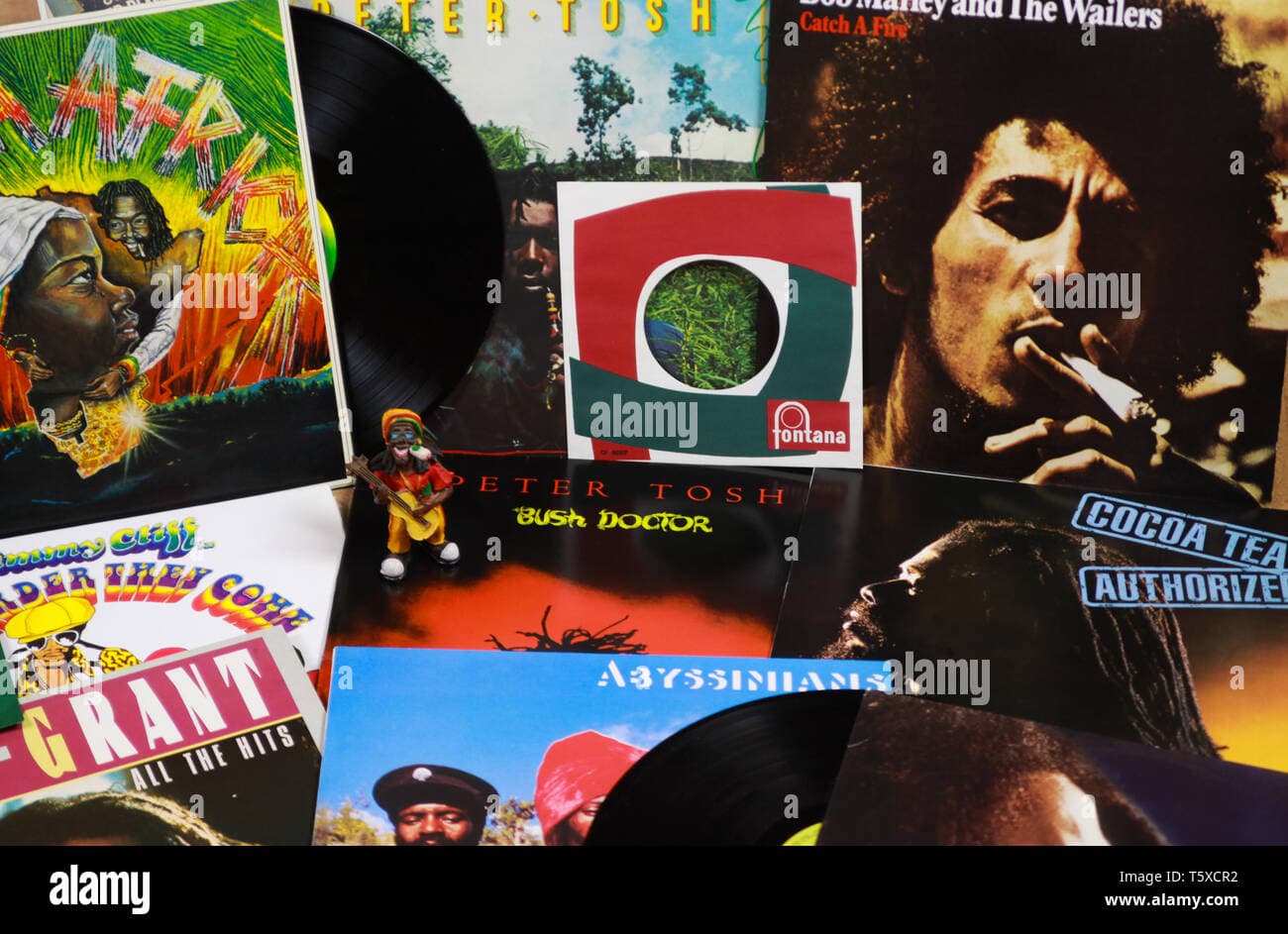
For collectors new to reggae, the most immediate decisions are format and scope. Seven inch singles, often called 45s, are foundational in Jamaican music history and typically pair a vocal A side with dub or version B sides. Twelve inch discomixes and extended singles are prized for longer vocal to dub transitions and for DJ friendly play. Long playing records became the primary format for international listeners in the 1970s and remain essential for full album statements. Decide whether you are pursuing rare Jamaican pressings, classic international LPs, or DJ friendly twelve inch cuts, and let that choice shape your budget and search strategy.
Collecting goals should follow the music history. Build a base of ska and rocksteady era material from the 1960s, then add landmark roots reggae records from the 1970s, and complete the arc with 1980s dancehall and modern hybrid styles. Leave room in the collection for local producer pressings and dub innovations that tell the story of sound system culture. Prioritize major artists and landmark albums for context, and add rarities that deepen a personal narrative.
Condition and provenance determine both listening enjoyment and market value. Inspect records visually for warp, scratches, and sleeve wear. Learn common grading terms such as Mint, Near Mint, Very Good Plus, and Good, and understand that small sleeve defects or light surface noise can significantly reduce price. Provenance matters: label, catalogue number, and pressing plant details identify rare pressings. Ask sellers for high resolution photos of label runouts and matrix numbers before purchase.
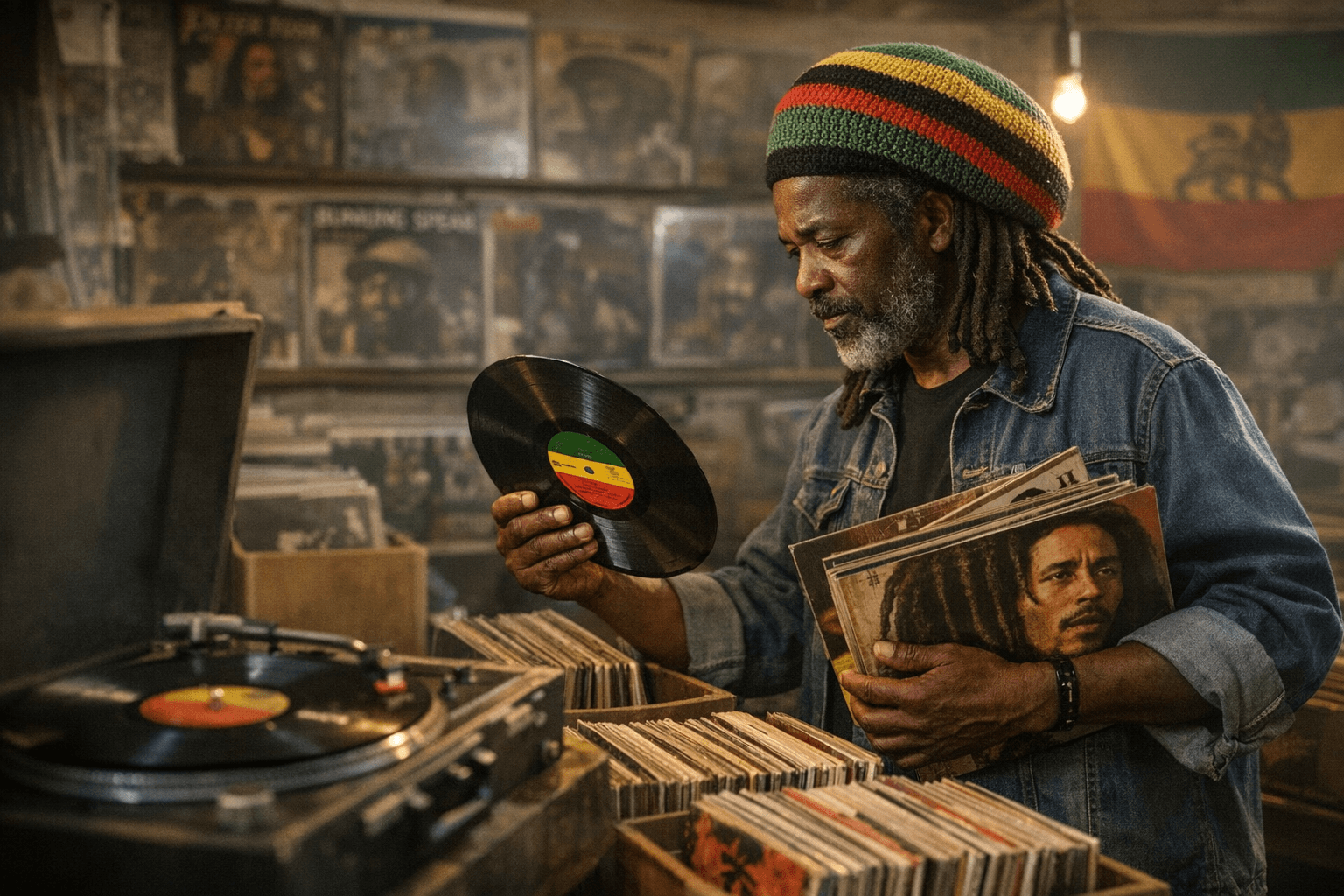
Cleaning, restoration, and storage protect sound and resale value. Start with a dry brush to remove dust, use vinyl specific cleaners and a distilled water rinse for gentle cleaning, and consider a record cleaning machine for dirty or valuable discs. Store records upright in anti static inner sleeves inside sturdy outer sleeves, and control temperature and humidity to prevent warping and sleeve mold.
Buying channels include specialist record stores, trusted online marketplaces with strong seller feedback, record fairs, and direct collector networks. Research catalogue numbers, compare pressings, and request close up photos before committing. For new collectors the practical path is clear. Decide a format focus, learn to grade and verify provenance, maintain records with proper cleaning and storage, and build a listening list that spans ska, roots, dub, and dancehall to create a historically informed and enjoyable collection.
Know something we missed? Have a correction or additional information?
Submit a Tip