A Simple Gesture Redistributes Surplus Food to 38+ Partners, Shapes Donor SOPs
A Simple Gesture redistributes surplus food to 38+ nonprofit partners in Guilford County and helped shape donor SOPs to reduce barriers and expand cold-storage and fresh-food capacity.
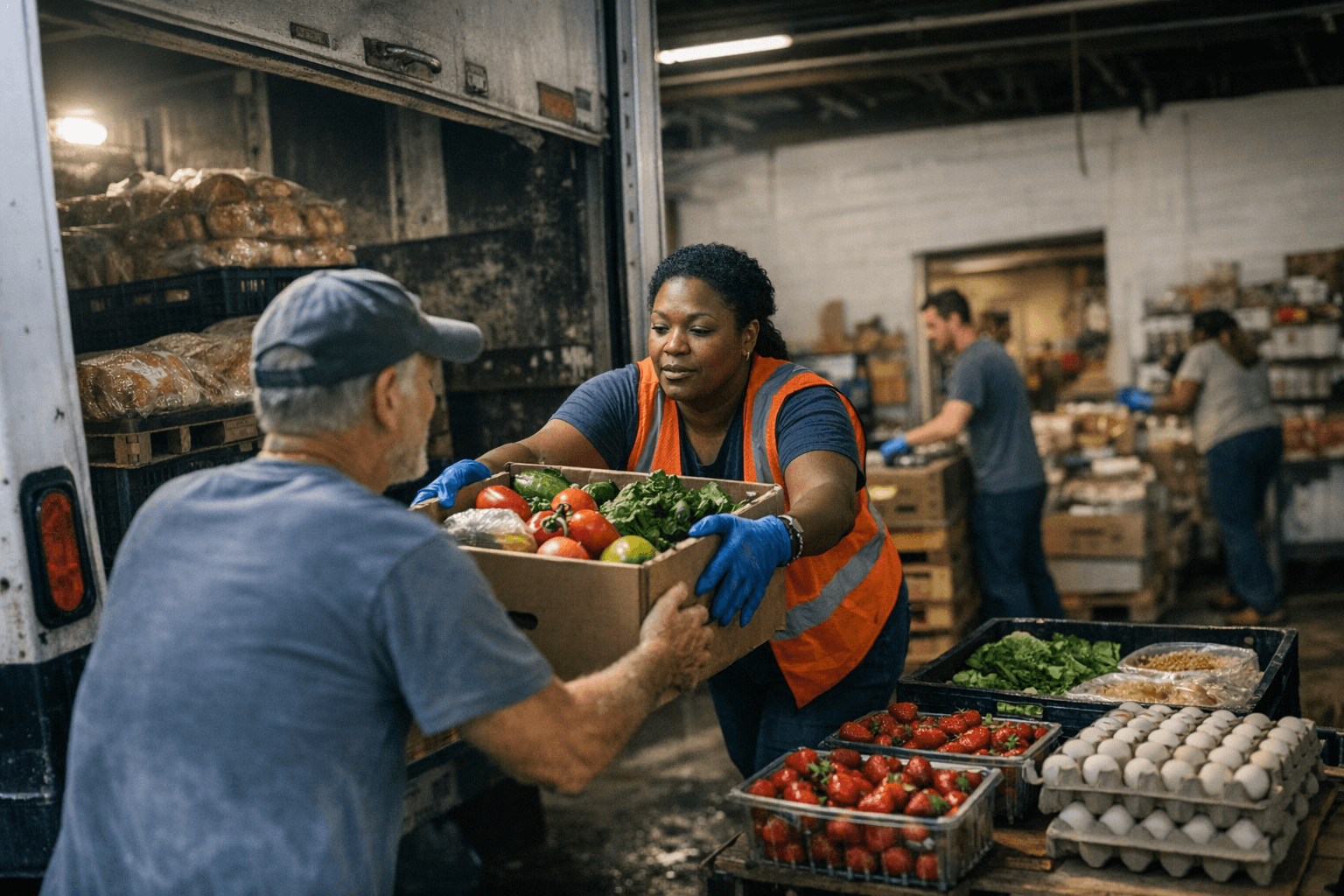
A Simple Gesture is moving excess wholesome food from food-industry businesses into 38+ vetted nonprofit partners across Guilford County, a model that both feeds people and reduces waste while reshaping how food donors operate. The organization prioritizes keeping food at its highest value by directing fresh and perishable items to agencies that can serve them immediately, and by building partner capacity to handle more refrigerated goods.
A Simple Gesture partners directly with restaurants, grocery stores, and other food-industry donors to recover surplus food that would otherwise be discarded. The nonprofit sorts and redistributes bulk donations to a network of vetted agencies including food pantries, meal programs, and shelters. That specificity matters to workers at donor sites and receiving organizations: donor staff face fewer logistical hurdles when donations go to predetermined, trained partners, and partner agency staff and volunteers receive more usable, nutritious food that fits client needs.
The program’s operational practices have influenced county and state-level standard operating procedures intended to lower barriers for food donors. By documenting pickup workflows, labeling protocols, and safety checks, A Simple Gesture has provided templates that reduce paperwork and uncertainty for donor employees who previously hesitated to donate surplus food. Those changes can shorten training time for frontline employees and shift liability concerns into routine steps, allowing kitchen and store staff to reallocate time to core tasks rather than donation logistics.
A Simple Gesture is also emphasizing cold-storage and fresh-food capacity among partner agencies. Expanding refrigerated storage and bolstering the cold chain enables partners to accept and distribute more perishable items, which increases food quality for service recipients but also changes day-to-day operations for receiving sites. Agencies that add cold storage must adjust staffing schedules, inventory practices, and volunteer training to manage rotation, temperature monitoring, and safe distribution.
For workers, the program means more predictable donation interactions and a potential increase in demand for roles focused on food handling, inventory control, and logistics. For donor-company managers, clearer SOPs can simplify compliance and reduce perceived risk around giveaways. For nonprofit staff and volunteers, higher-value donations require additional handling know-how but yield better client outcomes.
A Simple Gesture’s approach blends on-the-ground redistribution with practical processes that lower barriers for donors and raise the standard of fresh, nutritious food available through community partners. As the network grows, employees across the food system should expect evolving workflows, new training needs, and expanded cold-chain jobs that make food recovery a more routine part of industry and agency operations.
Know something we missed? Have a correction or additional information?
Submit a Tip