A Son's Grief Led Him to Rediscover a Forgotten Singer-Songwriter
After finding a single forgotten record at his father's deathbed, American producer Joshua Henry spent years tracking down English singer-songwriter Bill Fay.
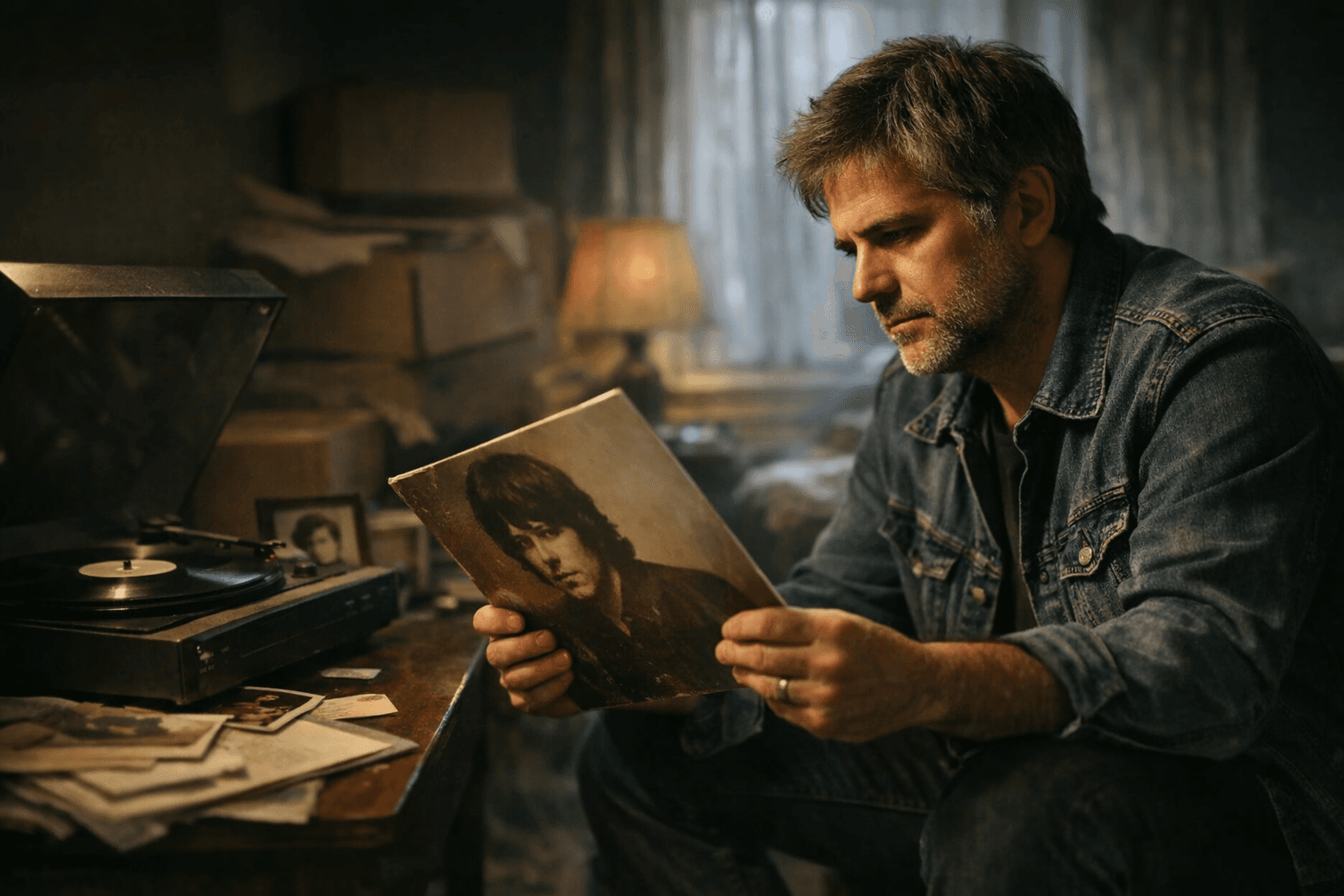
Joshua Henry was keeping vigil at his dying father's bedside when he came across a lone record by an English singer-songwriter named Bill Fay. The songs became a thread connecting father, Jamie, and son through those final weeks; after Jamie died, Henry, an American music producer, turned that private solace into a mission: find the man behind the music.
That search, and everything that grew from it, became the subject of a two-part BBC World Service feature released April 7, 2026, on the long-running program Outlook. Presented by Jo Fidgen and produced by Edgar Maddicott and June Christie, the episodes trace Henry's painstaking detective work to locate Fay, an English singer-songwriter whose records had gone out of print and whose name had largely disappeared from public memory.
Fay, it turned out, had never stopped writing and recording. He had simply done so in private, accumulating a trove of unreleased material over decades while the wider world moved on without him. When Henry finally reached him, the relationship between the two men deepened into something resembling a second father-son bond, and eventually into a creative collaboration that brought Fay's home recordings and new studio work into the open.
The Outlook package, billed as "I found the singer the world forgot," draws on archival audio, interviews, and reported scenes from both the U.K. and the U.S. to build the case that Fay's decades of silence represented a genuine cultural loss. The feature asks pointed questions about how many artists share a similar fate, and how much of any era's musical culture depends on institutional neglect or the accident of a single surviving record rather than deliberate preservation.
Henry's story reframes grief as a kind of archival instinct: the impulse, born from loss, to ensure that what mattered to the dead is not also lost. For Fay, the rediscovery offered something more immediate: an audience for music that had been sitting, unheard, for years.
This article was produced by Prism’s automated news system from verified source data, official records, and press releases, then run through automated quality and moderation checks before publishing. The system is built and supervised by the people who set the standards it runs under. Read our full AI policy.
Did this article answer your question?