A year after glacier collapse, Blatten residents rebuild in the Alps
A hotel built in 105 days now anchors Blatten's recovery, as 300 evacuees face a village plan shadowed by red-zone maps and a missing resident.

The new Hotel Momentum rises above the Lötschental valley as a stark marker of what rebuilding means in Blatten: not just clearing debris, but deciding whether a village can endure after 90% of it was wiped away. Built in just 105 days near Wiler, the hotel has become a refuge and a symbol for residents who were evacuated before the Birch Glacier collapse and then had to begin again with little more than what they could carry.
Its reception carries a message that captures the mood in the valley: “the past is gone, the future is not yet here and life is in the present.” That is the reality for many in Blatten, where authorities had moved more than 300 residents out before the collapse on May 28, 2025, but a 64-year-old man remained missing afterward. The disaster came when about 10 million tonnes of rock from the failing Kleines Nesthorn mountain flank crashed onto the Birch Glacier, setting off a rock, soil and ice avalanche that surged roughly 2.5 kilometers down the valley and climbed as high as 240 meters up the opposite wall.
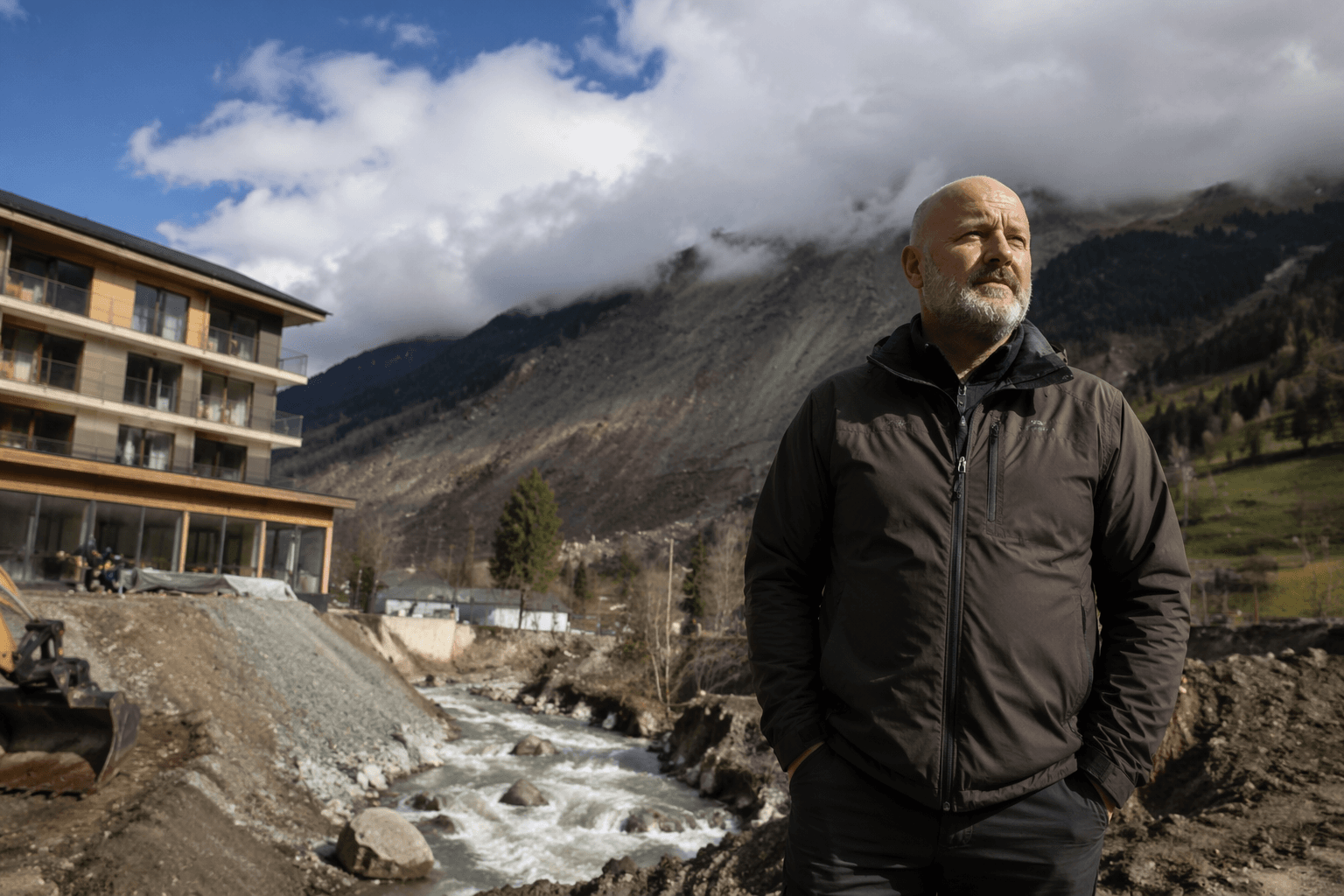
Scientists had been watching the glacier for decades because of earlier damaging avalanches in the 1990s. Just before the collapse, NASA said the glacier was moving at about 10 meters per day, an extraordinary pace that underscored how unstable the slope had become. By the time the debris stopped, officials estimated that about 90% of the village had been destroyed, leaving rooftops submerged in gray rubble and forcing Blatten to confront a future shaped by thawing permafrost and a warming Alpine climate.
For hotel owner Lukas Kalbermatten, rebuilding has been both personal and practical. He lost his family’s Hotel Edelweiss and his home, but after evacuating safely he helped open Hotel Momentum with another Blatten owner. The new business stands in for the wider reconstruction effort: at a public meeting in Wiler on June 12, 2025, authorities laid out a plan to rebuild over the next three to five years, with Eisten and Weissenried considered as part of a possible “New Blatten.”
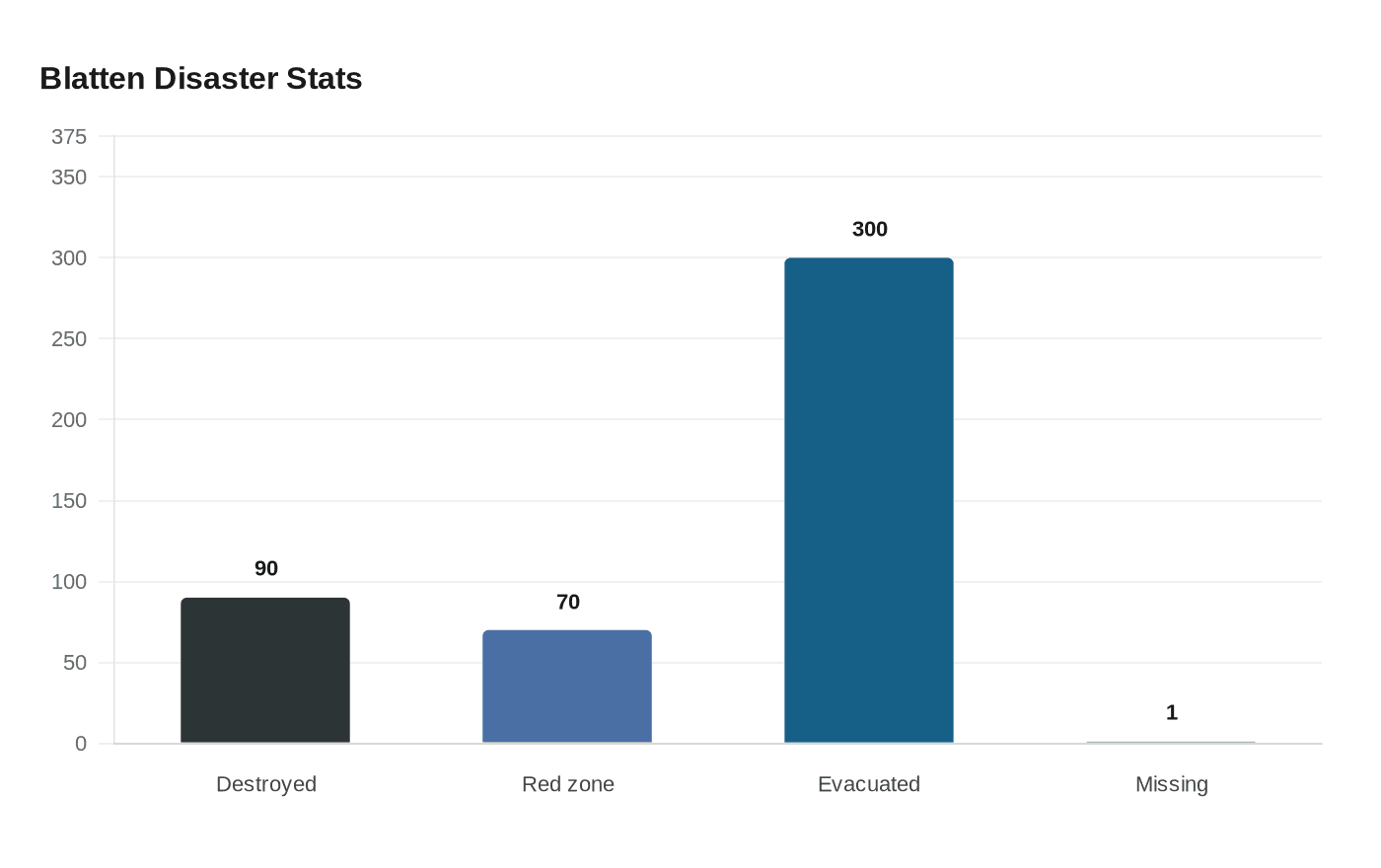
That promise now sits alongside hard limits. By November 2025, Canton Valais said 70% of the municipality lay in the highest-risk red zone, where construction is no longer allowed, and the hamlet of Ried would not be rebuilt. Swiss authorities said the reconstruction plan covers housing, infrastructure, mobility, spatial planning, environmental protection, and support for residents and businesses. In Blatten, rebuilding has become a test of whether alpine life can remain in place when the mountain itself is no longer stable.
This article was produced by Prism’s automated news system from verified source data, official records, and press releases, then run through automated quality and moderation checks before publishing. The system is built and supervised by the people who set the standards it runs under. Read our full AI policy.
Know something we missed? Have a correction or additional information?
Submit a Tip&w=1920&q=75)