AARP Report Finds Family Caregiving Tops $1 Trillion in Annual Value
The unpaid labor of 59 million family caregivers reached $1.01 trillion in 2026 — more than the U.S. spent on Medicaid or private-sector health care combined.
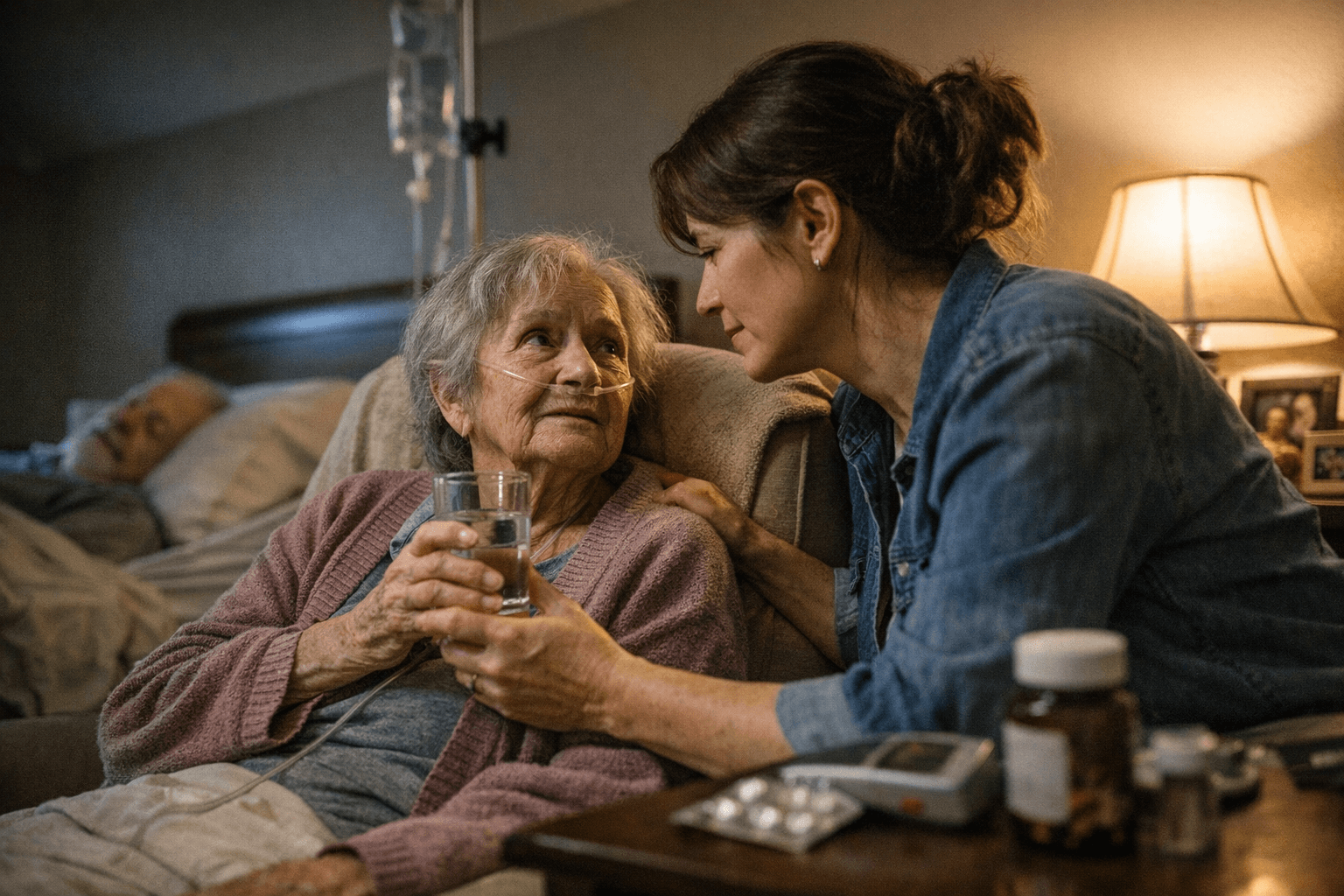
An invisible workforce across the country dedicates their time, energy and spirit to their work, usually without pay." Those are family caregivers, and their contribution to the U.S. economy exceeded $1 trillion in economic value in 2024, according to a new report from the AARP Public Policy Institute.
At $1.01 trillion annually, family caregivers represent a major economic force. "Family caregivers are holding up a system that millions of Americans rely on every day," said Dr. Myechia Minter-Jordan, CEO of AARP. "With the economic value of family caregiving now exceeding $1 trillion annually, it is clear that employers, health care providers, and policymakers must do more to recognize and support them."
To understand the scale: the estimated economic value of family care surpasses the $967 billion that private businesses spent on health care in 2024 and exceeds the $932 billion spent on Medicaid that year. Put differently, "if family caregiving were counted as a formal work sector, it would rank among the largest and most valuable labor forces in the domestic economy."
The report, "Valuing the Invaluable 2026," found that the 59 million family caregivers in the U.S., who are caring for adults, provided 49.5 billion hours of care, equaling work done by 23.8 million full-time workers, or about 17 percent of the nation's full-time workers. The average value of one caregiving hour rose from $16.59 to $20.41 in 2024, reflecting higher home care costs, direct care wages and minimum wage hikes. That per-hour figure is not uniform across the country: the estimated value of caregiving ranges from $14.12 per hour in Louisiana to $27.05 per hour in Washington, reflecting regional differences in wages and the cost of care.
The demands on those caregivers have intensified in recent years. Family caregivers are spending more time providing care, averaging 27 hours each week, and more than half, 57 percent, now provide high-intensity care, meaning they spend more hours helping with daily tasks like bathing and dressing, as well as complex medical tasks. Yet many caregivers go unpaid and often have to leave full-time jobs to care for aging relatives or loved ones.
The gender divide in who shoulders this burden is sharp. The National Partnership for Women and Families, in a blog post by Katherine Gallagher Robbins and Jessica Mason, framed the issue directly: women are doing two-thirds of the nation's unpaid caregiving work, labor that is "frequently seen as not having real value even though it is essential to the sustainability and well-being of families."
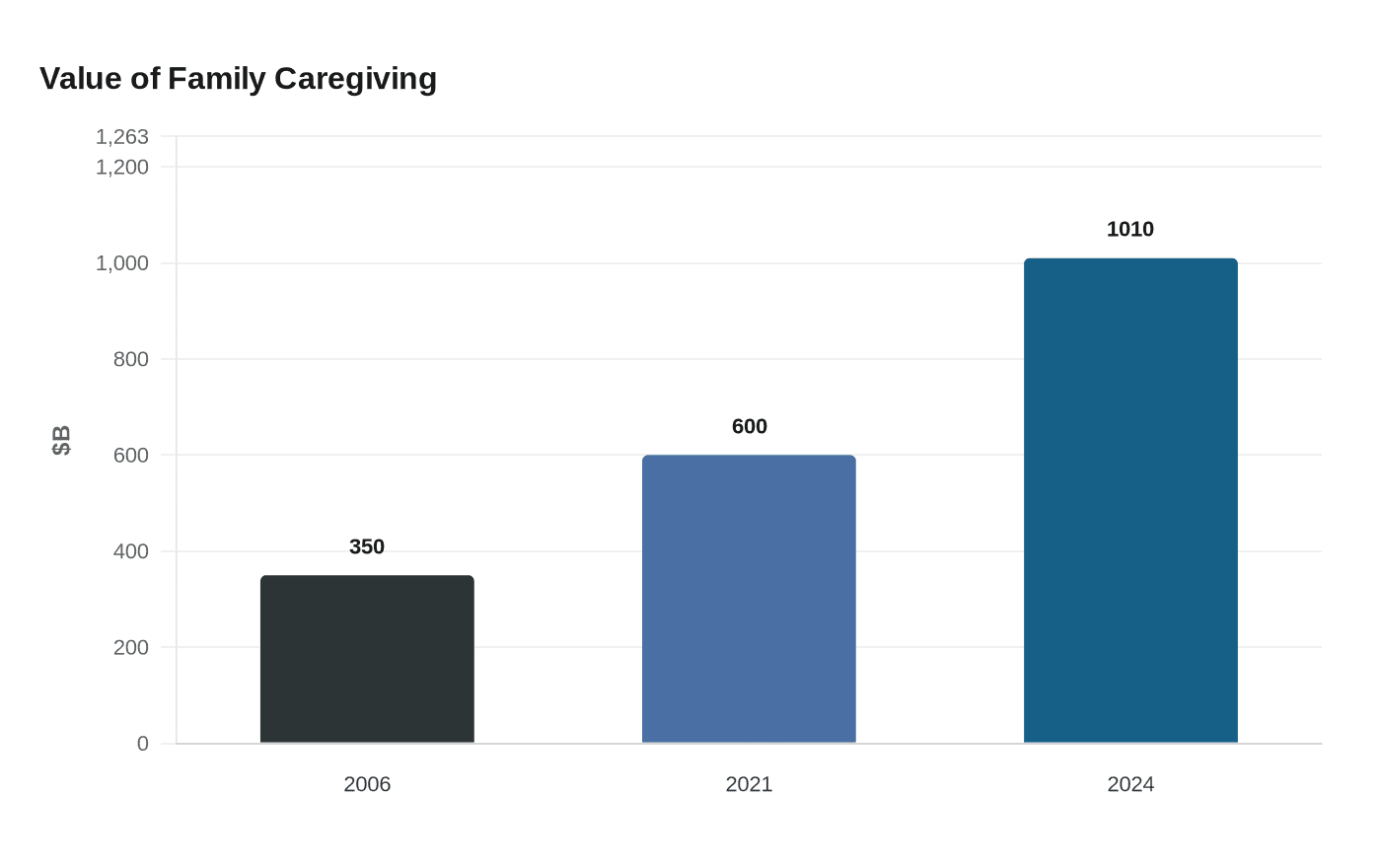
The Valuing the Invaluable series, now in its twentieth year, puts the growth of this economic contribution into stark relief. The first report in the series, issued every two to four years, estimated the economic value of caregiving at $350 billion in unpaid care in 2006. In 2021, that figure stood at approximately $600 billion, based on about 38 million caregivers providing an average of 18 hours of care per week, at an average value of $16.59 per hour. The jump to $1.01 trillion over three years reflects both a larger caregiver population and sharply higher hourly valuations.
In 2026, 12 states have considered legislation to provide caregiver tax credits, according to AARP. At the federal level, the bipartisan Credit for Caring Act calls for a $5,000 tax credit for families to offset caregiving expenses, while the Lowering Costs for Caregivers Act would let caregivers use health savings or flexible spending accounts for qualified medical expenses on behalf of parents or parents-in-law. Both bills have been with the House Ways and Means Committee since early 2025.
Valuing the Invaluable 2026 draws on data from "Caregiving in the U.S. 2025," a joint report from AARP and the National Alliance for Caregiving. "Behind every data point in our report is a person, a daughter, a husband, a grandchild, a neighbor," said Nancy LeaMond, chief advocacy and engagement officer at AARP. "They deserve some financial relief.
This article was produced by Prism’s automated news system from verified source data, official records, and press releases, then run through automated quality and moderation checks before publishing. The system is built and supervised by the people who set the standards it runs under. Read our full AI policy.
Did this article answer your question?