AbbVie to invest $380 million in North Chicago for two AI-enabled API plants
AbbVie will spend $380 million to build two AI-integrated API facilities at its North Chicago campus, promising about 300 jobs and broader reshoring of drug production.
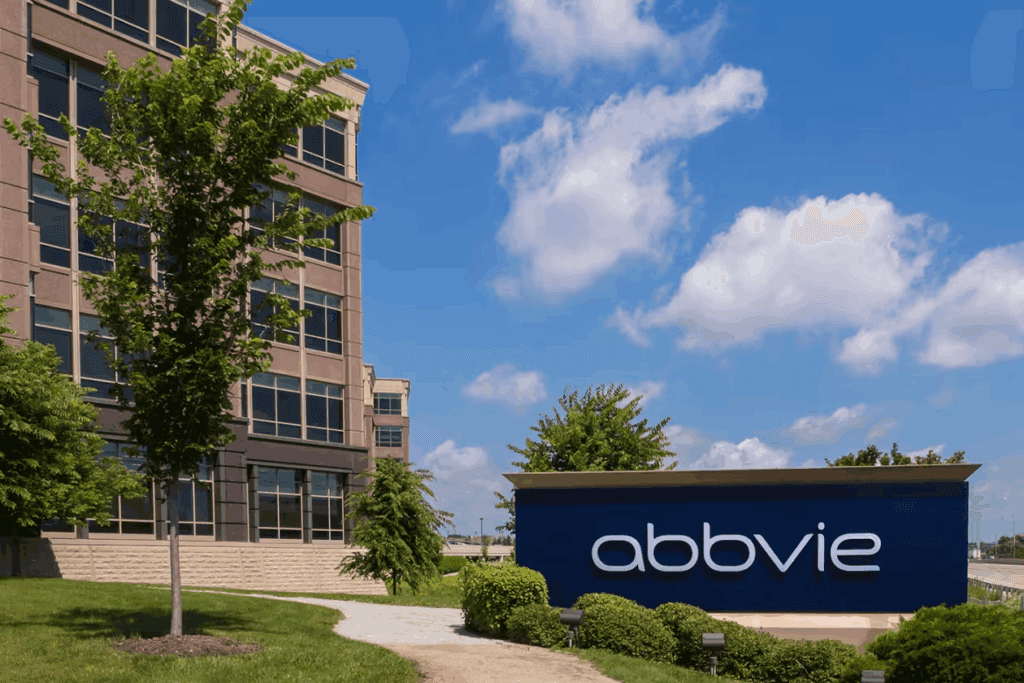
AbbVie will invest $380 million to build two active pharmaceutical ingredient manufacturing facilities at its North Chicago campus, creating roughly 300 jobs, the company said Feb. 23. Construction is set to begin in spring 2026 and both plants are expected to be fully operational in 2029, officials said.
The facilities are described by AbbVie as state-of-the-art operations that will "integrate advanced manufacturing technologies with artificial intelligence" to support production of next-generation neuroscience and obesity medicines. Robert A. Michael, AbbVie’s chairman and chief executive officer, framed the expansion as part of a broader capital strategy: "This milestone demonstrates further progress against our $100 billion commitment to U.S. R&D and capital investments over the next decade. By strengthening our U.S. manufacturing capabilities, we are well-positioned to support our investment in innovation and enhance our ability to deliver next-generation medicines to patients."
State economic development officials greeted the announcement as a local win. The Illinois Department of Commerce and Economic Opportunity said the $380 million addition brings AbbVie’s published North Chicago investments to $575 million over the past six months, counting a $195 million chemical synthesis facility the company broke ground on in September 2025 that added about 50 jobs. Kristin Richards, director of the DCEO, said, "By leveraging our economic development tools, the State of Illinois is supporting AbbVie in their efforts to expand advanced manufacturing, create hundreds of quality jobs, and keep Illinois at the forefront of innovation in next-generation medicines." Governor J.B. Pritzker also lauded the move for strengthening Illinois’ biomanufacturing profile.
Policy and economic implications of the project are immediate. The investment is a notable instance of pharmaceutical capacity being built or returned to U.S. soil at a time when federal and state policymakers are prioritizing supply-chain resilience and domestic production of critical medicines. The earlier $195 million chemical synthesis facility was explicitly pitched as a way to return selected API production from Europe and Asia to the United States, signaling a targeted reshoring strategy across AbbVie’s pipeline.
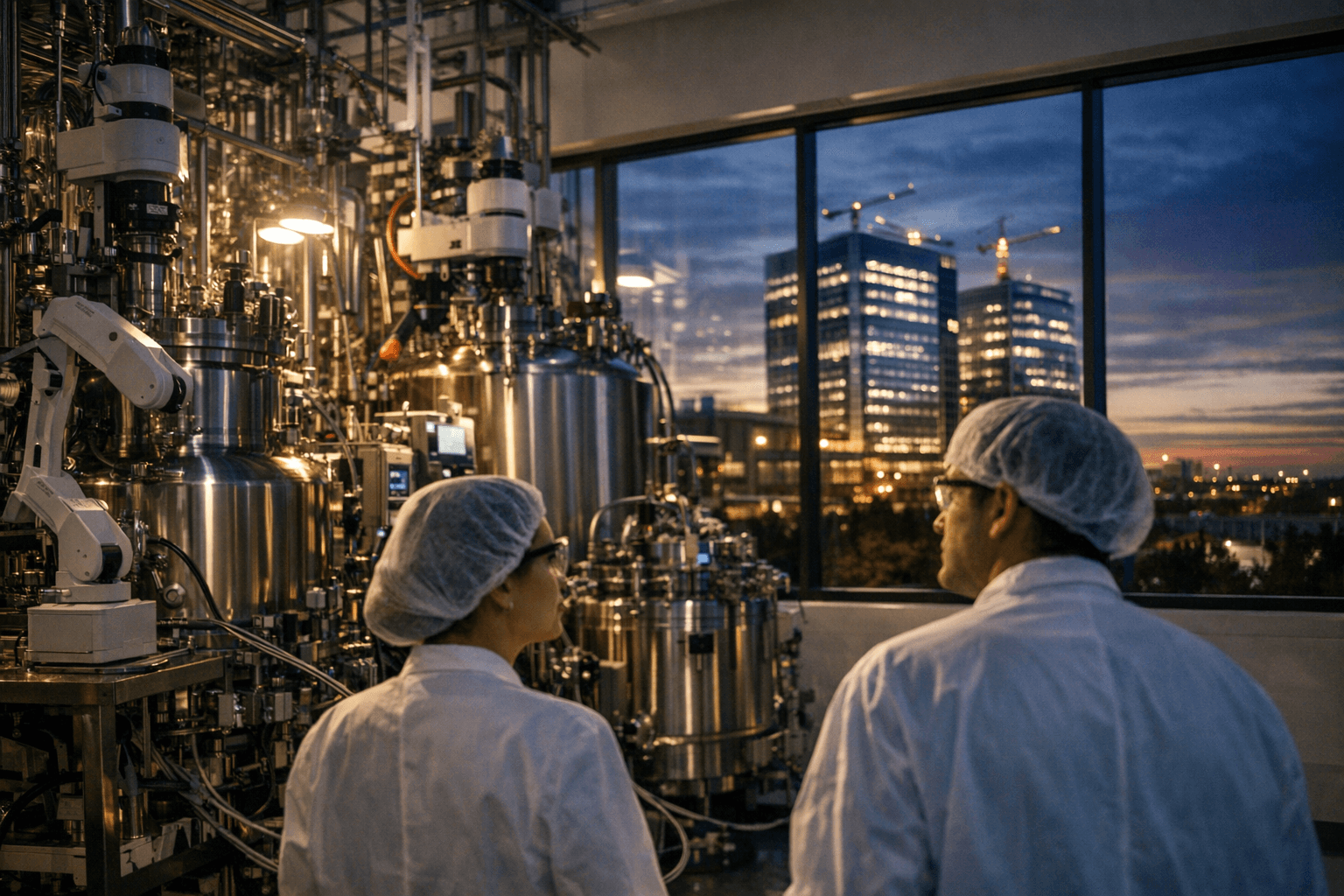
The technology claim raises follow-up questions for regulators and local stakeholders. AbbVie’s materials identify the plants as AI-enabled but do not specify vendors, platforms, or whether the sites will use continuous manufacturing or batch processes. Those technical details affect regulatory oversight, workforce needs, and local permitting. AbbVie has said it will hire engineers, scientists, manufacturing operators and laboratory technicians; the Illinois release characterizes the 300 positions as new full-time jobs. Local workforce-development partners will likely be called on to supply trained technicians and engineers as construction moves forward.
The announcement also highlights the role of state economic tools. Illinois credits its incentives and infrastructure in attracting the work, but the public statements do not list any specific tax credits or grant amounts tied to the project. Transparency about incentives, environmental permitting, and timelines will matter for elected officials and residents evaluating the net public benefit.
AbbVie’s expansion adds scale to ongoing U.S. investment in drug manufacturing, and it places questions about corporate commitments and public oversight in plain view. The company’s cited $100 billion pledge to U.S. R&D and capital investment, and earlier reports of other multi-billion-dollar pledges, merit clarification from AbbVie on scope and overlap. As construction begins in spring 2026, state and company officials will face scrutiny over hiring, technology disclosures, permitting, and the actual impact on local supply chains and workforce development.
This article was produced by Prism’s automated news system from verified source data, official records, and press releases, then run through automated quality and moderation checks before publishing. The system is built and supervised by the people who set the standards it runs under. Read our full AI policy.
Did this article answer your question?

