About 100 Kaiser Volunteers Restore Haleolono Fishpond and Pu‘uwa‘awa‘a Forest
About 100 Kaiser Permanente volunteers restored Haleolono fishpond and worked in Pu‘uwa‘awa‘a Forest on Jan. 19, helping protect cultural sites and fragile ecosystems that support community health and resilience.
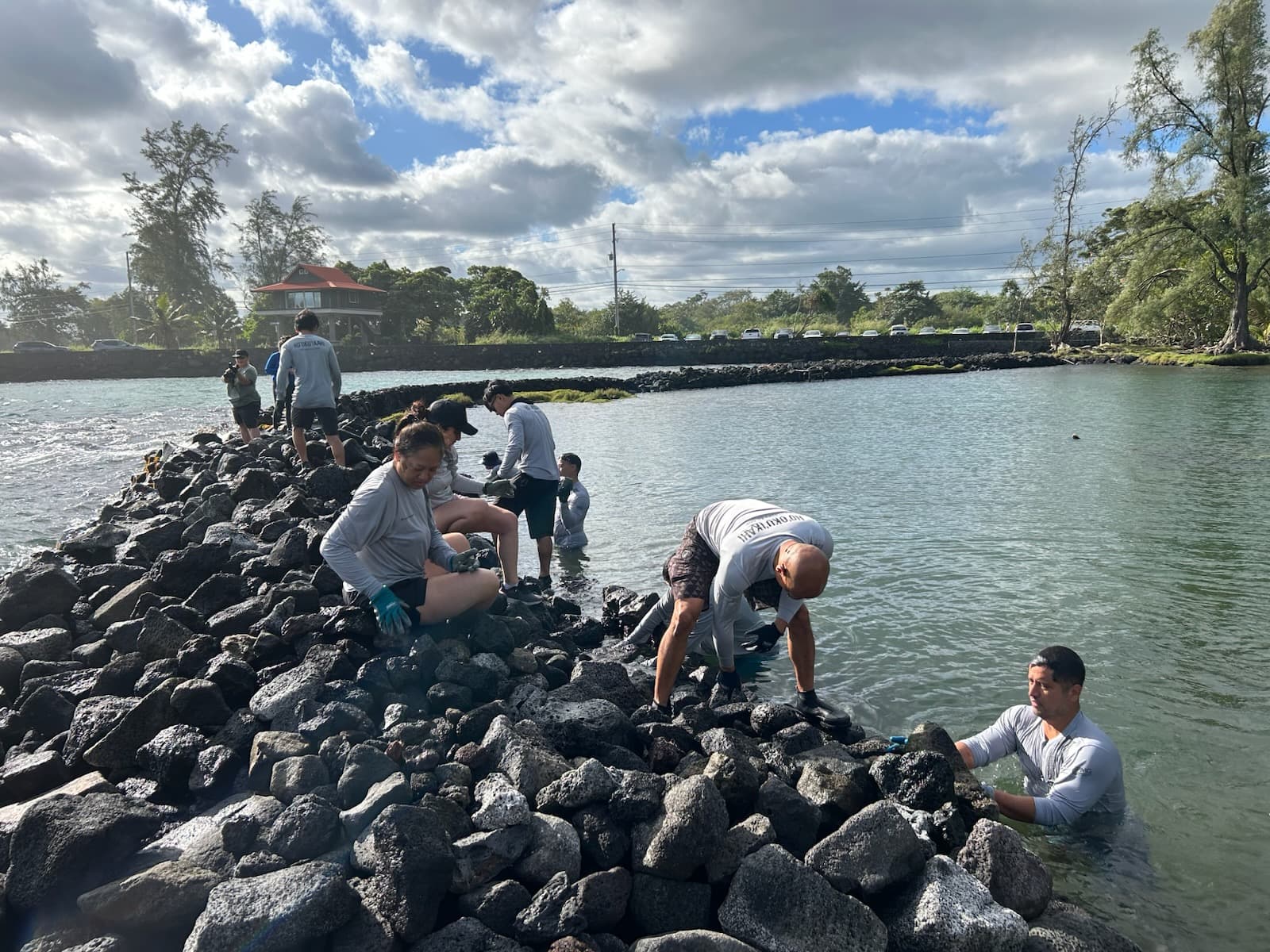
About 100 Kaiser Permanente physicians, providers, nurses, staff and family members spent Jan. 19 restoring two crucial natural and cultural sites on Hawai‘i Island as part of the 2026 Kaiser Permanente Hawai‘i Annual Day of Service in recognition of Martin Luther King Jr. Day. The island projects addressed coastal restoration and dryland forest recovery, aligning volunteer labor with long-term stewardship needs.
On the Hilo side, volunteers returned for an eighth consecutive year to Haleolono fishpond at Kamokuna in Honohononui. Working alongside the Edith Kanaka‘ole Foundation, teams removed invasive plants and repaired sections of the historic fishpond wall. Haleolono is an important cultural and ecological resource for the community; rebuilding and maintaining pond infrastructure supports traditional aquaculture practices, shoreline stability and habitat for native species.
In North Kona, Kaiser Permanente volunteers partnered with the Akaka Foundation for Tropical Forests and the Department of Land and Natural Resources’ Division of Forestry and Wildlife at Pu‘uwa‘awa‘a Forest Reserve. The group focused on restoring a rare dryland forest ecosystem through planting native species, collecting seeds and clearing invasive weeds and vines. Those actions help re-establish native plant cover that supports soil retention, pollinators and long-term forest recovery in a climate-stressed region.
The Hawai‘i Permanente Medical Group has hosted an annual Day of Service since its 50th anniversary in 2010. The Hawai‘i Island projects were part of a coordinated statewide effort that mobilized more than 1,000 Kaiser Permanente Hawai‘i physicians, providers, nurses, staff, family members and community partners volunteering simultaneously across the state. The scale of participation underscores a growing trend among health systems to engage directly in community-level environmental and cultural restoration as part of broader public health commitments.
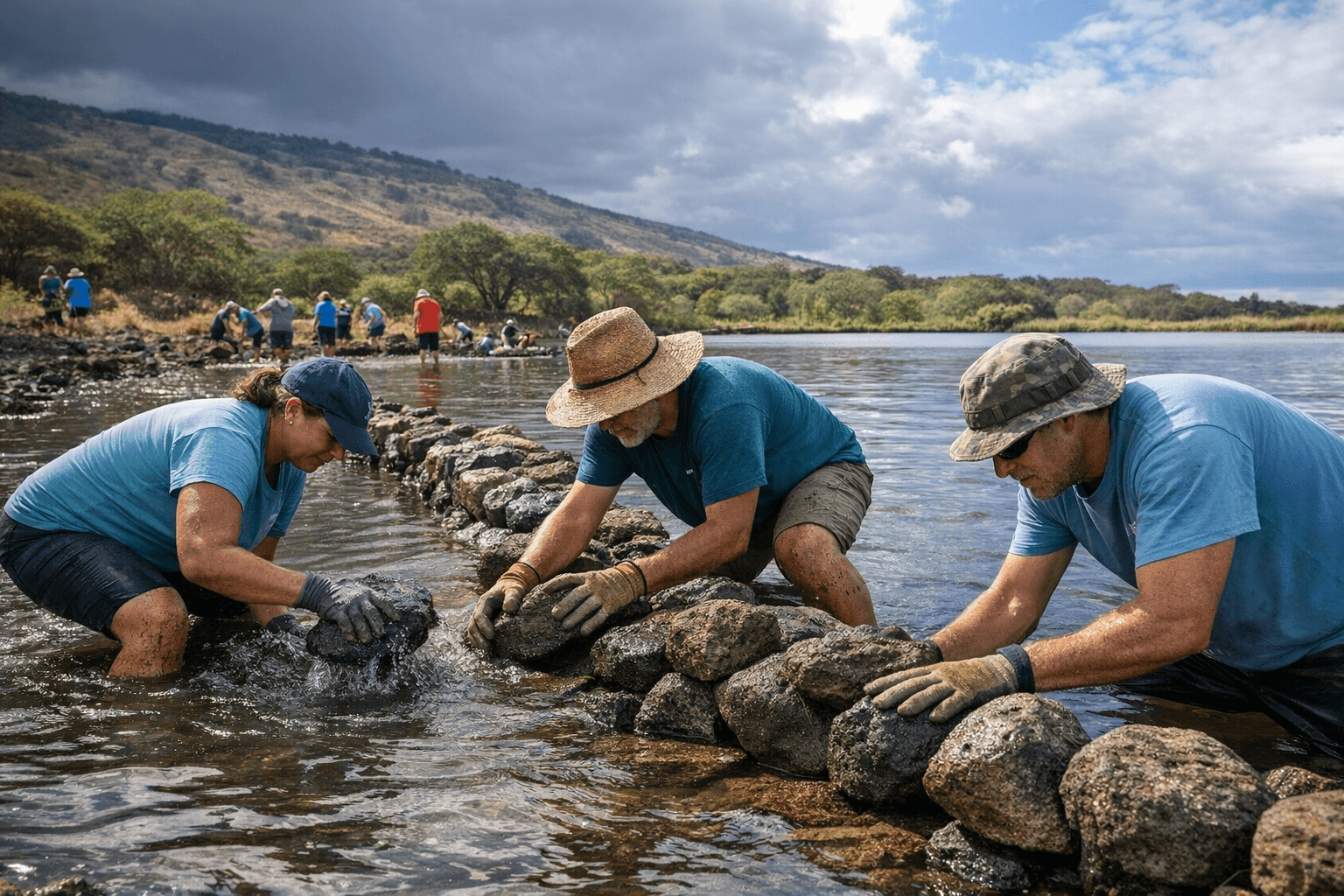
Restoration work at Haleolono and Pu‘uwa‘awa‘a matters to Big Island residents because healthy ecosystems support basic determinants of health: clean water, local food sources and protection from coastal erosion and invasive species. Repairing the fishpond wall and planting natives in dryland forests are investments in community resilience against climate impacts, and they reinforce cultural continuity for hālau, kupuna and others who rely on these living resources.
Sustained volunteer efforts like this one create connections between health care institutions and local stewardship networks, shifting some institutional resources toward addressing upstream drivers of health inequities. For readers, the work completed Jan. 19 represents both tangible improvements to local habitats and a reminder that ongoing maintenance and community partnerships will be necessary to preserve these systems for future generations.
Sources:
Know something we missed? Have a correction or additional information?
Submit a Tip