Accra braces for more rain after deadly flooding
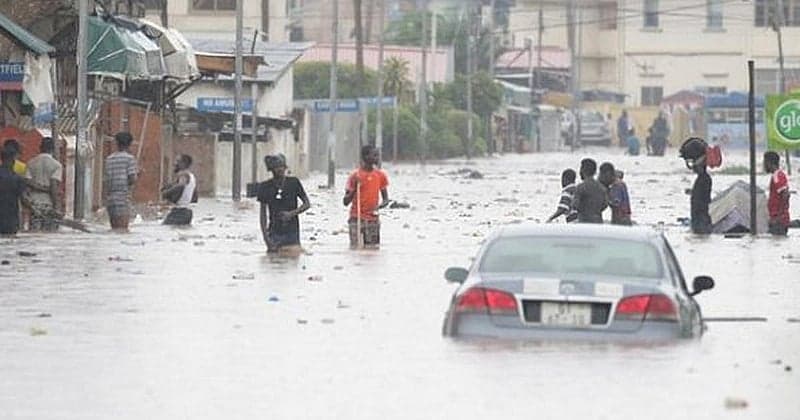
Accra faced another night of rain after floodwaters entered homes and shops, leaving roads blocked and damage still being assessed.

Rain was expected to intensify across Accra and nearby communities from Monday evening into Tuesday, with the Ghana Meteorological Agency warning of another spell early Tuesday morning after hours of heavy rainfall already flooded major roads and disrupted transport. Officials told motorists to stay off submerged roads and urged people in flood-prone areas to remain cautious.
Low-lying communities woke to floodwaters inside homes and shops, adding to a familiar scene in parts of Greater Accra where drainage failures quickly turn storms into emergencies. Emergency services were still assessing the damage and had not yet released a full casualty count. The National Disaster Management Organisation urged Ghanaians to monitor traditional and social media platforms for timely weather updates and flood warnings as the downpour continued.

Accra’s drainage system, rapid urban expansion and blocked waterways choked by improper waste disposal have repeatedly left neighborhoods exposed when heavy rain arrives, especially in districts where construction has spread across natural runoff routes and drains have not kept pace with development. Prof. Chris Gordon said flooding in places such as Oyarifa was predictable because rapid urban development had pushed onto former farmland and forest areas.
The warning came only weeks after heavy rains in May 2026 submerged homes and roads across Greater Accra, including in Alajo. NADMO said that flooding killed five people and affected more than 3,000 households, with damage also reported in Weija, Kaneshie, Adabraka, Adentan-Dodowa and parts of Tema.
The city’s deadliest flood remains the June 3, 2015 disaster, when torrential rain and an explosion near the GOIL fuel station at Kwame Nkrumah Circle killed more than 150 people. Patrick Yaw Boamah called for sustained investment in drainage infrastructure, stronger planning and a change in public attitudes toward sanitation.
This article was produced by Prism’s automated news system from verified source data, official records, and press releases, then run through automated quality and moderation checks before publishing. The system is built and supervised by the people who set the standards it runs under. Read our full AI policy.
Did this article answer your question?


