Acoustic fire suppression goes commercial as startup demos AI flame control
A grease fire vanished in seconds under infrasound waves, but the technology still faces certification, code, and scaling hurdles.
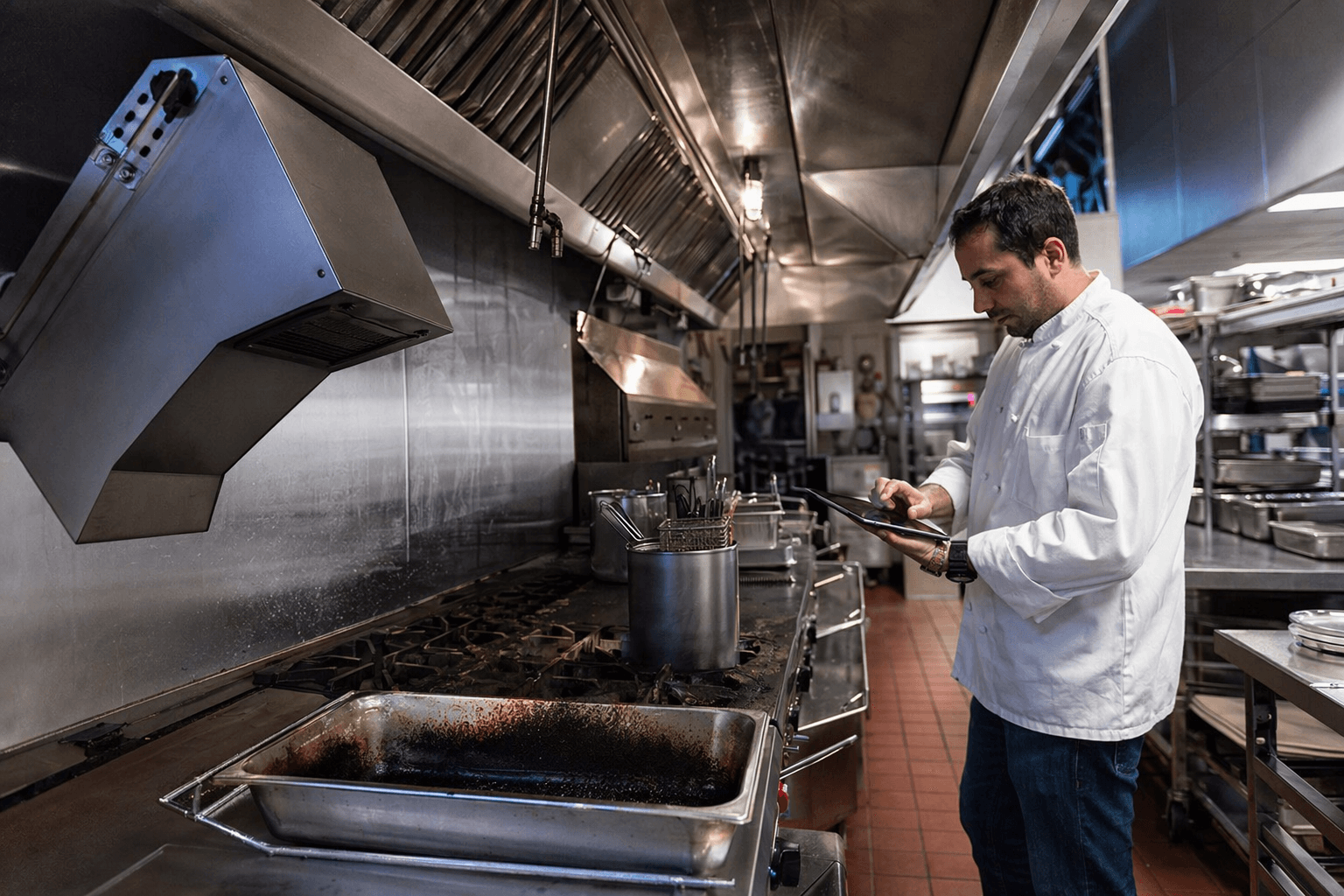
A kitchen grease fire in Concord, California, went out in seconds after a startup’s AI-driven sensor triggered wall emitters that blasted infrasound at the flames. Sonic Fire Tech, a Cleveland-based company, says the demo shows a new path for fire control that uses low-frequency sound instead of water or chemicals.
The company is pushing that idea into the market with $3.5 million in seed funding raised in October 2025, co-led by Khosla Ventures, Third Sphere and AirAngels. Sonic Fire Tech says its system combines patented infrasound suppression with UL-certified IR3 sensors, and that it is aiming at homeowners, public agencies, enterprises, first responders and utilities. The immediate test is not whether the science can create dramatic moments in a demo kitchen, but whether it can survive the slower grind of certification, building codes and real-world failure modes.
The physics behind the concept is not new. DARPA launched its Instant Fire Suppression program in 2008, and a 2012 demonstration showed speakers on either side of a pool fire could extinguish flames with an acoustic field. Later research kept pressing the case. A 2021 Scientific Reports paper found a laminar diffusion propane flame could be extinguished with sound in the 50 to 70 Hz range at 92.0 to 104.1 decibels. A 2024 Scientific Reports study described extinction through transient acoustic streaming, while a 2025 MDPI review said low-frequency sound waves around 40 to 80 Hz can destabilize combustion. The historical lineage reaches back further still, to John Leconte’s 1858 observation that flames responded to beats in music.
The commercial case is clearest in kitchens, where fires are frequent and expensive. The National Fire Protection Association says thousands of fires occur each year in commercial kitchens worldwide. FEMA-cited NFPA research estimates about 5,900 restaurant building fires annually in the United States, with cooking responsible for 59 percent of them, causing about 75 injuries and $172 million in property loss. Separate NFPA research on eating and drinking establishments put the average at 7,410 structure fires a year from 2010 to 2014, with about three civilian deaths, 110 civilian injuries and $165 million in direct property damage annually.
That scale also highlights the barrier. Commercial kitchens are already tightly regulated under NFPA 96, and local codes often require automatic suppression systems for commercial-type cooking equipment. Sprinklers remain the standard baseline for building fire protection, while hood-mounted wet-chemical systems are the established answer for grease fires. Acoustic suppression will have to prove it can match those systems on reliability, code compliance and cost before it can replace them. For now, the technology looks most plausible as a niche tool for controlled kitchen environments, not a universal substitute for conventional fire protection.
This article was produced by Prism’s automated news system from verified source data, official records, and press releases, then run through automated quality and moderation checks before publishing. The system is built and supervised by the people who set the standards it runs under. Read our full AI policy.
Did this article answer your question?