Ouster unveils native color lidar, doubling range and resolution for Physical AI
Ouster says its new REV8 color lidar can double range and resolution, a bid to fold camera-like data into one sensor for robots and vehicles.

Ouster is betting that one sensor can do the work of two. With its REV8 OS family, the company says it has built the world’s first patented native color lidar, a system it claims can deliver up to twice the range and resolution of the previous generation while pulling color information into the same hardware that measures depth.
The pitch goes straight at one of the longest-running questions in autonomy and robotics: whether machines need separate cameras, lidar and radar, or whether a richer lidar can collapse some of that stack. Angus Pacala, Ouster’s chief executive, has described a sensor that can capture depth and image data at once as a long-sought goal. In recent messaging, Ouster has framed lidar as the core component of safety-critical systems, with cameras as the obvious complementary sensor as the company pushes higher up the perception stack.
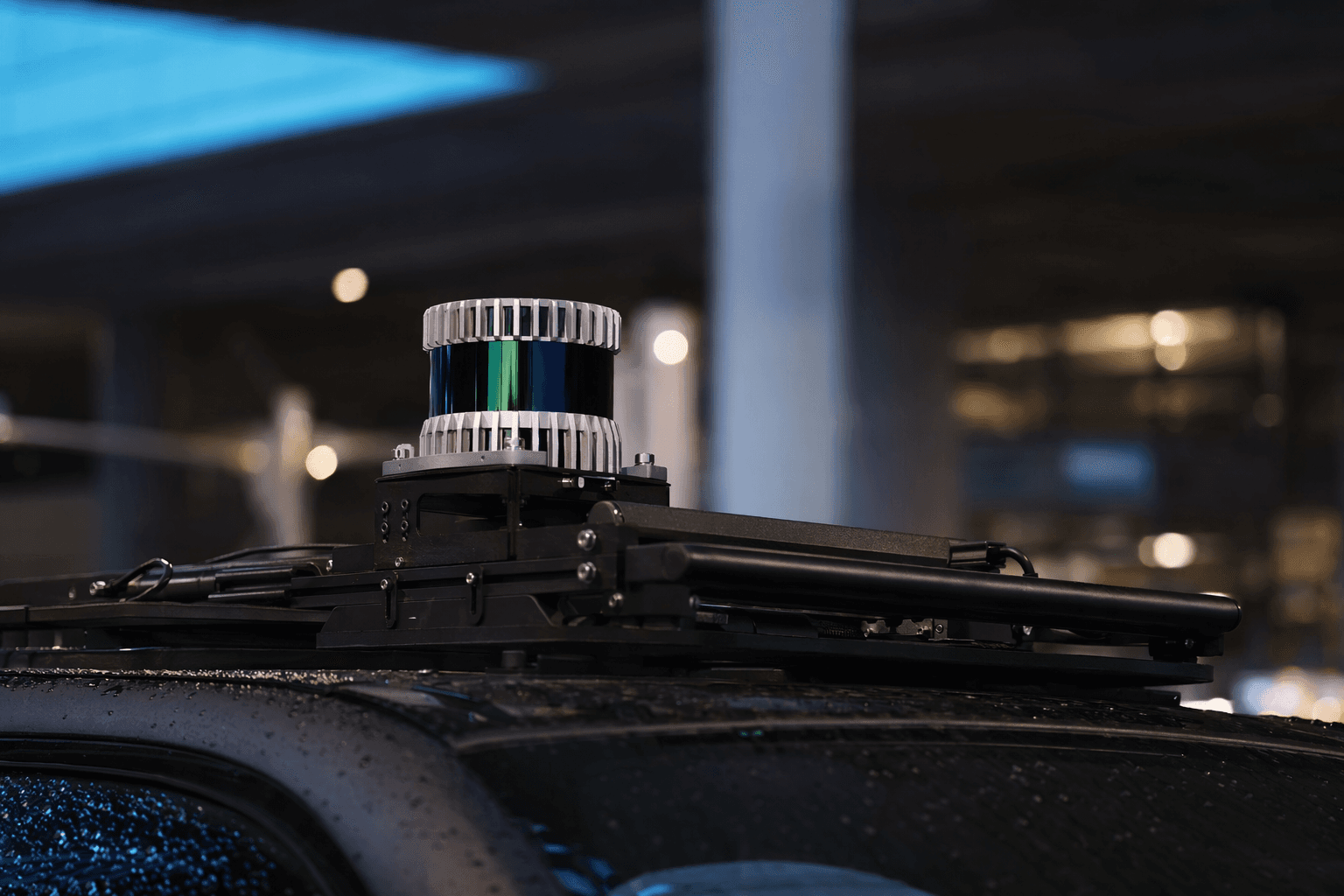
That strategy now extends beyond hardware. Ouster said it acquired StereoLabs on February 4, 2026, and is positioning the combined business as a unified sensing-and-perception platform for Physical AI, covering prototype-to-production use cases in robotics, automotive, industrial systems and smart infrastructure. The company’s argument is not just that lidar can see farther, but that combining lidar with camera-like information could reduce the number of separate sensors, simplify integration and improve reliability in systems that cannot afford blind spots.
The technical bet matters because Ouster is trying to move beyond the familiar lidar argument about range and point clouds. Its current OS1 sensor is listed at 90 meters of range at 10% reflectivity, 200 meters maximum range, 128 channels, 5.2 million points per second and a 20 Hz maximum frame rate. The OS0 is marketed for ultra-wide, short-range perception with a 90-degree vertical field of view. REV8 is meant to push that baseline further, with Ouster saying the new line doubles range and resolution.

There is also a deeper continuity to the claim. Ouster has said it has wanted to bring the best parts of lidars and cameras into one device since at least 2018, and public patent records show work on augmenting panoramic lidar results with color from cameras using a color-pixel lookup table. That history suggests REV8 is the latest step in a long technical line, not a sudden pivot.
The commercial test is tougher. Ouster said in its full-year 2025 results that it shipped more than 25,000 lidar sensors, generated $169 million in revenue and ended the year with $211 million in cash, cash equivalents, restricted cash and short-term investments. Those figures show a company with real traction, but also one still trying to prove that color lidar is more than a clever feature. It may outperform cameras where depth, low-light performance and safety are paramount. In mass-market deployment, though, it still has to clear the hardest hurdle in hardware: convincing buyers that one smarter sensor is worth reworking the whole system around it.
This article was produced by Prism’s automated news system from verified source data, official records, and press releases, then run through automated quality and moderation checks before publishing. The system is built and supervised by the people who set the standards it runs under. Read our full AI policy.
Did this article answer your question?


