Adams County Senior Council Offers Six Steps to Prevent Older Adult Falls
Adams County Senior Council tells older adults to follow six specific steps—exercise, medical review, medication checks, vision/hearing, home safety and family support—to lower fall risk.
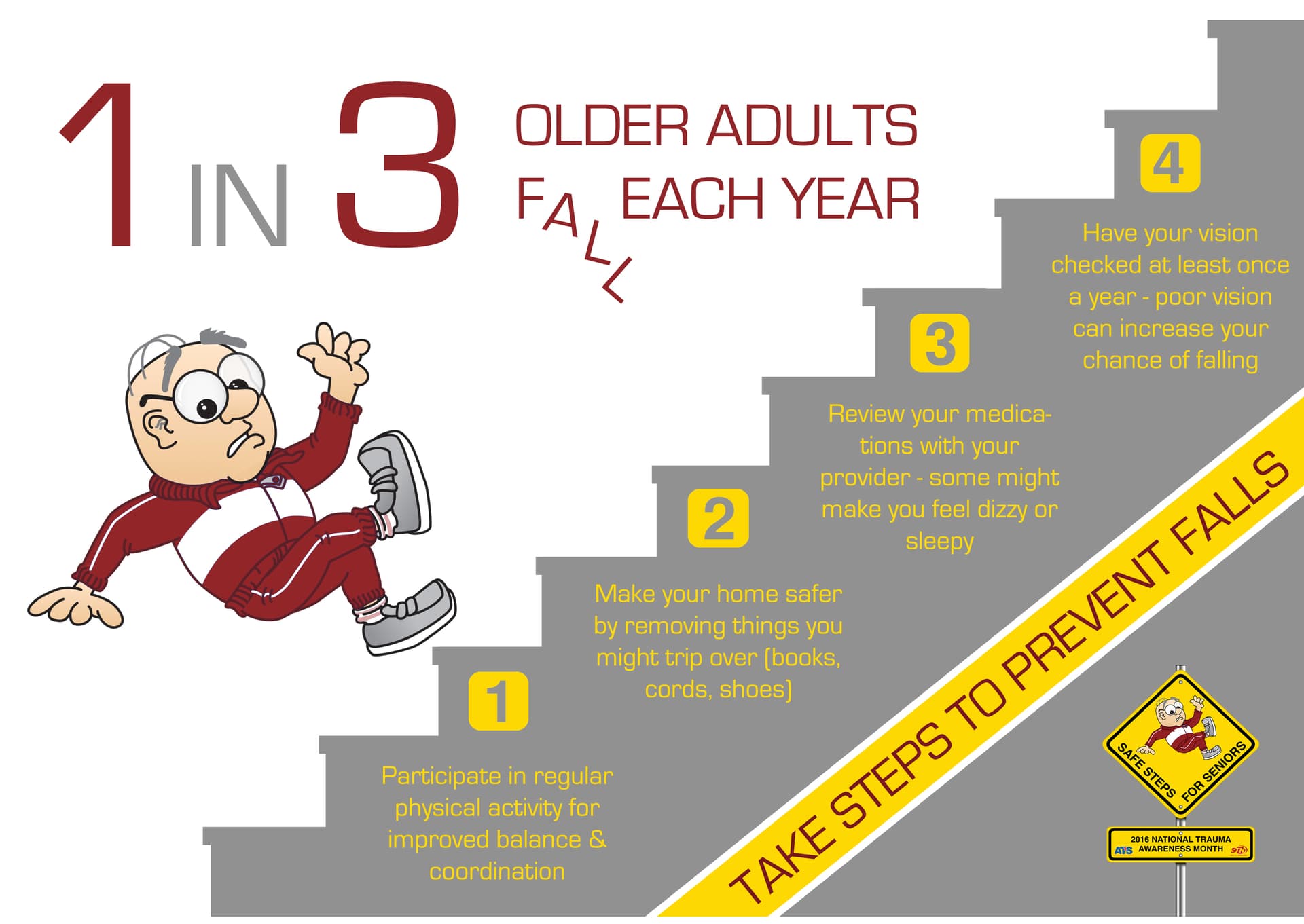
Adams County Senior Council is urging older residents to take six concrete steps to reduce fall risk, in a health‑education item published in the People’s Defender on Feb. 19, 2026. The advisory draws on guidance from national aging authorities and local referral channels, and stresses prevention as a practical public‑health priority for families and providers across the county.
- “Every 11 seconds, an older adult is treated in the emergency room for a fall,” the People’s Defender item states, underscoring a steady emergency‑care burden locally and nationally.
- Fall outcomes add to the strain on health systems: a clinical summary cited by FYZICAL reports that about 3 million older adults are treated in emergency departments for fall‑related injuries each year, with roughly 800,000 hospitalized after a fall—and FYZICAL notes that “one in four Americans ages 65 and above — 29% of seniors — fall each year.” These figures show why prevention reduces both human harm and health‑system costs.
Why this matters
- National groups the Adams County Senior Council cites, such as the National Council on Aging (NCOA), promote evidence‑based classes—A Matter of Balance, Stepping On and Tai Chi—for building strength and balance in older adults. San Diego County’s example programs include “Tai Chi Moving for Better Balance,” showing how counties offer structured classes.
- Clinical providers emphasize early professional assessment: FYZICAL recommends that seniors and families “consult with a physical therapist for a fall‑risk screening” as a first step. A PT evaluates gait, hip and ankle strength, posture and mobility, then prescribes individualized core and lower‑extremity strengthening, balance and flexibility work to reduce recurrent falls.
- Practical local action: contact your Area Agency on Aging to find nearby classes, enroll with a friend to improve adherence, and ask primary‑care clinics about referrals to physical therapy.
1. Find a balance and exercise program
People’s Defender: “Find a good balance and exercise program. Look to build balance, strength, and flexibility. Contact your local Area Agency on Aging for referrals. Find a program you like and take a friend.”
- NCOA expands this step: discuss current health conditions, problems managing medications, cognitive or mobility changes, and use of Medicare preventive benefits such as the Annual Wellness visit to document fall risk and get a care plan.
- A formal assessment can trigger targeted referrals—physical therapy for gait and strength issues, occupational therapy for home‑modification needs, and specialty evaluations for cardiac, neurologic or vestibular contributors to falls. Recording fall events and near‑misses in the medical record helps clinicians prioritize prevention interventions.
2. Talk to your health care provider and get a formal risk assessment
People’s Defender urges: “Talk to your health care provider. Ask for an assessment of your risk of falling. Share your history of recent falls.”
- Polypharmacy and medications that cause dizziness or sedation are common, modifiable contributors to falls. NCOA lists medication review as part of discussing current health conditions, and recommends open conversation with clinicians about side effects.
- Practical steps include bringing a current medication list to every appointment, asking whether any drug can be reduced or replaced, and scheduling periodic pharmacist medication reviews—especially after hospitalizations or new prescriptions.
3. Regularly review medications with a doctor or pharmacist
People’s Defender: “Regularly review your medications with your doctor or pharmacist. Make sure side effects aren’t increasing your risk of falling. Take medications only as prescribed.”
- NCOA explicitly tells caregivers to “ask about their last eye checkup.” FYZICAL also underscores sensory checks because impaired sight or hearing undermines balance, spatial judgment and hazard detection.
- Ensure annual eye exams, keep eyeglass prescriptions current, and address hearing loss with testing and amplification when recommended. These checks are preventive, widely available through primary‑care referrals, and are covered in part by many insurance plans, including preventive benefits under Medicare.
4. Get vision and hearing checked annually
People’s Defender: “Get your vision and hearing checked annually and update your eyeglasses. Your eyes and ears are key to keeping you on your feet.”
- NCOA recommends doing a walk‑through safety assessment of the home and notes the CDC’s home assessment checklist. For professional home‑safety planning, NCOA suggests consulting an occupational therapist who can prescribe grab bars, handrails and other home modifications.
- FYZICAL’s practical guidance: keep floors, hallways and stairs free of clutter; improve both indoor and outdoor lighting; add grab bars in showers and handrails on both sides of stairs; repair cracked sidewalks and reduce steep steps. FYZICAL also warns about environmental hazards such as throw rugs, thick grass and uneven trails.
- Quick checklist:
- Remove loose rugs and clutter from stairways and hallways
- Install and use grab bars in bathrooms and handrails on stairs
- Improve lighting in entryways and stairwells; add night lights
- Choose shoes with slip‑resistant soles and adequate heel support
- For people who need financial assistance to modify homes, county Aging services and Area Agencies on Aging can indicate local programs, grants and contractors that help low‑income older adults age safely at home.
5. Keep your home safe and perform a walk‑through assessment
People’s Defender: “Keep your home safe. Remove tripping hazards, increase lighting, make stairs safe, and install grab bars in key areas.”
- People’s Defender and NCOA both stress that falls are not solely an individual problem: social support reduces isolation, improves adherence to exercise programs, and ensures someone knows a senior’s care plan and medical history.
- NCOA also highlights technology options: if a fall does occur, “there are many medical alert system options that offer fall detection to alert first responders and loved ones.” Families should discuss emergency plans, key contacts, and whether a monitoring system is appropriate.
6. Talk to family and friends; enlist support
People’s Defender headline: “Talk to Your Family and Friends: Five Ways to Prevent Falls Together.” The guidance includes: (3) “Involve the family. Share with your family any upcoming medical appointments, what medications you are taking, and any current problems or concerns you have. Remember to let them know if you have already fallen and what happened after you fell.” (4) “Keep talking. One conversation is often not enough. Keep revisiting the topic with your family and friends and let them know if your needs change or grow.” (5) “Be assertive! Be clear and confident as to what you need. Ask your family members to help you with actions you are taking to prevent falls, such as removing home hazards and making home modifications, like adding grab bars in the bathroom.”
- The Adams County Senior Council’s item points residents to national resources and advises contacting the local Area Agency on Aging for program referrals. The National Council on Aging emphasizes that “most [falls] can be prevented” and offers tools such as a falls‑risk checkup and community program directories to connect seniors with evidence‑based classes.
- County and state programs vary. As an example of how counties deploy services, San Diego County’s Dignity At Home Fall Prevention Program provides free home‑safety items and assistive devices to qualifying participants and runs evidence‑based classes in multiple languages. That program accepts older adults at risk of falling and people with disabilities; it offers materials in languages including Spanish, Tagalog, Arabic, Vietnamese, Farsi, Korean, Mandarin and Somali—an equity model Adams County can study.
- Public‑health implications: fall prevention reduces emergency visits, hospital stays and long‑term disability among older adults. Policy choices that expand access to home modifications, subsidized community exercise classes, occupational and physical therapy, and multilingual outreach will narrow disparities in who can safely age in place.
Local resources, equity and next steps
A final note Adams County Senior Council’s brief is blunt and hopeful: “Many people think, ‘It won’t happen to me.’ But the truth is that more than one in four older adults falls every year in the U.S. … You have the power to reduce your risk,” the People’s Defender item says. Preventing falls requires clinical screening, home fixes, family engagement and program access; coordinated action—by families, providers, Area Agencies on Aging and county health leaders—can lower injuries, preserve independence and reduce pressure on emergency services.
Know something we missed? Have a correction or additional information?
Submit a Tip