ADB pledges $5 billion to help Bangladesh weather economic strain
ADB will channel $5 billion into Bangladesh over five years, with extra funds aimed at fuel, LNG and commodity shocks as growth slows and reserves stay thin.
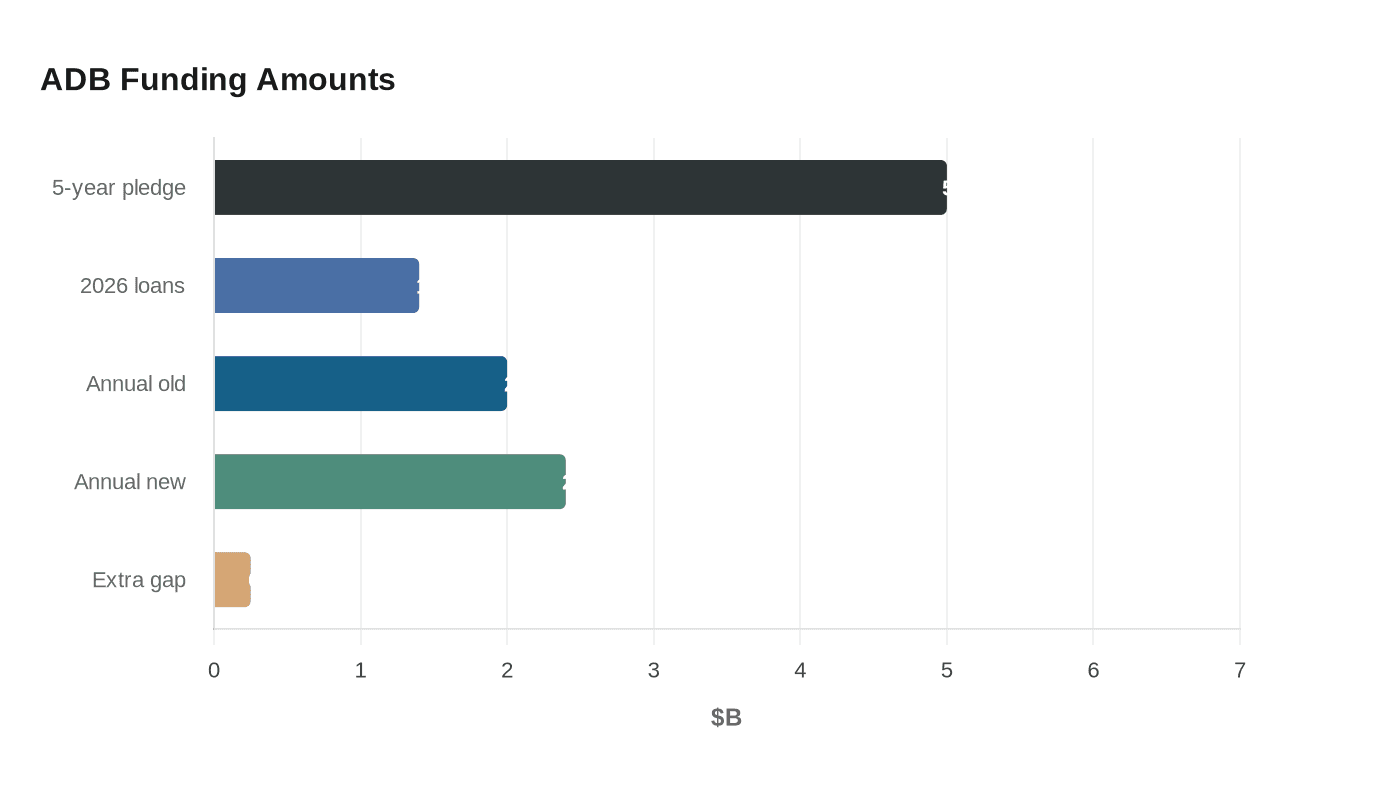
The Asian Development Bank has committed $5 billion to Bangladesh over the next five years, a package that lands at roughly $1 billion a year and is designed to steady an economy under pressure from higher import costs, weak foreign-exchange buffers and slower growth.
The lender also signed about $1.4 billion in loans under its 2026 commitment program during the Dhaka visit, and said it would lift annual sovereign commitments to Bangladesh by 20 percent, from about $2.0 billion to about $2.4 billion. An additional $250 million was added to help close financing gaps tied to the Middle East conflict and commodity pressures, especially higher fuel, liquefied natural gas, fertilizer and shipping costs.
The money is not being framed as a simple emergency bailout. The ADB said the financing will support investment-led growth, job creation, economic diversification, stronger governance and Bangladesh’s transition away from least-developed-country status. That makes the package a blend of stabilization and development support, with part of the money aimed at keeping the macroeconomy steady and part aimed at preparing Bangladesh for a more demanding external environment.
How the funds are deployed over five years will matter as much as the headline number. The 2026 loans are slated for energy, transport, climate resilience and social development projects, areas that can ease immediate constraints while also lifting productive capacity. The ADB has also said it wants to draw in private investment by strengthening capital markets, preparing bankable projects and mobilizing co-financing, a sign that it sees Bangladesh’s problem as more than a temporary financing squeeze.
The timing is delicate. Bangladesh is due to graduate from United Nations least-developed-country status on November 24, 2026, and the government requested in February 2026 that the preparatory period be extended. At the same time, the World Bank said on April 8 that Bangladesh faces slowing growth, persistent inflation, a stressed banking sector, weak revenue mobilization and subdued private investment, with the Middle East conflict adding fresh strain. The ADB’s own April outlook put GDP growth at 3.5 percent in FY2025, down from 4.2 percent in FY2024, citing political instability, financial-sector weakness and weaker household purchasing power.
Taken together, the package signals that Bangladesh’s core challenge is not one fault line but several at once: external payments pressure, costly energy imports, tighter credit conditions and the need for deeper reform. The ADB’s pledge suggests multilateral lenders still view Bangladesh as investable and strategically important, but also as an economy that will need sustained support to protect stability while it moves toward graduation and a more diversified growth model.
This article was produced by Prism’s automated news system from verified source data, official records, and press releases, then run through automated quality and moderation checks before publishing. The system is built and supervised by the people who set the standards it runs under. Read our full AI policy.
Know something we missed? Have a correction or additional information?
Submit a Tip