Adidas and Nike Bring Streetwear Sensibility to 2026 World Cup Kits
Kit design for 2026 is converging with streetwear at unprecedented scale, as crop tops, archive revivals, and celebrity campaigns redefine who football fashion is actually for.
The Two Forces Reshaping Kit Design
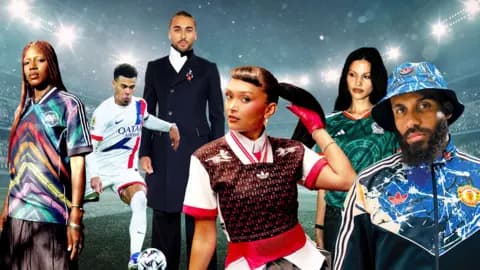
World Cup kit design has always carried cultural weight, but the 2026 tournament, running June 11 to July 19 across the United States, Canada, and Mexico, represents something categorically different: a moment when sportswear and streetwear have converged so completely that the line between them has effectively disappeared. The campaigns from the two dominant suppliers, Adidas and Nike, mark the most fashion-forward departure from any previous competition, explicitly designing for how jerseys are worn off the pitch, not just on it.
Adidas moved first and loudly, dropping home kits for 22 federations in a coordinated wave beginning in November 2025. Nike took a more deliberate path, releasing each federation's kit individually in the months that followed. Puma supplies a number of additional nations in the tournament. Together, these three brands are orchestrating a commercial and cultural moment that the sport has never quite seen before, timed deliberately to the World Cup's return to North America for the first time since 1994.
Crop Tops: From Pitch-Side DIY to Official Product
One of the boldest moves of the entire 2026 campaign is Adidas's launch of officially cropped jersey versions, a genuine first for a major World Cup kit-maker. The concept was born directly from fan culture: Adidas cited "seeing lots of fans cutting jerseys and re-sewing them to get the fit they wanted" as the driving inspiration, with the garments conceived as an "exciting product for female fans." The cropped versions, reworked with one-shoulder styles, cinched waists, and shortened silhouettes, take direct cues from female supporters and independent designers who had long been altering standard kits to achieve more feminine fits.
At launch, the cropped style was available for Adidas's four "Key Countries": Argentina, Germany, Italy, and Spain. Pricing sits at 75 GBP, intentionally set below the standard women's replica jersey to make the streetwear-oriented cut accessible to the fans it was designed for. The decision to officially sanction what had previously been a grassroots alteration is a significant signal of where kit design is heading.
Nostalgia as a Design Language
Archive nostalgia is the most pervasive thread running through the 2026 collection, deployed by both brands with considerable precision. Germany's 2026 Adidas home shirt draws from the iconic 1988-90 and 2014-15 World Cup-winning designs, restoring the black, red, and yellow chevron detailing from those eras. The shirt doubles as a memorial of sorts: it marks the 70-year partnership between Germany and Adidas, a relationship ending in 2027 when Nike takes over the federation contract.
Argentina's 2026 shirt is equally loaded with history, incorporating a gradient blue stripe effect that weaves together the three distinct shades of blue from their title-winning kits of 1978, 1986, and 2022. England's Nike kit has been widely described as channeling the 1990s Umbro aesthetic that English fans hold in particular affection. Then, on March 10, 2026, Adidas released a 90s-style US throwback jersey paying direct tribute to the iconic faux-denim design worn by the US Men's National Team at the 1994 World Cup on home soil.
Nike has taken the retro impulse furthest with a dedicated lifestyle collection sitting entirely outside the on-pitch product range. The line blends football aesthetics with streetwear in ways reminiscent of 1990s Nike football templates and covers nine national teams: England, France, Netherlands, Norway, USA, Nigeria, South Korea, Australia, and Uruguay. Each jersey carries unique retro styling rooted in the respective nation's footballing heritage, with authentic versions retailing at €159.99 and replicas at €109.99 on Nike's official store. Adidas's away kits, meanwhile, are built in jacquard fabrics with pastel color schemes pulled directly from the early 1990s and were designed, in Adidas's own framing, to be worn with baggy jeans and cargo pants. Some outlets have already called them "era defining."
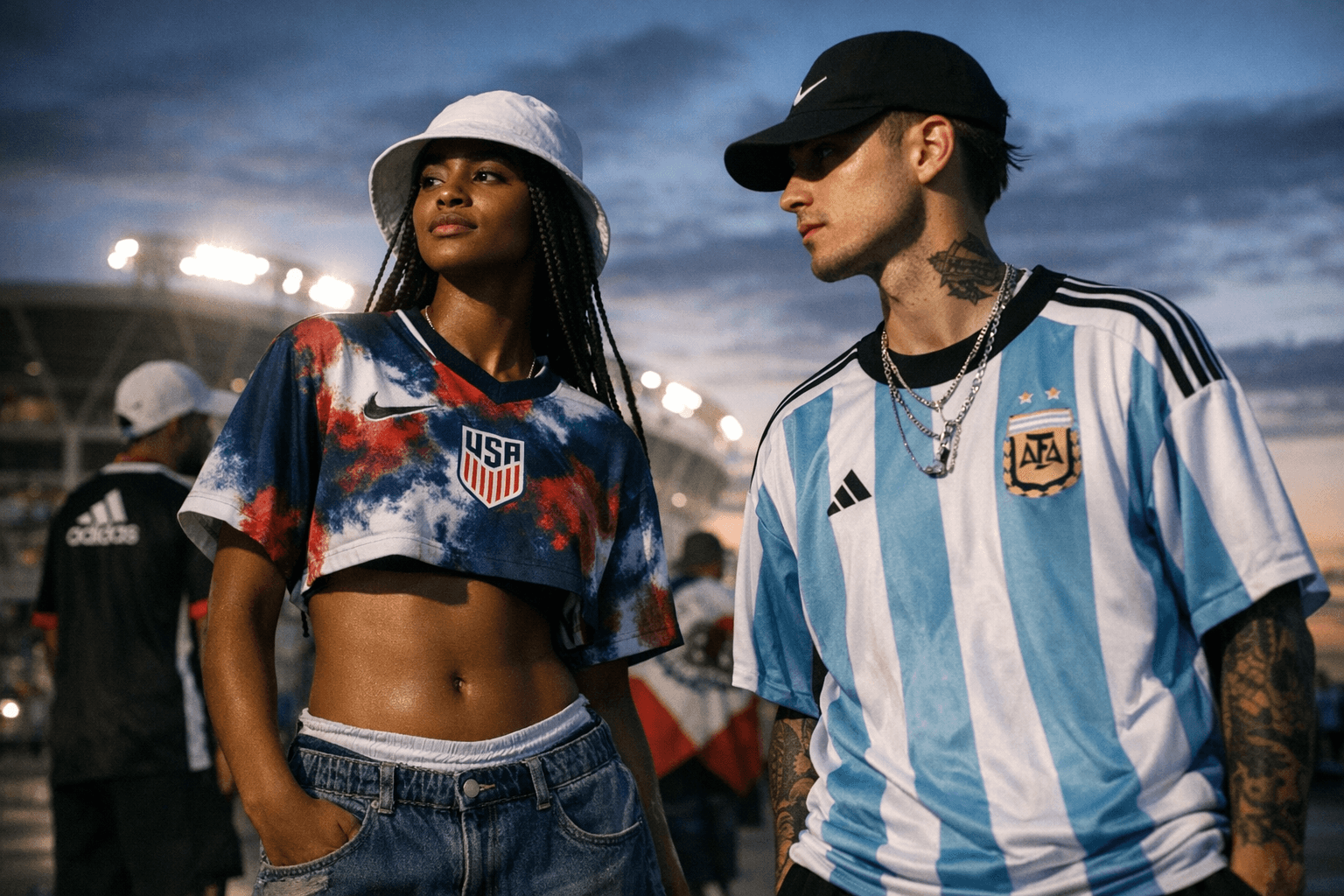
Fan Power as a Design Force
Kit releases at this level of cultural prominence now come with genuine accountability to supporters, and the 2026 cycle has made that abundantly clear. Brazil and Mexico both scrapped their initial kit designs entirely after fan backlash to leaked images, a striking demonstration of how invested supporters have become in their national team's visual identity. The USMNT players went further: reportedly dissatisfied with their 2022 World Cup kits, they insisted on direct involvement in the 2026 design process, ultimately resulting in a new Nike shirt that has earned widespread praise from critics. These are not isolated incidents but symptoms of a broader shift in which brands, federations, and athletes are treating kit design as a collaborative creative act rather than a top-down product decision.
Celebrity Crossover and the Cultural Moment
The campaign machinery surrounding these kits has reached well beyond traditional sports marketing. Model Bella Hadid fronted an Adidas Originals World Cup campaign unveiled in Times Square, placing football apparel squarely in the visual vocabulary of high-profile fashion. Actor Timothée Chalamet made headlines by wearing an original Mexico 1994 home shirt, a moment that underscored the vintage football shirt's firm position in mainstream celebrity culture.
The groundwork for this crossover was laid at the previous tournament. During the 2022 World Cup in Qatar, influential streetwear designer NIGO, then serving as creative director at Kenzo, designed Japan's national team jerseys. That collaboration was widely read as a watershed: the streetwear world announcing its intention to operate at the center of international football's visual identity, not merely its periphery.
The Business Behind the Style
The creative ambition in 2026 kit design is backed by substantial commercial logic. The global football apparel market is projected to grow by USD 3.66 billion between 2025 and 2029, at a compound annual growth rate of 5.8%. The football jerseys segment alone is forecast to expand from USD 8.00 billion in 2025 to USD 12.90 billion by 2035. The broader global streetwear market, valued at USD 371.09 billion in 2025, is projected to reach USD 397.97 billion in 2026 and USD 734.05 billion by 2034, at a CAGR of 7.95%. These are not adjacent markets converging by accident; they are markets that brands are now explicitly engineering to overlap.
At club level, the commercial scale is already staggering: FC Bayern Munich and Real Madrid each sell approximately 3 million shirts per year. The social media phenomenon known as "Blokecore," the trend of wearing football shirts as everyday fashion, has accumulated over 85,000 posts on Instagram and represents the cultural current that brands are now designing directly toward. The 2026 World Cup, returning to a North American market that is simultaneously the world's largest consumer economy and a country where football fashion has historically underperformed relative to the sport's global stature, is the opportunity brands have been positioning for.
The convergence of streetwear economics, archive nostalgia, fan-driven design pressure, and celebrity amplification means the 2026 tournament kits will be debated and collected long after the final whistle. What Adidas and Nike have recognized is that the World Cup jersey is no longer just a piece of match-day gear; it is a cultural artifact, and the market for cultural artifacts has no off-season.
This article was produced by Prism’s automated news system from verified source data, official records, and press releases, then run through automated quality and moderation checks before publishing. The system is built and supervised by the people who set the standards it runs under. Read our full AI policy.
Know something we missed? Have a correction or additional information?
Submit a Tip