ADP says private payrolls jump most in 15 months, labor market steady
Private payrolls rose 109,000 in April, the strongest gain in 15 months, even as Middle East tensions kept recession fears and inflation risks in view.
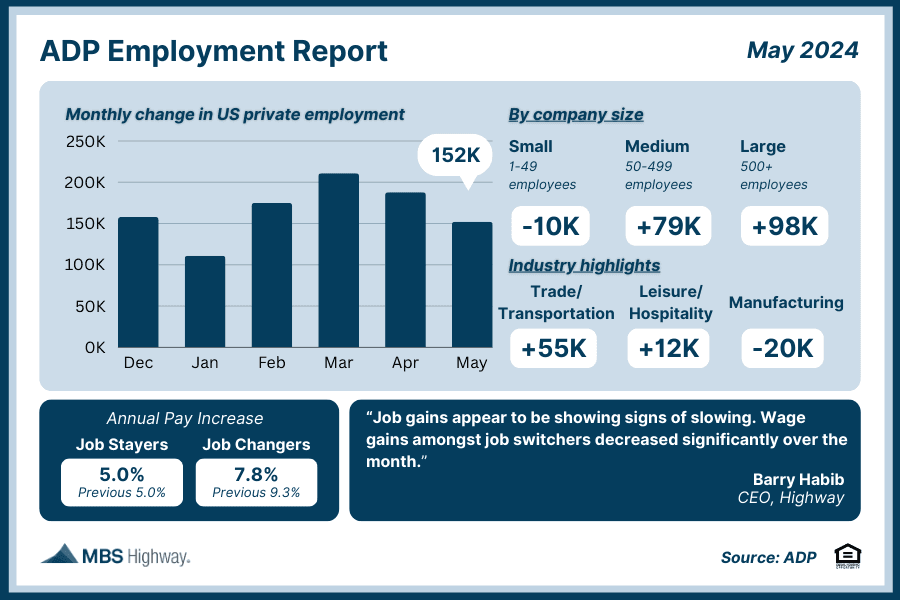
Private employers added 109,000 jobs in April, the biggest gain in 15 months, offering a reminder that the U.S. labor market is still holding up even as war risk in the Middle East and oil shock warnings keep recession fears alive.
ADP also said annual pay rose 4.4% from a year earlier, a pace that suggests wage growth remains firm enough to support household spending but not so hot that it clearly forces the Federal Reserve into immediate action. The labor market remains in what economists call a low-hire, low-fire pattern, with companies neither expanding aggressively nor cutting jobs in large numbers.
Elizabeth Renter of NerdWallet said the labor market has been on “solid but precarious footing” for some time. That is the central contradiction of the current economy: hiring is still positive, but confidence is fragile, and investors have been watching each jobs release for clues about whether growth is slowing enough to reopen the door to rate cuts.
ADP’s report is based on anonymized weekly payroll data from more than 26 million private-sector workers and is produced with Stanford Digital Economy Lab. It is closely watched because it often arrives before the government’s official labor report, but it is not a perfect preview. Carl Weinberg of High Frequency Economics said actual private payroll figures have generally been lower than what ADP predicts, a warning against reading too much into one month’s surprise.
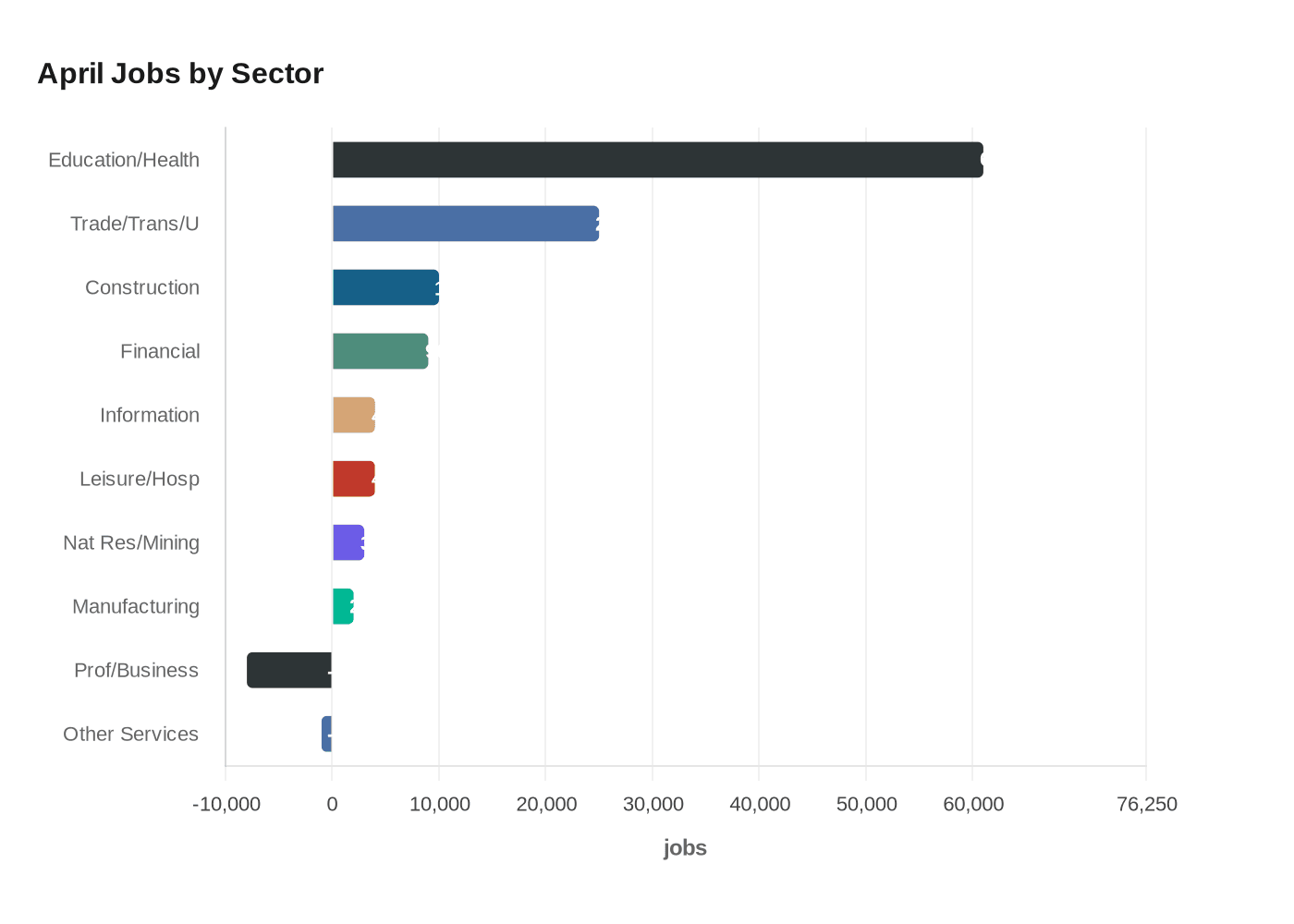
The April gain was led by education and health services, which added 61,000 jobs, followed by trade, transportation and utilities with 25,000 and construction with 10,000. Financial activities added 9,000 jobs, information and leisure and hospitality each added 4,000, natural resources and mining added 3,000 and manufacturing added 2,000. Professional and business services lost 8,000 jobs, while other services shed 1,000.
By company size, the strongest gains came from the smallest and largest employers. Firms with 1 to 19 workers added 43,000 jobs, and companies with 500 or more employees added 42,000. Mid-sized businesses were softer: firms with 250 to 499 workers cut 3,000 jobs. ADP chief economist Nela Richardson said, “Small and large employers are hiring, but we're seeing softness in the middle.”
That labor resilience matters because it complicates the Fed’s next move. Economists had expected nonfarm payrolls to rise by 62,000 in April, with private payrolls up 75,000 and unemployment holding at 4.3%. Against that backdrop, stronger hiring supports the case for patience on rates, especially after the World Bank warned April 28 that energy prices could surge 24% this year and overall commodity prices 16%, with disruptions in the Strait of Hormuz posing a major oil supply shock. If those pressures spread, the Fed’s path gets harder, not easier.
This article was produced by Prism’s automated news system from verified source data, official records, and press releases, then run through automated quality and moderation checks before publishing. The system is built and supervised by the people who set the standards it runs under. Read our full AI policy.
Did this article answer your question?
%3Amax_bytes(150000)%3Astrip_icc()%2FCertificate-of-deposit-2301f2164ceb4e91b100cb92aa6f868a.jpg&w=1920&q=75)