Siemens Healthineers cuts 2026 outlook as China diagnostics slump deepens
Siemens Healthineers cut its 2026 outlook after Diagnostics in China weakened, with revenue in the market falling to 985 million euros and shares dropping 3.3%.
Siemens Healthineers trimmed its full-year 2026 forecast after a sharper-than-expected slump in its Diagnostics business in China, signaling that weak demand in one of med-tech’s most important markets is now hitting revenue, not just sentiment. The German company said it now expects fiscal 2026 revenue growth of 4.5% to 5.0%, down from 5% to 6%, and lowered its adjusted earnings-per-share target to 2.20 euros to 2.30 euros.
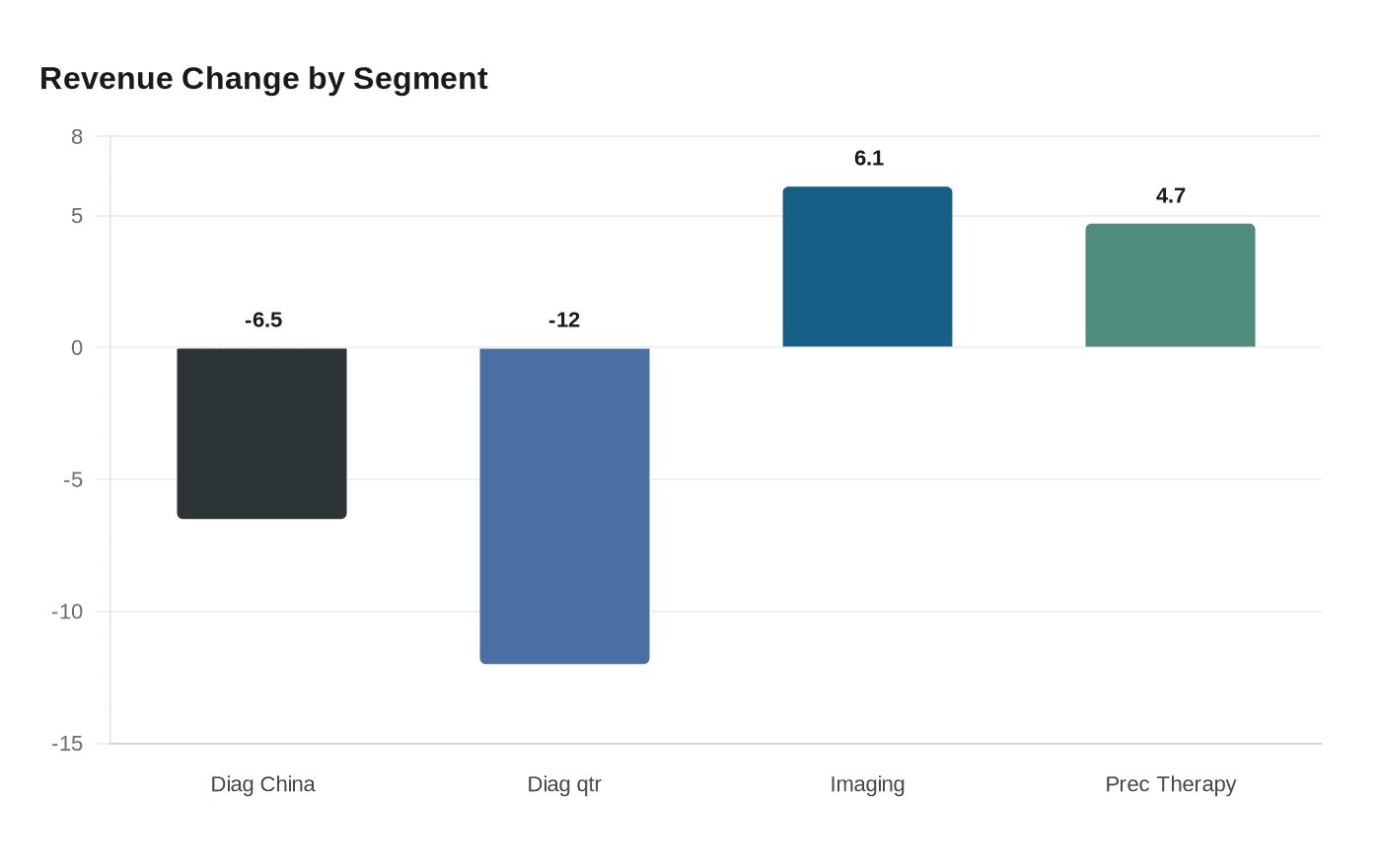
China is central to that reset. The market accounts for about 10% of Siemens Healthineers’ total revenue and is the company’s second-largest after the United States. Management said lower reimbursement rates and volume-based procurement have depressed prices and sales volumes, and described the shift as a structural market rebasing. In Diagnostics, China revenue fell 6.5% year over year to 985 million euros, while quarter reporting also showed Diagnostics revenue down 12% to 985 million euros from 1.12 billion euros.
The weakness in China overshadowed healthier results elsewhere in the portfolio. Imaging revenue rose 6.1% in the quarter, and Precision Therapy increased 4.7%, helping offset the pressure in Diagnostics. Even so, Siemens Healthineers shares fell 3.3% after the results were announced, underscoring how quickly investors are recalibrating expectations for health-tech companies tied to Chinese demand.
The company also flagged higher costs across its supply chain, saying memory chips, raw materials and logistics could add about 5 euro cents per share in profit pressure this year. It blamed more pronounced inflation assumptions for the softer outlook, adding another layer of uncertainty to a business already dealing with slower Chinese demand.
The strain in Diagnostics is also feeding strategic debate inside Siemens Healthineers. The company has been weighing spin-off options for parts of the business, including a possible carve-out of Diagnostics, while also carrying continued transformation costs. Chief executive Bernd Montag has described the division as facing a perfect storm, a reminder that policy changes in Beijing and broader procurement reforms are reshaping the economics of medical testing.
For multinational med-tech companies, the message is broader than one German earnings report. China’s healthcare slowdown is no longer only a macroeconomic story; it is now a direct revenue problem that can force guidance cuts, pressure margins and test investor patience. As pricing reform and centralized buying continue to reshape the market, companies with heavy exposure to China may face tougher comparisons and a more uneven path to growth.
This article was produced by Prism’s automated news system from verified source data, official records, and press releases, then run through automated quality and moderation checks before publishing. The system is built and supervised by the people who set the standards it runs under. Read our full AI policy.
Did this article answer your question?