Advocates Urge Public Comments on Fresno's Draft 2026 Active Transportation Plan
City of Fresno's public review of the draft Active Transportation Plan ends March 5, 2026; submit in person to Andreina Aguilar at 2600 Fresno Street, Room 4019.
The City of Fresno opened a 30-day public review of its draft Active Transportation Plan, with comments due March 5, 2026; residents may submit feedback via email or in person to Andreina Aguilar, Public Works Department, 2600 Fresno Street, Room 4019, Fresno, CA 93721. Streetsblog California published analysis and reaction on March 2, 2026, highlighting the deadline and linking to the city’s public draft and appendices A through J.
Titled on the city page as the “2024 Fresno Active Transportation Plan (ATP),” the public draft says it “updates the 2017 plan to address Fresno’s growth and evolving needs” and that the ATP “reinforces the City’s commitment to improving active transportation—walking, biking, wheelchair use, and other human-powered travel modes—by enhancing accessibility, safety, and connectivity.” The project overview also states the update “introduces new strategies informed by the latest data and community input” and that it “aligns with broader city planning efforts and meets state and federal funding guidelines.”
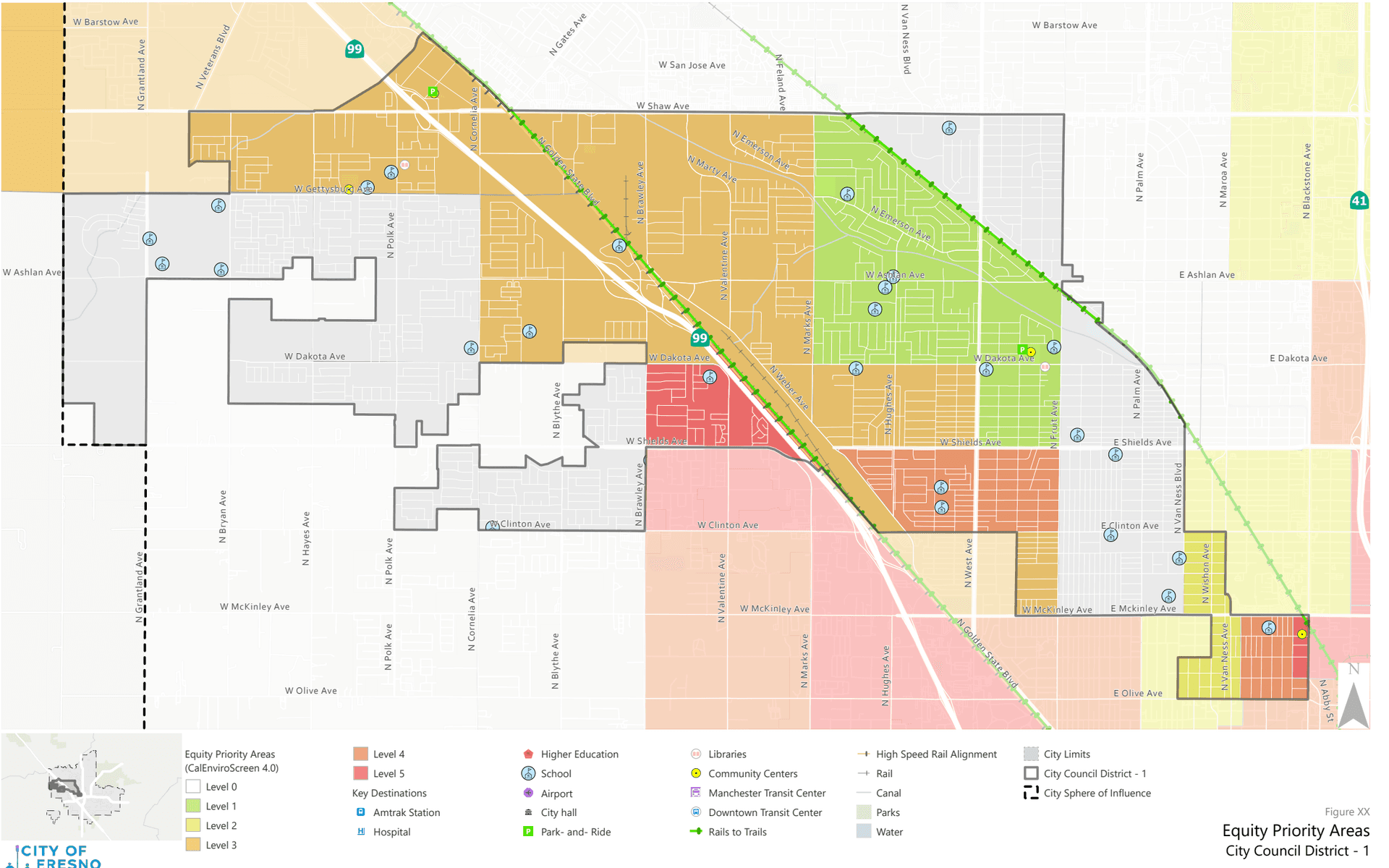
The draft lists specific infrastructure elements: expanded networks of bike lanes, multi-use trails and paths, sidewalks, intersection improvements, safe crossings, Safe Routes to School programs and electric micromobility considerations described in Appendix B. The city posted appendices A–J for review, with Appendix A labeled “Equity Priority Areas of Fresno.” Streetsblog flagged an equity-priority map and noted that red areas are highest priority on the ATP maps.
Local advocates welcomed the plan’s tone but urged sharper implementation detail. The Fresno County Bicycle Coalition called the draft a document that “marks a major step forward in ambition and vision” while urging the city to “tighten the plan’s implementation framework, correct mapping errors, and more clearly align infrastructure investments with real-world engineering constraints and equity priorities.” Streetsblog also reported that some advocates worry the draft “reads more like a consultants wish list than a plan.” Recordings cited by Streetsblog include a City of Fresno Disability Commission meeting and a Fresno Active Transportation Advisory Committee meeting for additional stakeholder remarks.

City outreach for the ATP included an online ATP survey and community events such as a “traffic garden” for school students; the city thanked participants with survey copy that read, “Your input was essential for the success of this Active Transportation Plan Update. Thank you for completing the survey and providing us with your comments and concerns regarding pedestrian and bicycle connectivity, safety, and accessibility.”
Regional funding and ballot context intersect with the ATP review. Fresno Council of Governments’ 2026 RTIP highlights projects like the Shaw Avenue Multimodal Interchange (SR 99), South Fresno interchanges at North Cedar and American Avenue, and the SR 41 Excelsior Expressway. The Fresno Chamber of Commerce and the mayor have signaled support for RTIP investments. Separately, the FresnoBHC “Moving Forward Together” campaign is gathering signatures to qualify a November 2026 transportation measure that backers say would raise an estimated $7.4 billion over 30 years and extend a half-cent sales tax that has been in place since 1986 and is set to expire in 2027.
Today is the final day to submit public comments on the draft ATP; the city’s review materials and appendices A–J remain the primary sources for project maps, equity-area designations and the plan’s stated strategy for pursuing state and federal funding.
Know something we missed? Have a correction or additional information?
Submit a Tip