After the U.S.-Israeli War on Iran, Some Things Changed, Some Didn't
Khamenei is dead, Iran's missile arsenal is degraded, and oil markets are in crisis — but Tehran's proxy networks are intact and the war's endgame remains undefined.

Defining Victory Before Measuring It
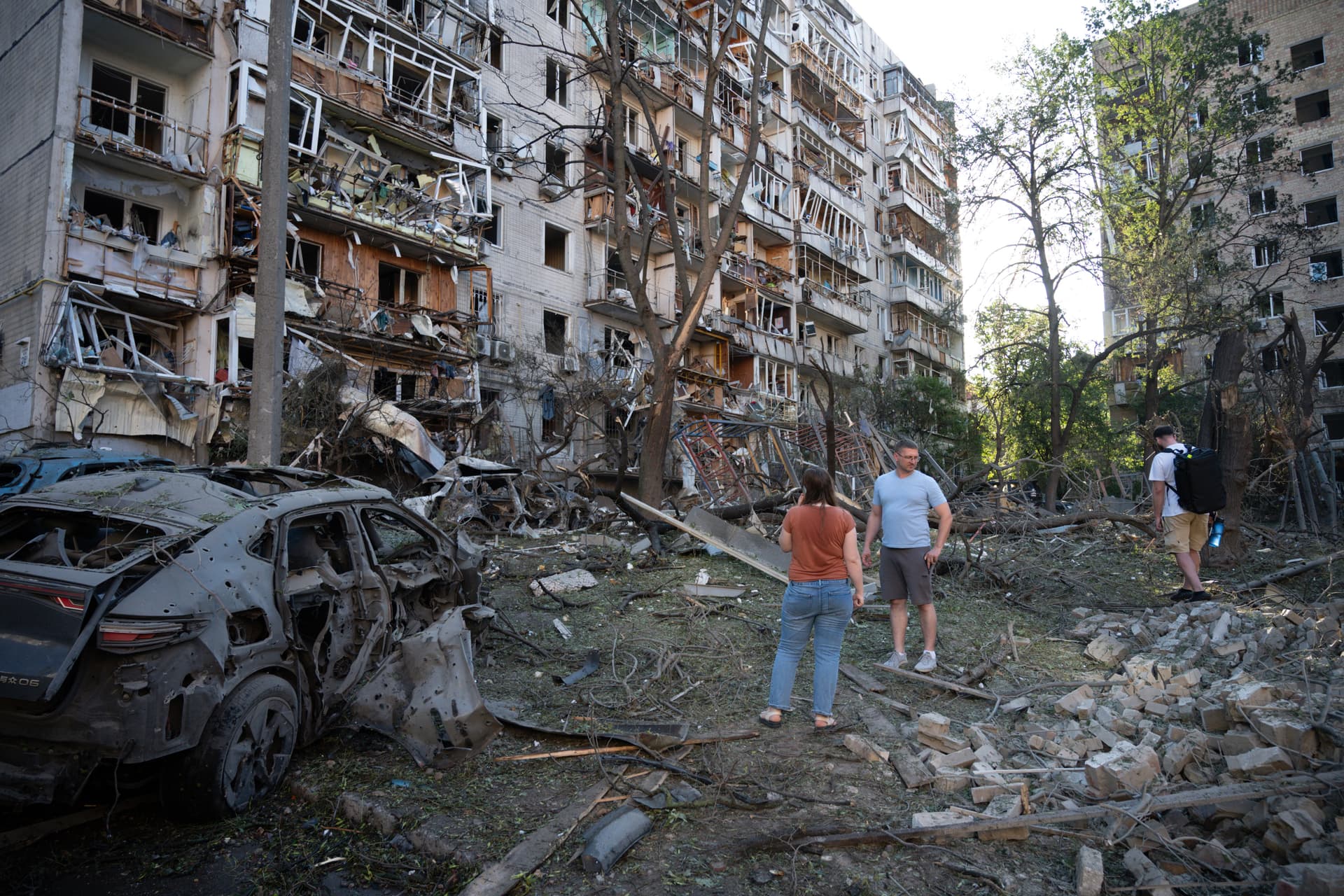
Nearly 900 strikes in 12 hours. A supreme leader killed in the opening salvo. The largest oil supply disruption since the 1970s energy crisis. Thirty-two days into Operation Epic Fury, the joint U.S.-Israeli military campaign against Iran that began on February 28, 2026, the scale of what has been achieved is undeniable. What remains genuinely contested is whether any of it adds up to a durable strategic win.
President Donald Trump named four military objectives for the operation at its outset: neutralizing Iran's nuclear program, degrading its ballistic missile capacity, eliminating key leadership, and creating conditions for political transformation inside Iran. Secretary of State Marco Rubio, in an exclusive interview with Al Jazeera on day 32 of fighting, said those objectives would be achieved "in weeks." Running each one against the current evidence produces a deeply uneven scorecard.
What Changed: The Military and Nuclear Picture
The initial wave of strikes on February 28 destroyed significant elements of Iran's nuclear infrastructure and, according to Israeli Prime Minister Benjamin Netanyahu, eliminated Iran's ability to produce nuclear weapons and ballistic missiles, removing "two existential threats" to Israel. That claim rests on top of a foundation already laid during the June 2025 twelve-day war between Israel and Iran, in which joint U.S.-Israeli strikes significantly set back the Iranian nuclear program and eliminated as many as three-quarters of Iranian missile launchers, including those that had been rebuilt after earlier Israeli strikes.
The concern driving the 2026 escalation was specific: Iran had ambitions to ramp up ballistic missile production from roughly 2,000 to 10,000 units capable of reaching Israel, a volume that could overwhelm Israeli and American missile defense interceptors. That production capacity appears to have been severely degraded. But verification is elusive. The International Atomic Energy Agency noted that while Iran's nuclear program is ambitious and its damaged sites have been closed to inspectors since the 2025 conflict, there was no confirmed evidence of a structured nuclear weapons program before the strikes. Netanyahu's claims directly contradicted public assessments from the IAEA's leadership.
What Changed: The Regime's Head
The most irreversible change is the one at the top. Supreme Leader Ali Khamenei was killed in the opening strikes of February 28, a decapitation that triggered immediate retaliatory waves of hundreds of drones and ballistic missiles from Iran against targets in Israel and U.S. military bases in Bahrain, Jordan, and across the Gulf. His son, Ayatollah Mojtaba Khamenei, has since been installed as his successor, though he has refrained from public appearances since taking power. Separately, Ali Larijani, the regime loyalist Khamenei had left in charge, was killed in a subsequent Israeli airstrike.
The succession has not produced a more moderate governing posture. The most powerful figure now operating in Tehran appears to be IRGC chief Ahmad Vahidi, an officer who analysts link to the 1994 bombing of a Jewish community center in Buenos Aires and who directed the violent crackdown on Iranian protesters in 2022. Mohammad Zolghadr, described by one Iranian journalist as "fascist," has taken over as chief of the Supreme National Security Council. The Chatham House analysis frames this dynamic starkly: the war marks "the most consequential turning point in the 47-year history of the Islamic Republic," but the shift has so far empowered hardliners, not reformers.
What Changed: Energy Markets and the Strait of Hormuz
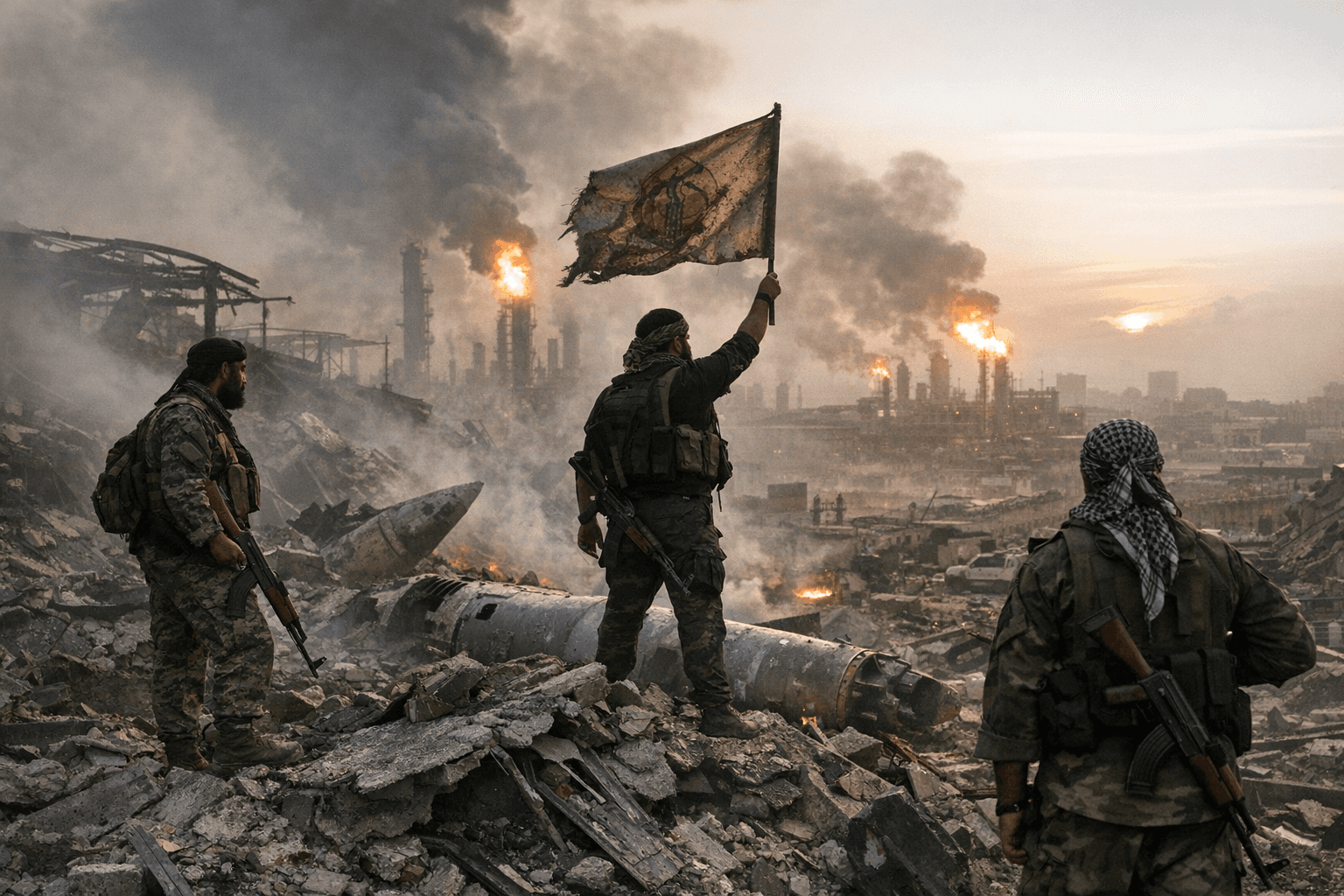
Commercial transit through the Strait of Hormuz has fallen to effectively zero. More than 300 ships are stranded in the Gulf. The International Energy Agency has described the disruption as the "largest supply disruption in the history of the global oil market," echoing the 1970s energy crisis through acute supply shortages, currency volatility, and heightened risks of stagflation and recession in major economies. Oil prices have surged above $100 a barrel.
The economic fallout has forced direct intervention: the U.S. Energy Department announced it would loan up to 10 million barrels of crude oil from the Strategic Petroleum Reserve. Treasury Secretary Scott Bessett said the administration was considering lifting restrictions on approximately 140 million barrels of Iranian oil already loaded onto vessels. Trump has publicly said he told Israel not to conduct additional attacks on Iranian oil infrastructure, even as reports surfaced that U.S. attack jets and helicopters were simultaneously targeting Iranian assets near the Strait. As of April 1, Trump stated that Iran's president had requested a ceasefire, but the U.S. is conditioning any agreement on Iran reopening the Strait of Hormuz, with a stated deadline of April 6 before the U.S. would conduct "extensive attacks."
What Hasn't Changed: The Proxy Architecture
Here the endgame audit grows considerably more sobering. Operation Epic Fury, as the Small Wars Journal analysis put it, "has not destroyed, and what no air campaign alone can destroy, is Iran's forty-year strategic investment in a distributed proxy architecture spanning Lebanon, Yemen, Iraq, Syria, and Gaza." Hezbollah's tunnel networks in southern Lebanon are intact. The Houthis in Yemen continue to operate. Iran-backed militias in Iraq have maintained activity. Weapons shipments have been intercepted en route to Houthi forces in Yemen, and suspected Iranian-backed militias have carried out drone attacks on oil infrastructure in Kurdish Iraq.
This is the architecture that gives Iran its persistent leverage regardless of what happens to its conventional military forces or its Supreme Leader. Iran's "forward defense" strategy, built over decades precisely to ensure strategic depth beyond its own borders, does not collapse when Tehran is bombed. The ACLED analysis warned that the war's trajectory may prove "more protracted and unpredictable than decision-makers in Washington anticipated" for precisely this reason.
What Hasn't Changed: The Regime's Survival Instinct
The Islamic Republic has not collapsed, and there is limited evidence it is close to doing so. The protests that gripped Iran in early 2026 reflected a genuine weakening of the regime's domestic legitimacy, driven by a deteriorating economy and failing infrastructure. But those protests were suppressed through extensive use of force before the war began. Regime change was listed among the stated objectives of the operation, with Netanyahu explicitly framing the war as aimed at "creating the conditions that will allow the Iranian people to take their fate into their own hands." Thirty-two days in, powerful explosions continue to be reported in Tehran and Isfahan. Iran has continued firing salvos of missiles and drones. The Iranian president has written an open letter to the American people insisting his country "harbors no enmity toward ordinary Americans," framing the war publicly as the U.S. fighting as a "proxy for Israel" — a narrative designed for international consumption and domestic resilience.
The Audit
Benchmarked against the four original objectives of Operation Epic Fury, the ledger at 32 days looks like this: nuclear infrastructure has been severely degraded but not verifiably eliminated; ballistic missile production capacity has been crippled but Iran retains the ability to launch; key leadership has been killed but replaced by figures who are, if anything, more ideologically rigid; and regime change remains an aspiration rather than a reality. The proxy network, which is perhaps Iran's most durable strategic asset, is operational.
The Georgetown Journal framed the essential question as "tell me how this ends." That question has no clear answer on day 32. The ceasefire diplomacy circling the Strait of Hormuz suggests both sides feel economic and military pressure to find an exit. What the endgame cannot credibly promise, based on everything that has and hasn't changed, is a Middle East where Iran's regional influence has been structurally dismantled. The nuclear clock may have been set back. The proxy clock is still running.
This article was produced by Prism’s automated news system from verified source data, official records, and press releases, then run through automated quality and moderation checks before publishing. The system is built and supervised by the people who set the standards it runs under. Read our full AI policy.
Did this article answer your question?