Aftershocks disrupt rescue effort after deadly Mindanao earthquake
Strong aftershocks kept rescuers running from a leaning grocery in General Santos as a 7.8 quake left at least 45 dead, 17 missing and thousands displaced.
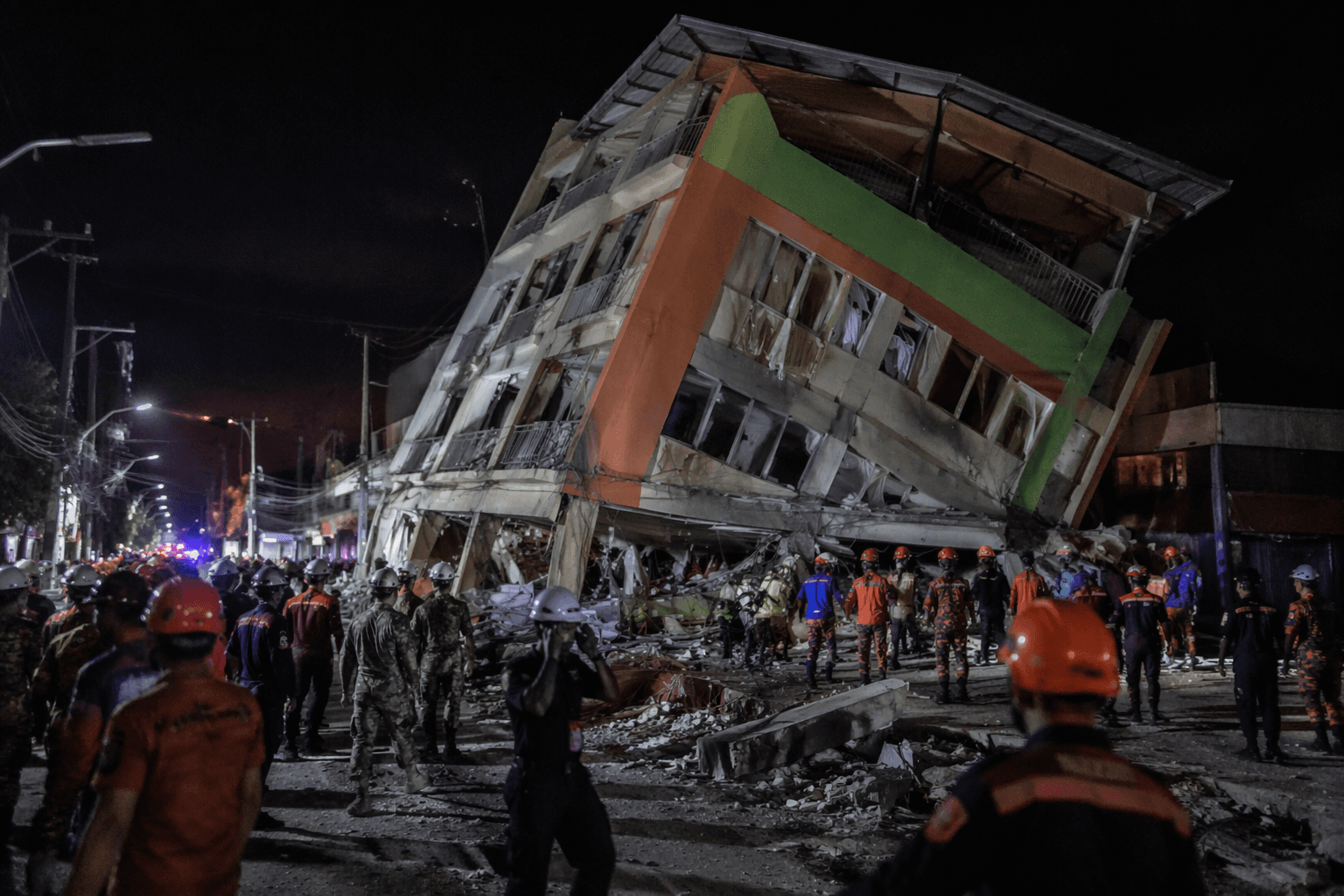
Strong aftershocks turned the Mindanao earthquake into a rolling emergency Wednesday, forcing rescuers to break off search work, evacuate damaged buildings and wait for the ground to settle before going back in. The quake has killed at least 45 people, left 17 missing and displaced more than 25,000 others, while more than 2,100 aftershocks kept rattling a region already struggling with shattered roads, damaged schools and overloaded shelters.
The first major tremor struck June 8 at 7:37 a.m. Philippine Standard Time, with an offshore epicenter about 32 kilometers west of Maasim, Sarangani, and an estimated depth of 33 kilometers. The Philippine Institute of Volcanology and Seismology said the quake may have been caused by subduction along the Cotabato Trench, and it was among the strongest to hit the Philippines in half a century, the worst since an August 17, 1976 quake off the same trench.
In General Santos, a busy commercial hub known as the tuna capital of the Philippines, dozens of rescuers in hard hats rushed out of a partially collapsed grocery store when an aftershock sent debris crashing down. Ressa Mia Tactaquin-Betoya, who speaks for firefighters searching for the last employee missing inside the ruined store, said the alarm was sounded so everyone under and inside the damaged structure could run out for a headcount. She said the scene was frightening because the rescuers themselves had to be protected before work could resume. An AP video journalist saw a safety officer blow a whistle as firefighters and coast guard personnel sprinted away from the leaning three-story building.

The toll extended far beyond that one site. The quake injured at least 630 people and damaged more than 3,100 houses, 29 roads, 11 bridges and more than 100 government buildings. General Santos International Airport was damaged and shut down except for government and military flights carrying aid and disaster-response personnel, while more than 6,000 public school buildings in quake-hit provinces had to be assessed before classes could resume. United Nations humanitarian officials said more than 3.2 million learners were affected and classes were suspended in over 6,200 schools, underscoring how the disaster immediately disrupted daily life for children and families across Mindanao.

Authorities issued tsunami alerts and carried out coastal evacuations before warnings were lifted, with waves of up to 1.4 meters measured in the Philippines. Some deaths were linked to a landslide in Glan, Sarangani province, where houses were buried on a mountainside, a reminder that the quake’s deadliest effects were not limited to shaking alone. President Ferdinand Marcos Jr. visited General Santos on June 10 and announced P100 million for the city government’s damaged city hall and P50,000 for each bereaved family. UNICEF and other humanitarian partners warned that children could face significant psychological harm from the quake and the relentless aftershocks, which continue to delay rescue, slow aid delivery and keep many displaced families from returning home.
This article was produced by Prism’s automated news system from verified source data, official records, and press releases, then run through automated quality and moderation checks before publishing. The system is built and supervised by the people who set the standards it runs under. Read our full AI policy.
Did this article answer your question?


