Agencies Can Build Scalable White Label Lead Generation With Three Service Models
Three proven service models let agencies add white label lead gen as a recurring revenue product without owning traffic infrastructure.
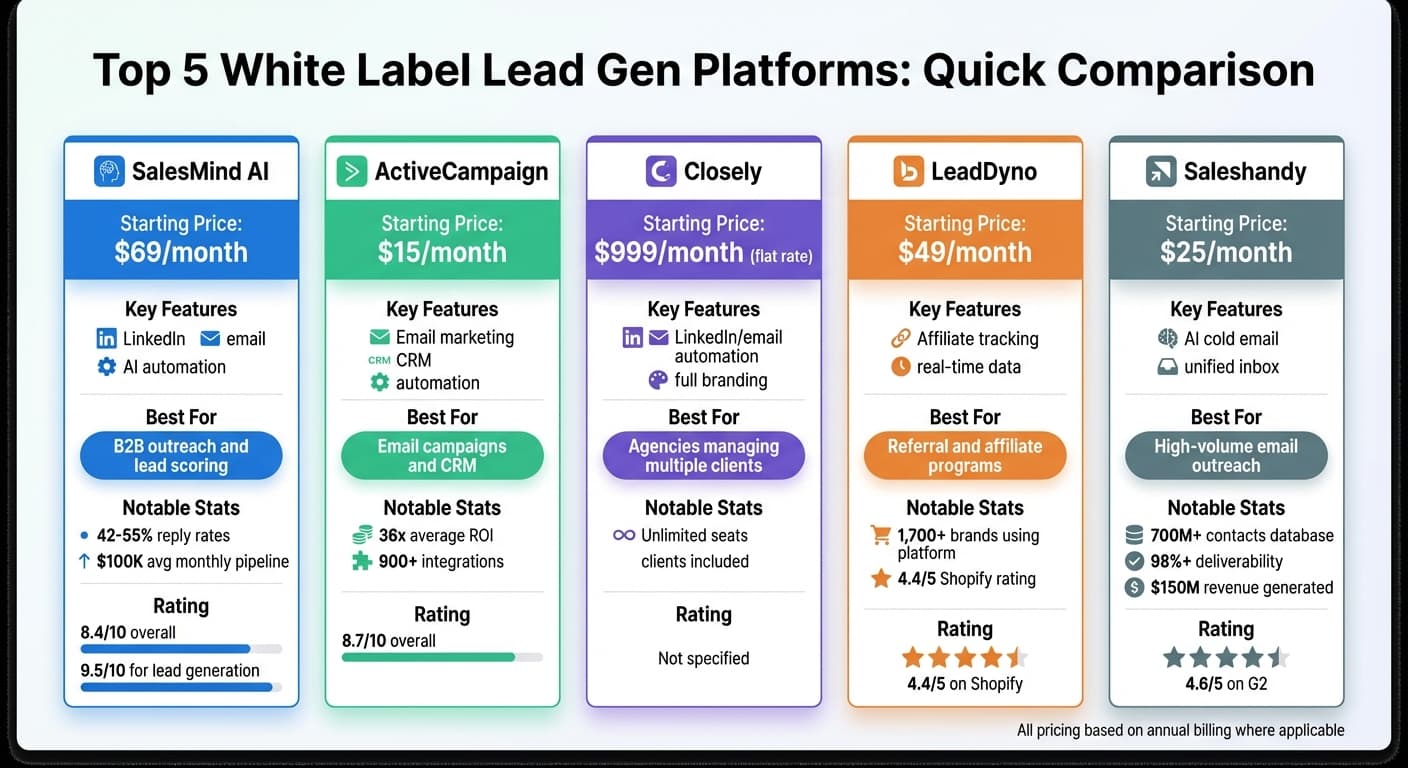
White label lead generation is one of the cleaner margin opportunities available to agencies right now, and the model works whether you're running a two-person shop or a 50-person operation. The key is understanding that you don't need to own the traffic acquisition infrastructure to deliver lead products under your own brand. What you need is the right service model, disciplined onboarding, and airtight compliance language. LeadSwift's practitioner-oriented playbook for agency owners and product managers lays out exactly how to build, price, and scale these offerings, and it starts with picking the right structural framework for your operation.
Three Models, Three Different Risk Profiles
The playbook organizes white label lead generation into three primary service models, each with its own margin dynamics, implementation complexity, and client fit.
Model A is the reseller portal: the agency curates per-lead delivery, sends validated leads directly to the client, and retains a markup on each unit. This is the lowest-friction entry point. You're essentially operating as a branded distribution layer, which means fast setup but also thinner differentiation unless your validation and targeting logic adds real value.
Model B, managed lead supply, moves the agency into a program manager role. Here you're working with a partner network to acquire and nurture leads, taking responsibility for the quality and throughput of the pipeline rather than just the delivery. The margin ceiling is higher, but so is the operational complexity. This model suits agencies that already have media buying or CRM relationships they can leverage.
Model C is the white label platform model, where clients get branded portals and dashboards while the agency operates the full acquisition stack behind the scenes. This is the most capital-intensive to build, but it creates the stickiest client relationships and the most defensible recurring revenue. The playbook provides margin calculations, example price tiers, and implementation timelines for each model, so you can run the numbers against your existing cost structure before committing.
The Metrics That Actually Drive Margin
Across all three models, the playbook provides formulas for calculating margins alongside CAC and CPA break-evens, which is where most agencies underestimate complexity. Per-lead pricing looks simple until you factor in refund rates, integration overhead, and the cost of disputes. Two levers matter above everything else: API reliability and lead validation rules.
If your upstream data partner has inconsistent uptime or delivers leads without structured validation logic, your refund exposure balloons fast. The playbook specifically calls out SLA-driven refund and credit structures as a margin preservation tool, not just a client relations one. Build your contracts around clear SLA thresholds, and make sure your technology partner can actually hit them before you price your packages based on that assumption.
Compliance Is Not Optional at Scale
One of the most practically useful sections of the playbook addresses legal exposure, and it's worth spending serious time here before you sign your first white label contract. For U.S.-focused lead programs, TCPA risk around telephone outreach is the biggest liability, particularly when leads change hands across multiple parties. GDPR and CCPA compliance layers on top for any program touching European or California consumer data.
The recommended technical measures are specific: webhook acknowledgements to create an audit trail for lead delivery, and hashed PII transmissions to limit exposure during data transfer. On the contract side, the playbook recommends explicit clauses covering lead origin documentation, data retention periods, and dispute resolution procedures. These aren't just legal boilerplate; they're the language that determines who carries the liability when a lead source gets challenged. If you're reselling white label lead generation at volume, the absence of these clauses in your agreements is a real financial risk, not a theoretical one.

Productize Before You Go to Market
The playbook makes a strong case for productizing your lead offering before your sales team starts quoting clients, and the logic is straightforward: if every deal requires a custom scoping conversation, your margins erode through sales time and implementation variation. Productization means bundling lead volume, qualification rules, response time guarantees, and reporting cadences into fixed, pre-priced packages.
This does two things. It lets a salesperson quote quickly without escalating to ops or leadership on every deal, and it keeps your cost structure predictable because you're delivering a defined product rather than a bespoke engagement. The playbook ties this directly to the case studies it presents, where agencies that added white label lead gen as a structured product saw both revenue per account and retention rates increase materially.
A Five-Step Onboarding Checklist
The operational onboarding process the playbook recommends follows a specific five-step sequence:
1. Discovery and KPI alignment: establish what success looks like for the client, including volume targets, lead quality definitions, and acceptable cost-per-lead ranges.
2. Sample data test: run a small batch of leads through the client's CRM or sales process to validate the data format, field mapping, and quality before full integration.
3. Technical integration: connect your delivery infrastructure to the client's systems via API or webhook, confirm acknowledgement receipts, and test the dispute workflow.
4. 30-day ramp: run at reduced volume while monitoring validation rates, conversion feedback, and any data quality issues that didn't surface in the sample test.
5. Performance review: at day 30, evaluate the actual CAC and CPA numbers against the projections, adjust volume or qualification rules as needed, and formalize the SLA terms.
This sequence reduces churn by catching integration and quality problems before they become client complaints, and it creates a documented baseline for the ongoing relationship.
Where to Start
For agencies that haven't yet added lead gen as a product line, the playbook's recommended starting point is deliberate rather than ambitious: run a two-client pilot before committing to infrastructure or partner contracts. This gives you real operational data on your margins and a chance to stress-test your onboarding process without betting the business on it.
Partner selection deserves scrutiny. The playbook specifically flags robust API and webhook support as a non-negotiable criterion, because the entire model depends on reliable, auditable data delivery. Beyond that, codify your lead validation rules and dispute resolution process in writing before you onboard anyone. The agencies that fail at white label lead gen usually do so because they treated these as administrative details rather than core product decisions.
The central argument the playbook makes is this: white label lead generation is a scalable margin engine, but only when you bring disciplined onboarding, genuine compliance infrastructure, and transparent reporting to the table. The technology exists. The supplier networks exist. What separates agencies that build a durable recurring revenue product from those that churn through clients is execution quality on exactly those three dimensions.
Sources:
Know something we missed? Have a correction or additional information?
Submit a Tip