AI boom drives surge in cybersecurity hiring as threats grow
Cybersecurity postings rose 11% in early 2026 as AI flooded companies with new code and new risks. Anthropic’s Mythos Preview can probe zero-day flaws in every major operating system and browser.

Artificial intelligence is speeding up code generation, and it is also speeding up the hunt for people who can defend it. Cybersecurity job postings rose 11% in the first quarter of 2026 from a year earlier, a sign that employers are scrambling to shore up defenses as AI expands the attack surface and makes software easier to break.
The pressure is not abstract. Anthropic announced Claude Mythos Preview on April 7, 2026, and its red-team assessment said the model can identify and then exploit zero-day vulnerabilities in every major operating system and web browser when directed to do so. On April 13, the AI Security Institute said Mythos Preview marked a step up over previous frontier models in cyber capabilities. Those advances help explain why security teams are suddenly hiring against a backdrop of faster code production and more powerful offensive tools.
The threat picture has worsened beyond model demonstrations. A Reuters report on May 19 said hackers are increasingly using AI to detect software vulnerabilities, while Verizon said software flaws in data had overtaken stolen credentials as a breach driver for the first time. That combination has pushed companies to look for security engineers who can review code, secure AI systems and respond quickly when a flaw turns into an incident.
The labor data show a market with both scale and strain. CyberSeek reported 514,359 U.S. cybersecurity job openings during its reporting period and estimated the global cybersecurity workforce at 4.97 million, with a range from 4.4 million to 5.5 million. It also found that 10% of cybersecurity job listings specifically referenced AI skills, suggesting the hiring boom is spreading beyond elite research roles into broader engineering and operations jobs.
ISC2’s 2025 Cybersecurity Workforce Study, which surveyed a record 16,029 professionals, points to a shortage that is increasingly about skills, not just headcount. Thirty-three percent of respondents said their organizations lacked the resources to adequately staff cybersecurity teams, and 29% said they could not afford to hire the skills they needed. Another 72% agreed that cutting security personnel sharply raises breach risk. At the same time, 28% said their organizations had already integrated AI tools into operations and 69% were in some stage of AI adoption.
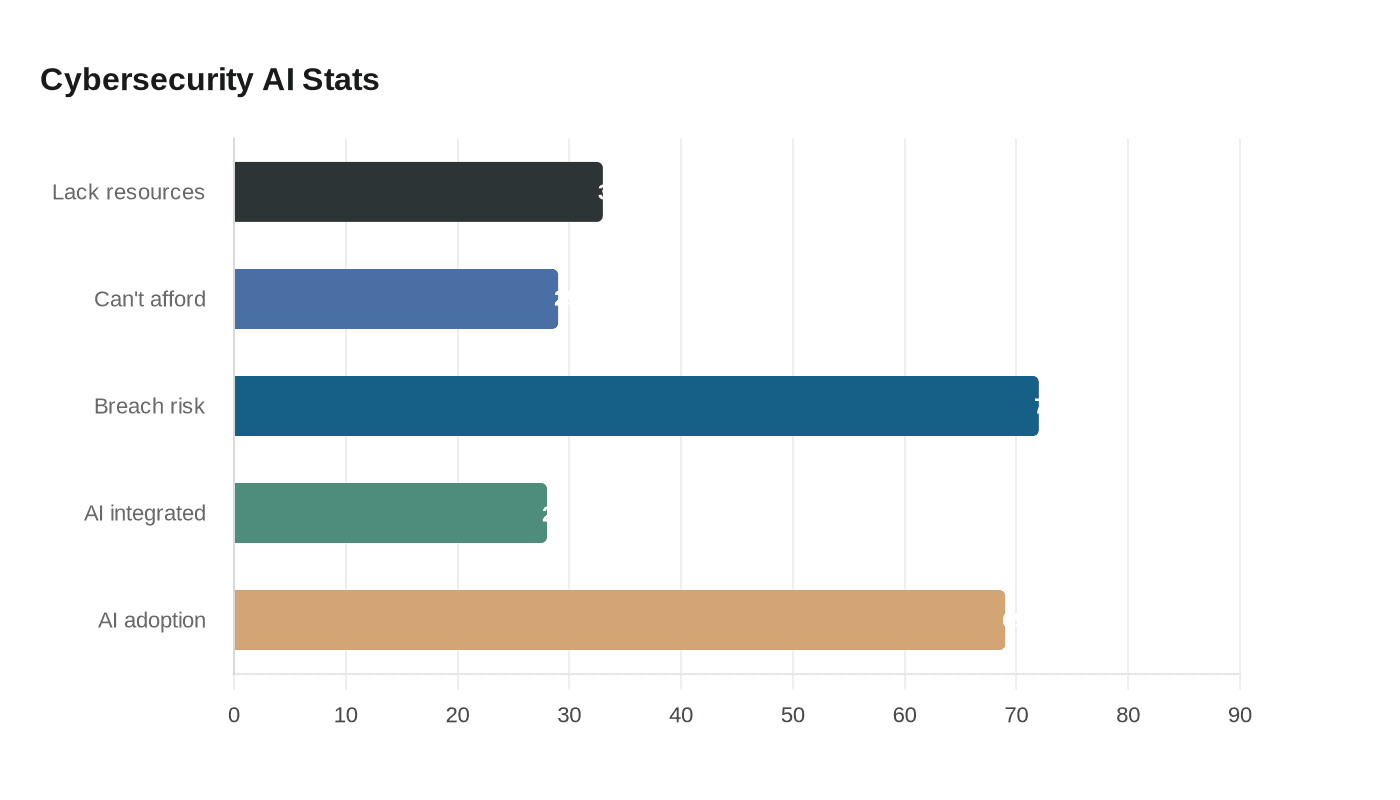
That is the labor-market paradox of the AI era: the same technology that can automate parts of the work is also forcing employers to hire more people who know how to secure it. The result is a cybersecurity market that is not just growing, but changing shape, with demand rising for workers who can keep pace as AI rewrites both the offense and the defense.
Know something we missed? Have a correction or additional information?
Submit a Tip