FTC fines Cox Media Group over fake AI listening ad claims
The FTC said Cox Media Group sold a fake “Active Listening” ad tool that never listened at all, exposing a wider accountability gap in ad-tech surveillance.

The Federal Trade Commission said Cox Media Group and two marketing firms built a sales pitch around a surveillance claim they could not support: an AI-powered “Active Listening” service that supposedly used smart-device conversations to place localized ads. Instead of audio, the agency said, the companies were reselling email lists from other data brokers at a steep markup.
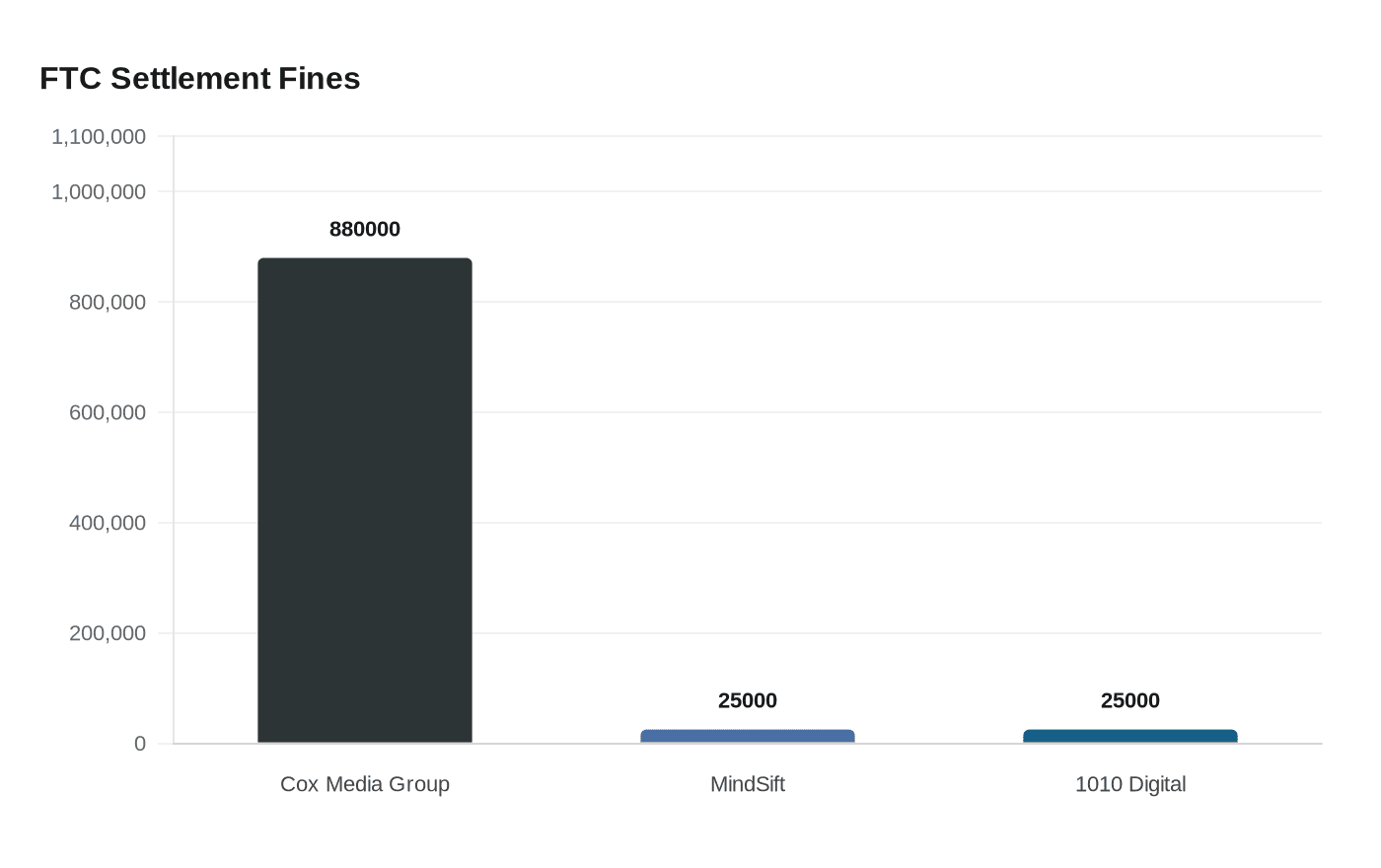
Under settlements announced Thursday, Cox Media Group, MindSift LLC and 1010 Digital Works LLC agreed to pay a total of $930,000. Cox Media Group, identified by the FTC as CMG Media Corporation doing business as Cox Media Group and based in Georgia, will pay $880,000. MindSift, based in New Hampshire, and 1010 Digital Works, based in Wisconsin, will each pay $25,000.

The FTC said the companies told prospective customers they used a special algorithm and voice-processing technology to listen for relevant conversations from consumers’ smart devices in real time, then steer ads to people in a specific geographic region. The agency said that was false. According to the complaints, the service did not use voice data, did not actually listen to conversations and did not accurately place ads in the locations buyers were promised.
The agency also said the firms falsely claimed consumers had opted in to the service, including through app terms of service. The FTC said that was not valid consent for the alleged targeting program. That detail goes to the core of the accountability gap in ad-tech surveillance: marketers were not merely overstating a feature, but presenting a supposedly permission-based system that regulators said lacked the consent necessary to justify it.

Christopher Mufarrige, director of the FTC’s Bureau of Consumer Protection, said the companies misled customers. The case also underscores how easy it can be for digital ad products to trade on a whiff of technical mystique. Cox’s 2023 marketing pitch said it used artificial intelligence and voice-processing technology to “identify buyers based on casual conversations in real time,” and its website described the service with the line “Creepy? Sure. Great for marketing? Definitely,” according to the FTC.
Reuters reported that Cox said it relied on marketing materials from a third-party vendor about the product and had stopped using the vendor’s product. However framed, the case leaves a sharp question hanging over the ad ecosystem: if companies can market phone-listening capabilities without using voice data at all, the consumer exposure is not just technical, but structural.
Know something we missed? Have a correction or additional information?
Submit a Tip