Singapore core inflation cools to 1.4%, undershoots forecasts in April
Singapore’s core inflation slipped to 1.4% in April, easing below forecasts and giving policymakers more room to wait on further action.
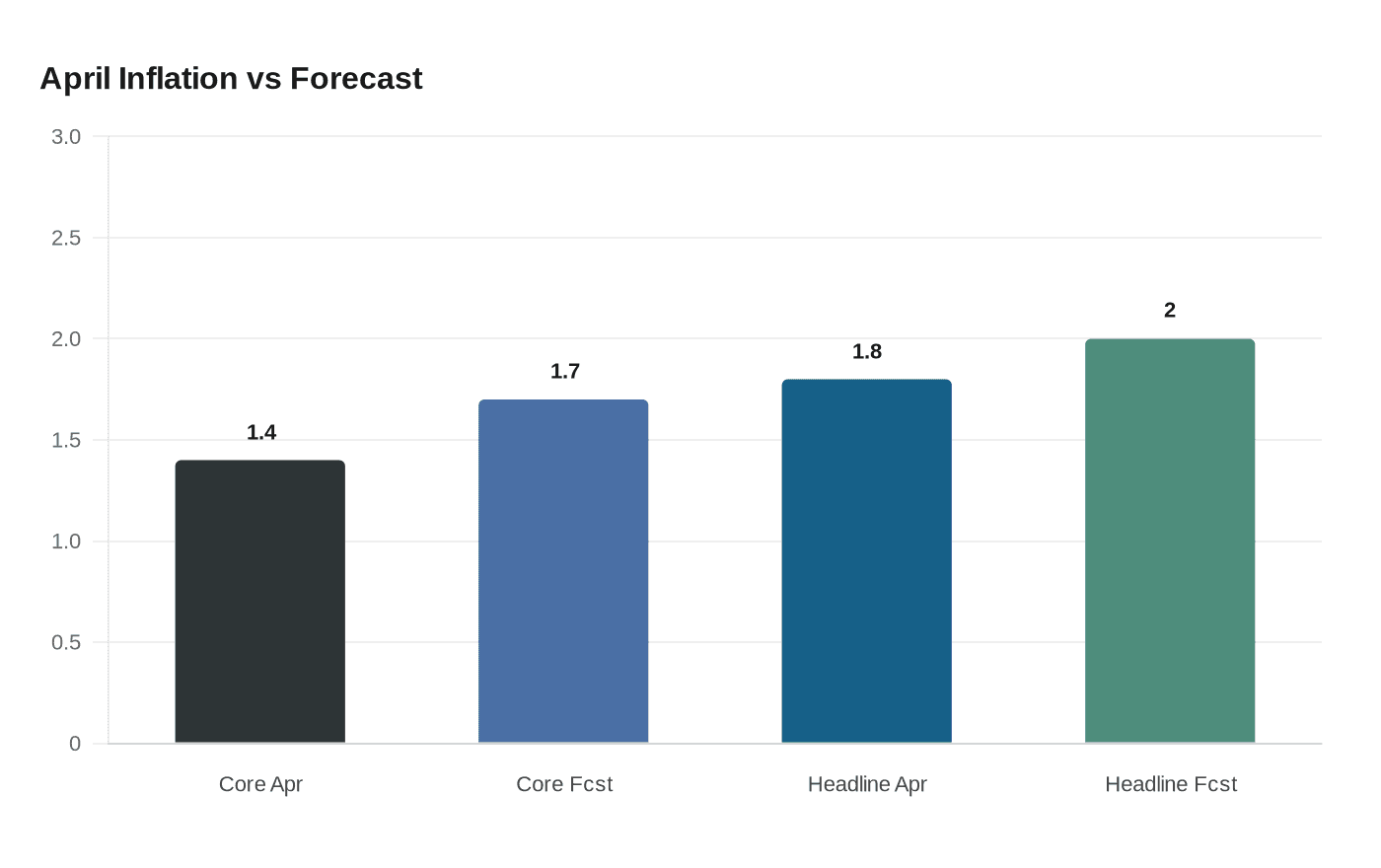
Singapore’s core inflation cooled to 1.4% in April, undershooting expectations and giving the Monetary Authority of Singapore more room to stay patient after a period of tighter policy. The reading, which strips out private road transport and accommodation costs, came in below the 1.7% forecast in a Reuters poll and pointed to a further easing in underlying price pressure.
Headline inflation also came in softer than expected at 1.8% year on year, below the 2.0% forecast. Together, the figures suggest that the sharpest phase of inflation has passed, at least for now, helping households and businesses with budgeting and reducing the urgency for any further tightening that would push borrowing costs higher.
The policy question is whether the softer reading reflects a healthy normalization or a broader loss of momentum. Lower inflation usually supports consumer demand by leaving households with a little more spending power, and it can ease pressure for wages to keep accelerating. But in Singapore’s case, price trends are heavily shaped by imported costs, exchange-rate moves and global commodity swings, so one calm month does not remove the risk of a fresh price shock.
That caution was already clear in the Monetary Authority of Singapore’s April policy statement. The central bank said core inflation had held steady at 1.2% in January and February 2026, noted that import costs for oil and food had been declining before the Middle East conflict, and warned that higher energy and other input costs could still pass through global supply chains and lift production and transport expenses. It also raised its 2026 inflation forecast range to 1.5% to 2.5% from 1.0% to 2.0%, underscoring that officials remain alert to external risks even as domestic price pressure eases.
The softer April print lands against a still-solid economic backdrop. Singapore’s economy grew 4.6% year on year in the first quarter of 2026, according to the Singapore Department of Statistics, after consumer prices had already eased to 1.8% in March. That combination of steady growth and cooling inflation gives policymakers more flexibility, but the balance remains delicate: if price pressures keep easing, borrowing conditions could stay stable for longer, yet a renewed rise in imported costs would quickly change the outlook.
Know something we missed? Have a correction or additional information?
Submit a Tip