AI boom drives up power bills for U.S. manufacturers
Belden Brick's electric bill jumped 90% as data centers pushed up grid costs, with one monthly capacity charge soaring from $1,600 to $12,000.

Belden Brick Company in Sugarcreek, Ohio, saw its electricity costs jump 90% last year as data-center demand in the region pushed up grid costs, and one monthly capacity charge climbed from about $1,600 to $12,000. For the 141-year-old brick maker, whose products have been used at the Alamo and Notre Dame University, the surge has already forced a 4% price increase even as profits shrank.
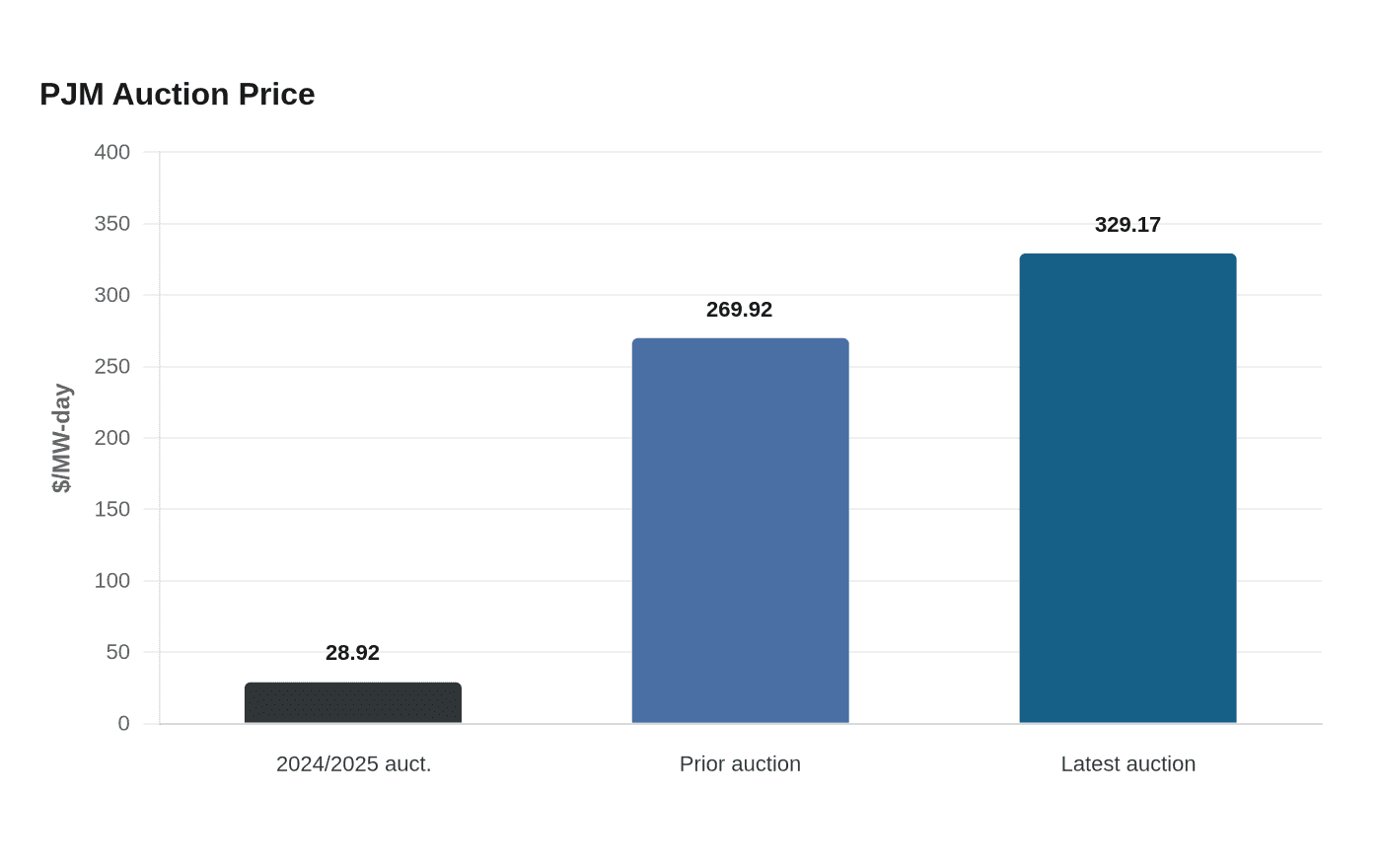
The pressure is showing up well beyond one brick plant. At Plaskolite, a plastic products maker with facilities in Pennsylvania and Ohio, annual capacity charges jumped to $1.2 million from $200,000 a year earlier. In PJM Interconnection, which covers much of the Midwest and mid-Atlantic, the latest capacity auction cleared at $329.17 per megawatt-day, up from $269.92/MW-day in the prior auction and far above the $28.92/MW-day result in the 2024/2025 auction.

Capacity charges are meant to pay generators for being available during peak demand, but the rapid build-out of AI data centers is tightening the market for everyone else. Factory bills are rising faster than those for many homes and other businesses, leaving manufacturers to absorb higher operating costs even when they are not the ones driving the new load. In central Ohio, fast data-center growth has strained grid capacity and raised electricity prices.
Ohio regulators have moved to shift more of the burden onto the biggest new users. The Public Utilities Commission of Ohio approved AEP Ohio’s data-center tariff on July 9, 2025, and the new rules took effect on July 23, 2025. Under the tariff, large new data-center customers must pay for at least 85% of the energy they are subscribed to use, even if they consume less, for up to 12 years.
This article was produced by Prism’s automated news system from verified source data, official records, and press releases, then run through automated quality and moderation checks before publishing. The system is built and supervised by the people who set the standards it runs under. Read our full AI policy.
Did this article answer your question?