AI fake citations cost lawyers $110,000 in vineyard family fight
A Southern Oregon vineyard inheritance fight turned into a $110,000 sanction after lawyers filed briefs with 15 fake citations and eight invented quotes.
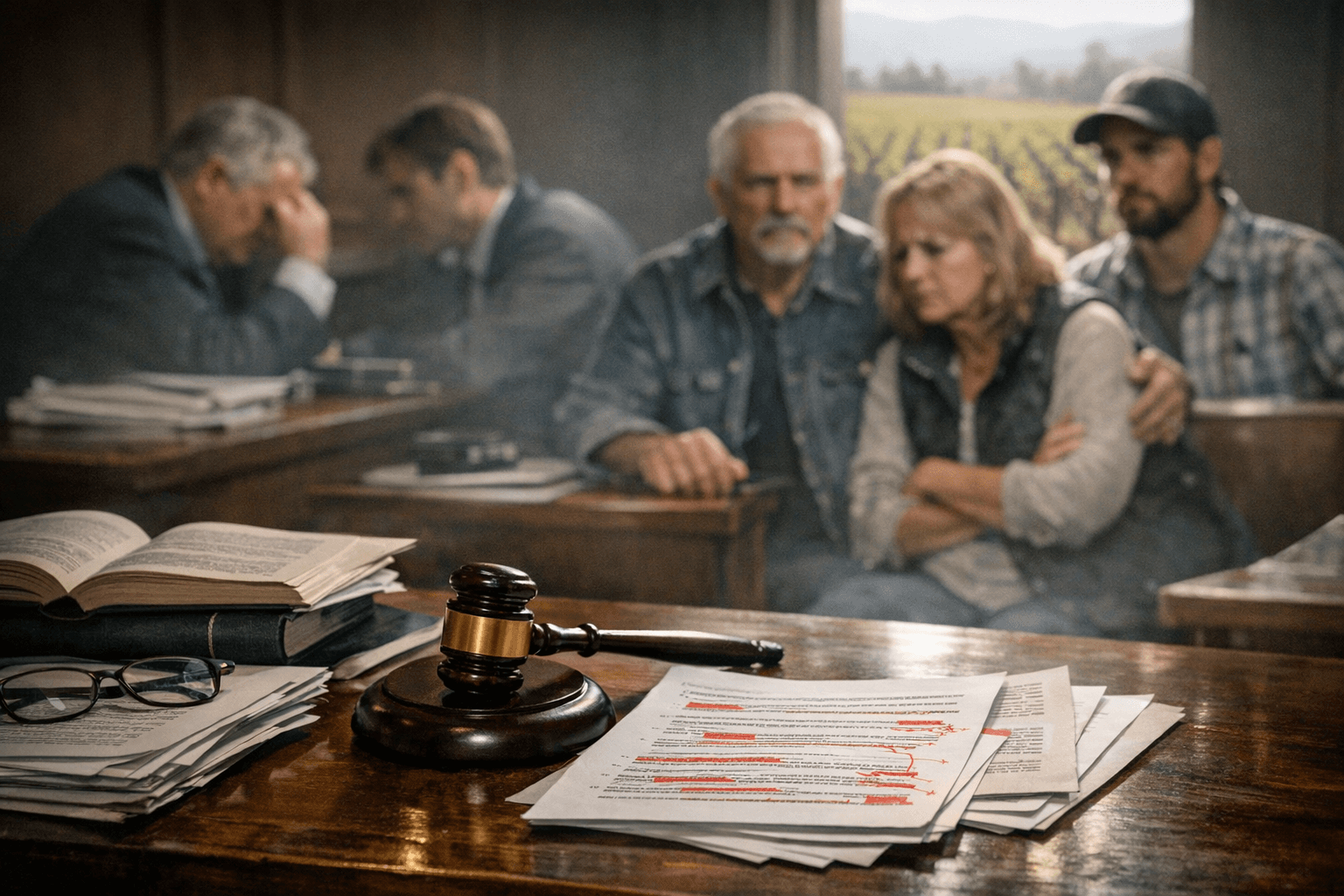
False AI citations pushed a family fight over Valley View Winery into one of Oregon’s most expensive sanctions cases, with a federal judge ordering $110,000 in fines and attorneys’ fees after finding that the plaintiffs’ side submitted briefs riddled with nonexistent law.
The dispute centered on Joanne Couvrette and her brothers, Mike Wisnovsky and Mark Wisnovsky, over control of the Jacksonville, Oregon vineyard. Couvrette filed suit on January 29, 2021, alleging that the brothers had taken advantage of their mother, Ann M. Wisnovsky, who was 88 and suffering from dementia, to gain control of the property in 2015 as her health declined. Ann M. Wisnovsky later died on March 16, 2023, in San Diego, California, but the litigation continued through substitute parties and counterclaims.
U.S. Magistrate Judge Mark D. Clarke issued the sanctions ruling on December 12, 2025, saying the plaintiffs’ briefing across three filings over five months contained 15 nonexistent case citations and eight fabricated quotations. Clarke dismissed the case with prejudice, which bars it from being filed again, and said the matter stood out as an outlier in the emerging universe of AI-sanctions cases. San Diego-based attorney Stephen Brigandi was ordered to pay $80,000 in attorneys’ fees and $15,000 in fines as part of the total penalty.
The ruling also said there was circumstantial but persuasive evidence that Couvrette herself may have generated the AI-assisted briefs, but the court held the signed attorneys responsible for the filings. Couvrette said she planned to appeal, while the Wisnovsky brothers said they were relieved to have the case behind them after five years of defending their mother’s wishes.
Beyond the vineyard feud, the case underscores how quickly AI mistakes are becoming a legal risk with real financial consequences. In 2025, the Oregon State Bar’s Formal Opinion 2025-205 said lawyers may use artificial intelligence only if they take reasonable steps to become competent with the technology, protect client confidentiality, and supervise anyone using it. Clarke’s order was described as the largest sanctions award ever imposed by an Oregon federal judge, far above the Oregon appellate court’s previous high mark of $10,000. The message for lawyers and clients is now unmistakable: in court filings, verification is no longer optional.
This article was produced by Prism’s automated news system from verified source data, official records, and press releases, then run through automated quality and moderation checks before publishing. The system is built and supervised by the people who set the standards it runs under. Read our full AI policy.
Did this article answer your question?

