Starlink outage reveals U.S. military dependence on Musk's network
A Starlink outage left two dozen Navy unmanned boats adrift off California, exposing how much Pentagon testing now depends on one private network.
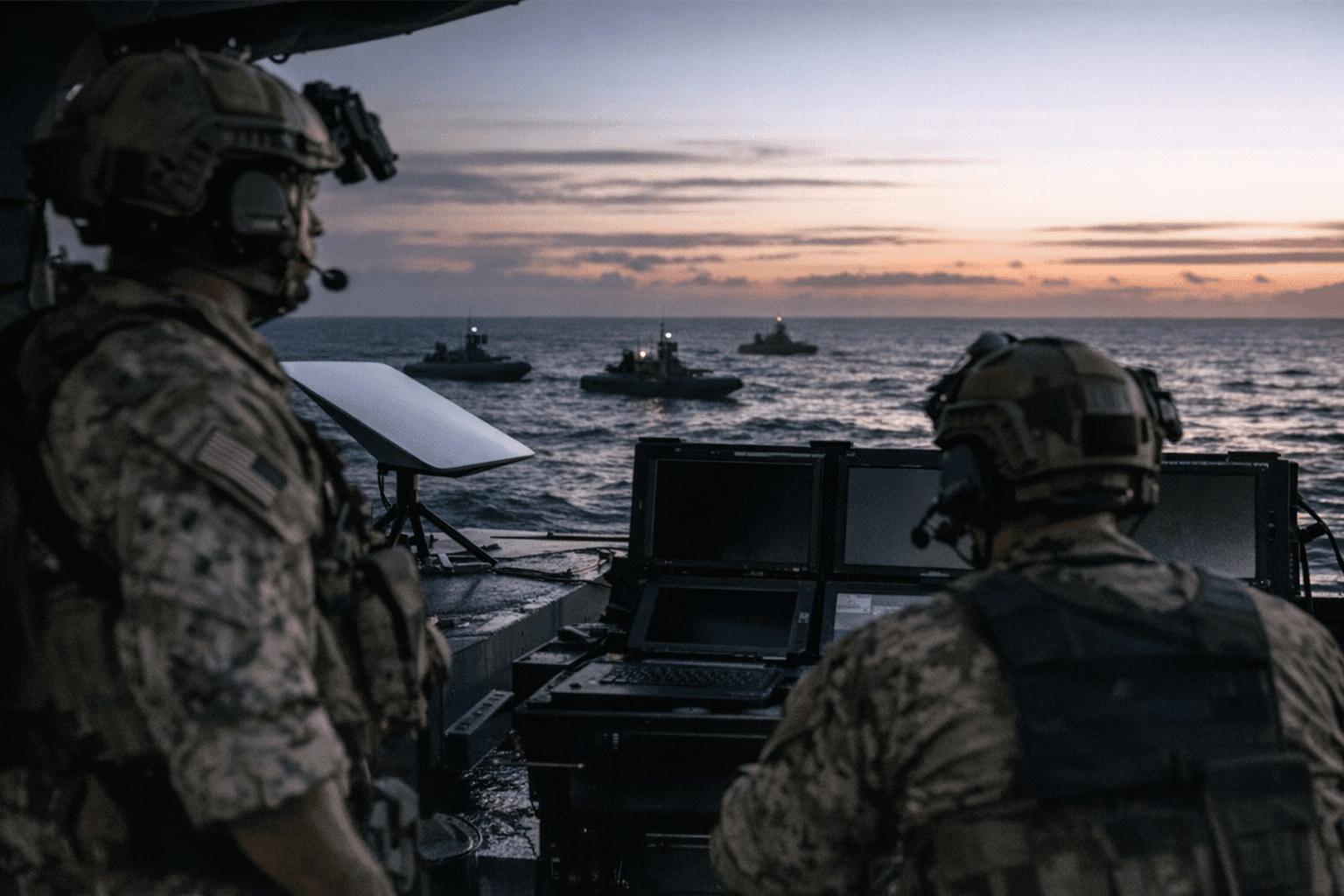
A global Starlink outage last August left two dozen unmanned surface vessels bobbing in the water off the California coast, and Navy operations stopped for almost an hour after communications failed. Internal Navy documents and a person familiar with the matter described the episode as a single point of failure in testing that increasingly depends on Elon Musk’s satellite network.
The outage was not the only Starlink-linked disruption in Navy trials. In April 2025, during another series of tests in California involving unmanned boats and flying drones, Starlink struggled to hold a solid connection under the heavy data load required to control multiple systems, according to a Navy safety report. The problems underscored how quickly Starlink has moved from a useful tool to a core dependency in military experimentation.
That dependence matters because the Navy’s autonomous vessel and drone programs are meant to strengthen U.S. options in a conflict with China. Starlink has become central to that effort because its low-earth-orbit constellation offers speed, reach and battlefield resilience that the military has struggled to match on its own. Clayton Swope of the Center for Strategic and International Studies put the strategic gap bluntly: “without Starlink, the U.S. government would not have access to a comparable global low-earth-orbit communications network.”
The Pentagon has long said space-based capabilities, including satellite communications and missile warning and tracking, are critical to military effectiveness. Defense Department factsheets describe Wideband Global SATCOM as the backbone of military wideband communications, but Starlink has given testing units a faster commercial path to high-capacity links. That speed comes with a tradeoff: the more the military builds around one private network, the more a technical fault, outage or business dispute can ripple through planning and operations.
Starlink’s own scale shows why those ripples can be so wide. By July 14, 2025, the network said it had more than 6 million active customers, had expanded to 42 new countries, territories and other markets over the previous year and had added more than 2,300 satellites through more than 100 missions. Just days later, another Starlink outage, later described as an internal software failure, produced about 61,000 outage reports on Downdetector and disrupted users in the United States, Europe and Ukrainian battlefield communications.
The Navy’s problems now sit at the center of a broader procurement question: whether military planners have built enough redundancy, or whether the push to adopt commercial space systems has outpaced the safeguards needed when one network becomes indispensable.
This article was produced by Prism’s automated news system from verified source data, official records, and press releases, then run through automated quality and moderation checks before publishing. The system is built and supervised by the people who set the standards it runs under. Read our full AI policy.
Did this article answer your question?

