AI Reconstructs Pompeii Victim Fleeing Mount Vesuvius Eruption
AI gave Pompeii’s latest victim a face, but the real evidence still lies in a skeleton, a mortar and 10 bronze coins.
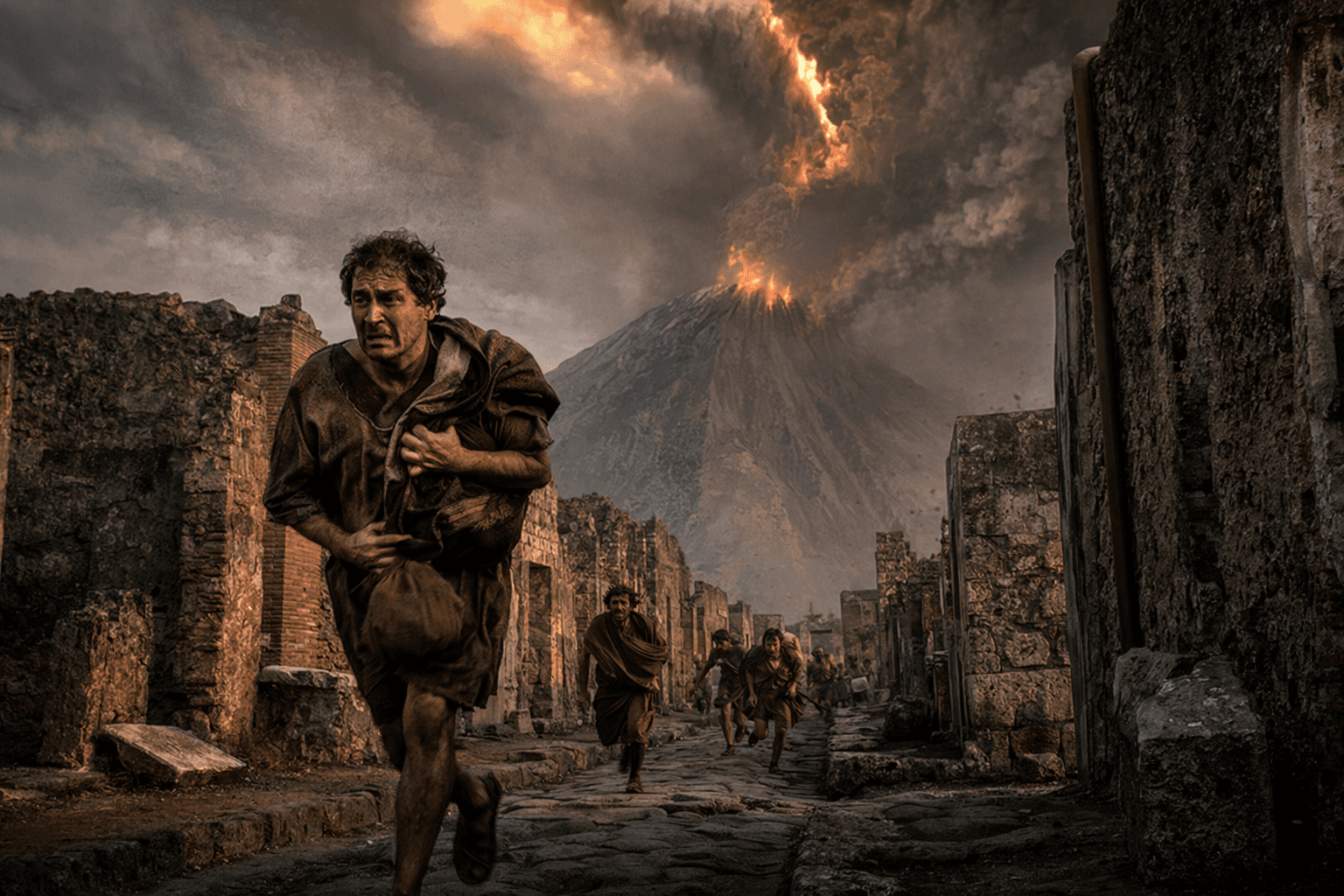
Pompeii has turned to artificial intelligence for the first time to reconstruct the appearance of a victim of Mount Vesuvius, creating a digital portrait that shows a man crouching for cover with a large bowl above his head as the volcano looms behind him.
The image is built around a male adult skeleton found just outside one of Pompeii’s southern gates, near Porta Nocera. Archaeologists say the man lay beside a terracotta mortar that may have served as improvised protection as he tried to flee the city, and he was also carrying a lamp, an iron ring and 10 bronze coins. Researchers believe he died in the early hours of the second day of the AD 79 eruption, likely after being struck by volcanic rocks while trying to reach the sea.
The reconstruction is more than a dramatic portrait. It is a test case for how machine learning can be used in public history without blurring the line between physical evidence and generated interpretation. The skeleton, the objects and the burial context are real; the face, pose and much of the visual detail are a modern reconstruction layered onto gaps that archaeology cannot fully close. That distinction matters at Pompeii, where the archive of ash-preserved bodies, graffiti, architecture and domestic objects has long made the site one of the richest windows into Roman life.
Gabriel Zuchtriegel, the director of the Archaeological Park of Pompeii, said that “if used well, artificial intelligence can help renew classical studies by making the ancient world more immersive.” The park has already been experimenting with that approach. Its RePAIR project, launched in September 2021, ran for four years under the coordination of the University of Venice Ca’ Foscari, with the Italian Institute of Technology and partners in Israel, Portugal and Germany. Funded through the European Union’s Horizon 2020 research and innovation programme, the project tested whether artificial intelligence and robotics could help reassemble thousands of fresco fragments from the House of the Painters at Work and the Schola Armaturarum.
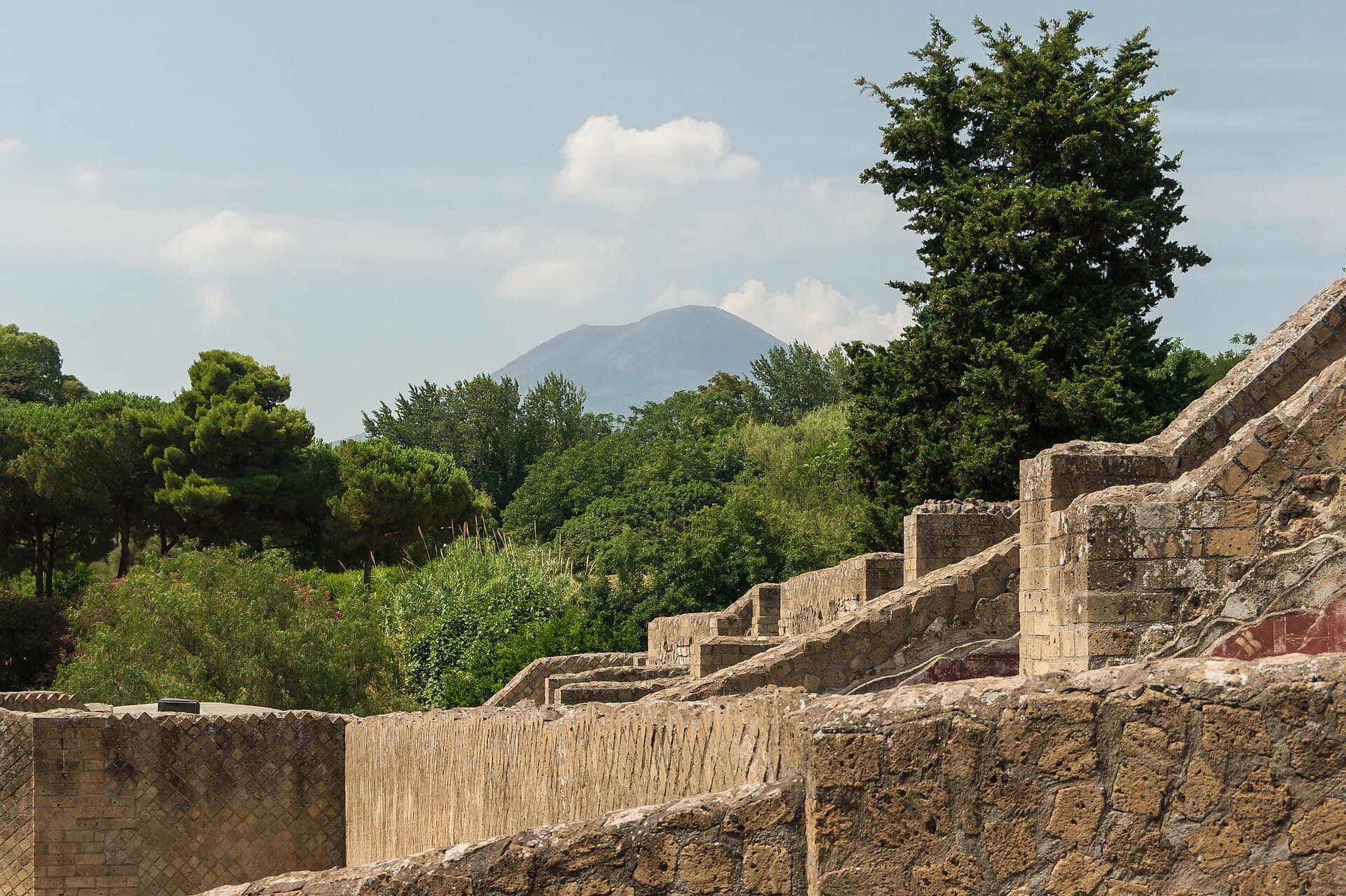
Pompeii’s appeal has only intensified the stakes. The park says the city had at least 20,000 inhabitants in AD 79 and that about 1,300 victims have been found since excavations began in 1748, even though two-thirds of the site remains unearthed. It also says its official ticketing system now limits admissions to 20,000 a day and uses named tickets, part of the pressure management required at a UNESCO World Heritage Site that still draws more than 4 million visitors a year. The new AI image shows how Pompeii is being presented not just as a ruin, but as a place where science, technology and public memory are being negotiated in real time.
This article was produced by Prism’s automated news system from verified source data, official records, and press releases, then run through automated quality and moderation checks before publishing. The system is built and supervised by the people who set the standards it runs under. Read our full AI policy.
Did this article answer your question?