Suspected suicides linked to domestic abuse rise in England and Wales
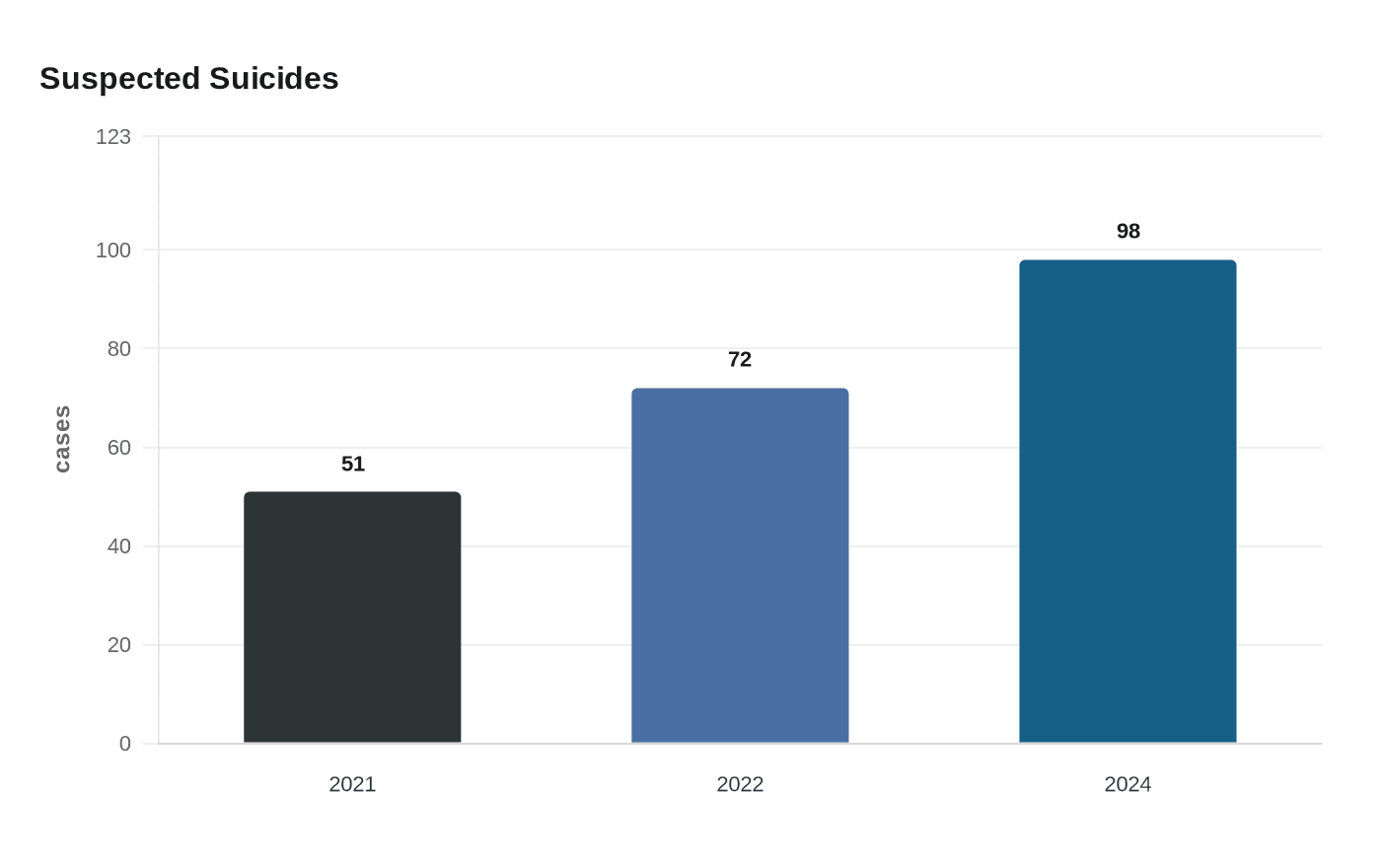
Suspected suicides linked to domestic abuse rose to 98 in England and Wales in the year to March 2024, underscoring a hidden toll police say is still being undercounted.

Suspected suicides linked to domestic abuse have climbed sharply in England and Wales, exposing what police leaders say is a hidden death toll that has long been missed in official counts. The National Police Chiefs’ Council said its latest Domestic Homicide Project recorded 98 suspected suicides linked to domestic abuse in the year to 31 March 2024, up from 93 the year before, 72 in the year to March 2022 and 51 in the year to March 2021.
For the second year in a row, those suspected suicides outnumbered homicides involving current or previous partners. That shift matters because it suggests the fatal end point of domestic abuse is not always a killing by a partner, but can be a suicide after years of coercion, violence and control. The project said deaths involving a current or previous partner consistently made up around a third of domestic abuse-related deaths each year across the four years from 1 April 2020 to 31 March 2024.
Police leaders said the increase reflects better awareness and improved recording rather than a sudden surge in abuse itself. But they also warned that the figures still understate the true scale. Domestic abuse-linked suicides are often not recognised as abuse-related at the point of death, and recording practices vary across police forces, leaving families and investigators with an incomplete picture of how many victims die after repeated abuse reports.
The latest annual report points to a broader mortality burden. Over the five-year period covered by the Domestic Homicide Project, 1,452 deaths were linked to domestic abuse, and 347 deaths were recorded in the year to March 2025, an increase of 85 from the previous year, with most of those deaths again suspected suicides following domestic abuse. The trend has sharpened demands for a more joined-up response before cases end in a fatal outcome.
Louisa Rolfe, a senior policing figure, has said investigators have missed obvious patterns of abuse and coercive and controlling behaviour, while new guidance now tells officers responding to unexpected deaths to ask about any history of abuse. Clare Moody and the Association of Police and Crime Commissioners have welcomed recommendations to strengthen links between domestic abuse teams and internal suicide prevention teams, and for police and the Crown Prosecution Service to review posthumous prosecution in suspected domestic abuse-suicide cases. The message from the numbers is stark: between repeated reports of abuse and a death, too many warning signs are still going unheeded.
This article was produced by Prism’s automated news system from verified source data, official records, and press releases, then run through automated quality and moderation checks before publishing. The system is built and supervised by the people who set the standards it runs under. Read our full AI policy.
Did this article answer your question?


