AI spending boom strains economy as data centers surge
OpenAI and Anthropic drove a $131 billion annualized AI capex pace late in 2025, while data centers were on track to top half a trillion dollars.

Federal Reserve research said AI-related capital spending by OpenAI and Anthropic reached a $131 billion annualized pace in the fourth quarter of 2025, equal to about 1.31 percent of U.S. GDP, even as business adoption remained far smaller. Census Bureau survey data showed about 18 percent of U.S. firms had adopted AI by year-end 2025, underscoring how much of the spending surge still ran ahead of broad commercial use.
The money flowing into the sector was concentrated at the top. OpenAI and Anthropic raised a combined $102 billion from 2023 through 2025, and by the end of 2025 their post-money valuations were about $500 billion and $350 billion, respectively. The Federal Reserve also said U.S. data-center spending alone was expected to exceed half a trillion dollars in 2025, a scale that has made AI infrastructure one of the biggest investment booms in the economy.
That boom has clear winners. Frontier model developers have attracted enormous financing, while chip suppliers, cloud providers, utilities and landowners have all been pulled into the buildout. But the same wave has also raised the risk that capital, power and political attention are being diverted from other uses, especially in places where data centers compete with housing, manufacturing or grid upgrades for the same land, labor and transmission capacity.
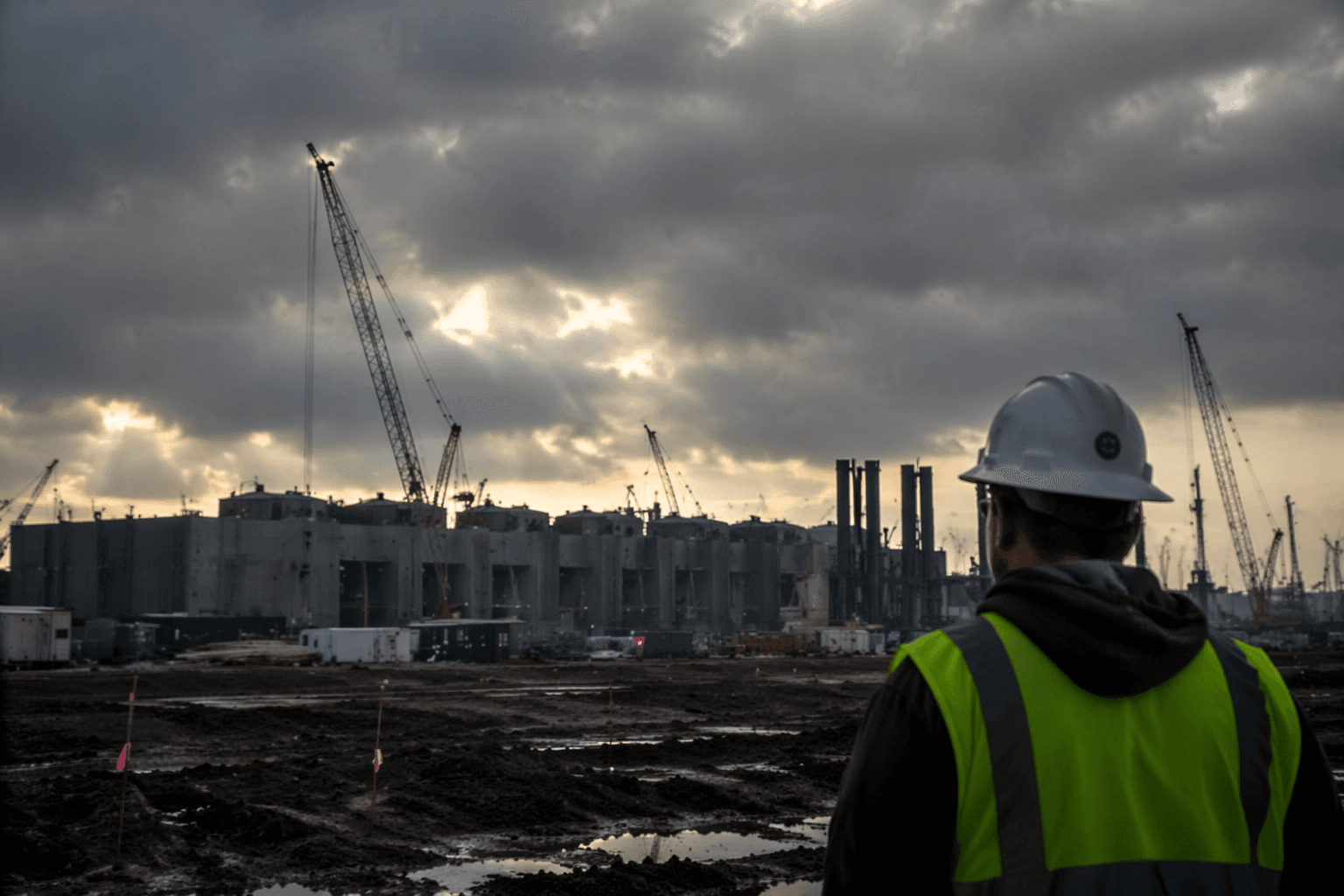
The energy bill is becoming harder to ignore. The International Energy Agency estimated that data centers used about 415 terawatt-hours of electricity in 2024, roughly 1.5 percent of global consumption. In its base case, the agency projected electricity generation for data centers would rise from 460 terawatt-hours in 2024 to more than 1,000 terawatt-hours in 2030 and 1,300 terawatt-hours in 2035. The IEA said demand from data centers had been growing about 12 percent a year over the last five years.
That trajectory has intensified pressure on utilities and regulators already confronting backlash over electricity prices and siting decisions. New Jersey lawmakers have moved to target tax breaks for data centers, a sign that state incentives, once meant to lure investment, are now being scrutinized as communities weigh the costs of the buildout. The IEA said its April 2025 Energy and AI report was the first comprehensive global analysis on the issue, and by April 2026 it said the field had evolved quickly enough to require a new look at energy affordability, security and broader economic effects.
This article was produced by Prism’s automated news system from verified source data, official records, and press releases, then run through automated quality and moderation checks before publishing. The system is built and supervised by the people who set the standards it runs under. Read our full AI policy.
Did this article answer your question?