AI stocks stumble as rate hike fears and Broadcom results rattle markets
A hotter Fed outlook and Broadcom's miss jolted AI stocks, sending South Korea's KOSPI down 8.29% and testing how much perfection investors had priced in.
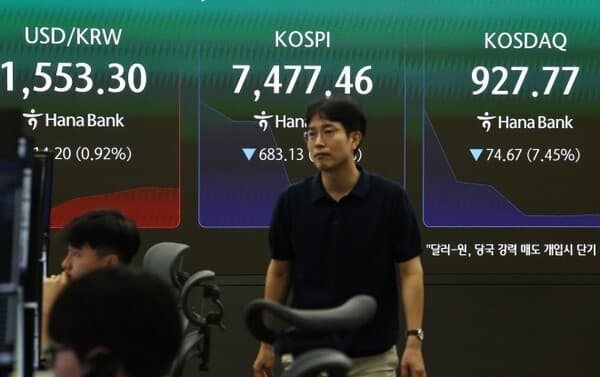
The AI trade lost its footing as investors abruptly shifted from chasing momentum to questioning whether technology valuations had outrun the fundamentals beneath them. The sharpest warning came in Seoul, where a technology-led selloff drove South Korea’s KOSPI down 8.29% to 7,484.41, its biggest daily fall since March 4 and about 15% below the 8,801.49 peak reached on June 2. Circuit breakers were triggered as Samsung Electronics tumbled 10.2% and SK Hynix fell 7.7%, showing how tightly the market’s biggest AI-linked names had become bound to the broader mood.
The first trigger was not a new weakness in artificial intelligence itself, but a repricing of interest-rate risk. A strong U.S. labor report pushed traders to rethink how long the Federal Reserve could stay on hold, and rate futures quickly moved to price in more than a 70% chance of a December hike, up from 45% a week earlier. A separate Reuters market update on June 5 put that December probability at 68.4%, compared with 52% late the previous Thursday, underscoring how fast the market’s assumptions changed. Higher-rate expectations typically hit growth stocks hardest because a larger share of their value rests on earnings expected far in the future.
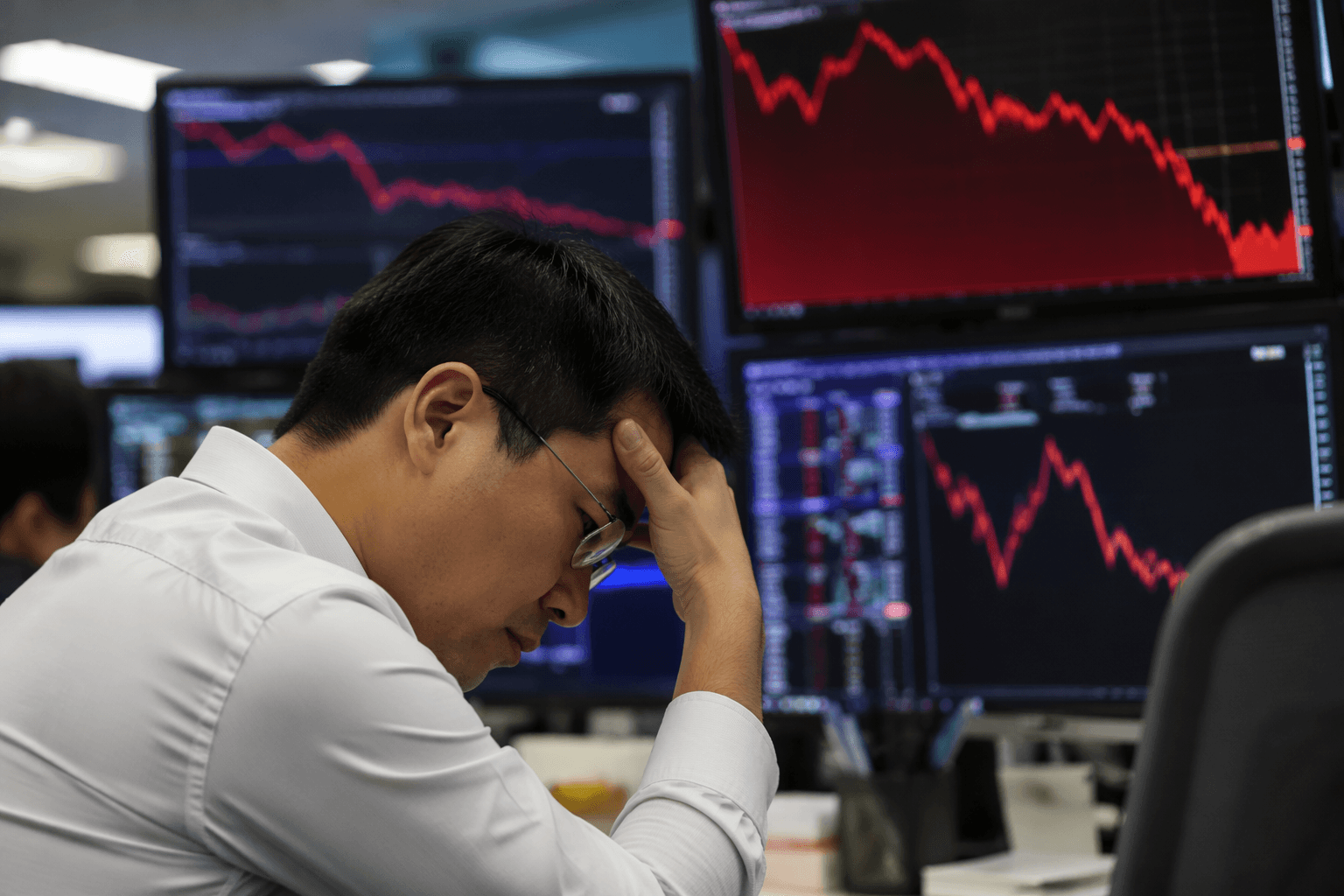
Broadcom then sharpened the selloff. Shares sank more than 14% after results fell short of the lofty expectations surrounding demand for its custom AI chips business, and the premarket drop threatened to erase more than $315 billion from a market value that had stood around $2.268 trillion. That reaction mattered beyond one company. It suggested investors were not merely punishing a single earnings miss, but revisiting whether the whole AI complex had been priced for flawless execution.

The damage spread across Asia, and leverage appears to have amplified the move in Korea. Bloomberg said leveraged positioning likely intensified volatility, while Han Ji-young of Kiwoom Securities said increased volatility was inevitable even though semiconductor earnings momentum remained strong. That distinction is the key test for AI investors: this looks less like a collapse in demand for chips, cloud infrastructure or model training, and more like a correction against stretched expectations. The U.S. dollar also climbed near a two-month high as traders boosted rate-hike bets, reinforcing the same message across markets: the AI boom is intact, but the price paid for it may need to come down.
This article was produced by Prism’s automated news system from verified source data, official records, and press releases, then run through automated quality and moderation checks before publishing. The system is built and supervised by the people who set the standards it runs under. Read our full AI policy.
Know something we missed? Have a correction or additional information?
Submit a Tip