Britain unveils £1.1 billion plan to build sovereign AI computing capacity
Britain pledged £1.1 billion for AI compute, including a £750 million supercomputer and £400 million for next-generation chips, in a bid for sovereign capacity.

Britain committed £1.1 billion to domestic AI computing, bundling a £750 million national supercomputer with fresh support for British chip firms as the government pushed to build more of the sector at home. The plan is designed to strengthen national security as well as economic competitiveness, and it underscores a shift from buying compute abroad to trying to own more of the stack.
Keir Starmer’s government had already announced £400 million earlier the same day at London Tech Week for specialist AI chip purchases. The new package sits inside a wider Compute Roadmap, published in July 2025, which said Britain had committed up to £2 billion by 2030 to build a modern public compute ecosystem and reduce reliance on foreign computing power.
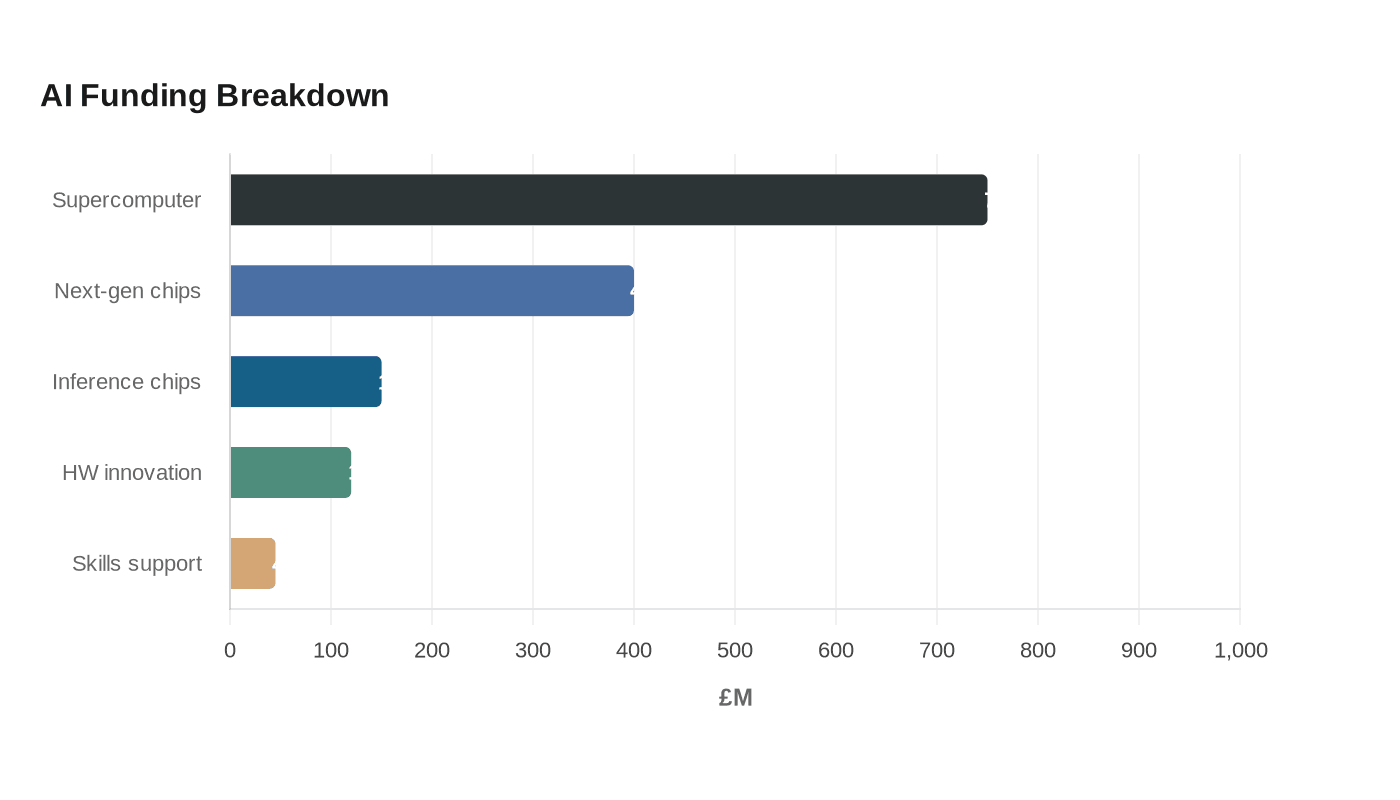
The headline item is the new national AI supercomputer, due to deploy in 2030. Of that £750 million budget, £400 million is reserved for next-generation chips, while £150 million is earmarked for inference chips to be purchased this summer from British firms. That spending aims to give the UK more control over the hardware that powers model training and deployment, but the long lead time shows how much of the infrastructure race remains ahead of Britain.
The package also includes a fund led by Playground Global, with the British Business Bank working toward a cornerstone commitment of up to £150 million. The bank said that would be its largest commitment ever. Playground Global said it will open its first office outside the United States in the UK, a sign that the country wants not just to attract capital, but to become a base for AI hardware investment.
A separate £120 million AI hardware innovation programme will help British companies design, develop and test new chips. Another £45 million in skills support lifts total AI hardware sector skills funding to £80 million, with the money aimed at doctoral training and undergraduate bursaries for engineers, chip designers and technicians. The industrial logic is clear: without a deeper talent pipeline, Britain cannot sustain its own compute ambitions.
The government has also said the AI Research Resource, a suite of advanced supercomputers for researchers, academia and industry, will be paired with a large-scale storage facility in Bristol expected to go live by August 2026. In November 2025, ministers said they would act as a “first customer” for high-quality AI hardware with up to £100 million for startups, and that they would invest up to £250 million over four years in cloud GPUs. The pattern is unmistakable: Britain is trying to assemble a sovereign AI hardware base, but the scale and speed of the global compute race still set a daunting benchmark.
This article was produced by Prism’s automated news system from verified source data, official records, and press releases, then run through automated quality and moderation checks before publishing. The system is built and supervised by the people who set the standards it runs under. Read our full AI policy.
Know something we missed? Have a correction or additional information?
Submit a Tip