AI tools reshape China’s booming microdrama industry, slashing costs
AI now powers China’s short-drama boom, where a 50.4 billion yuan market has overtaken mainland film and cheap production is rewriting the business.

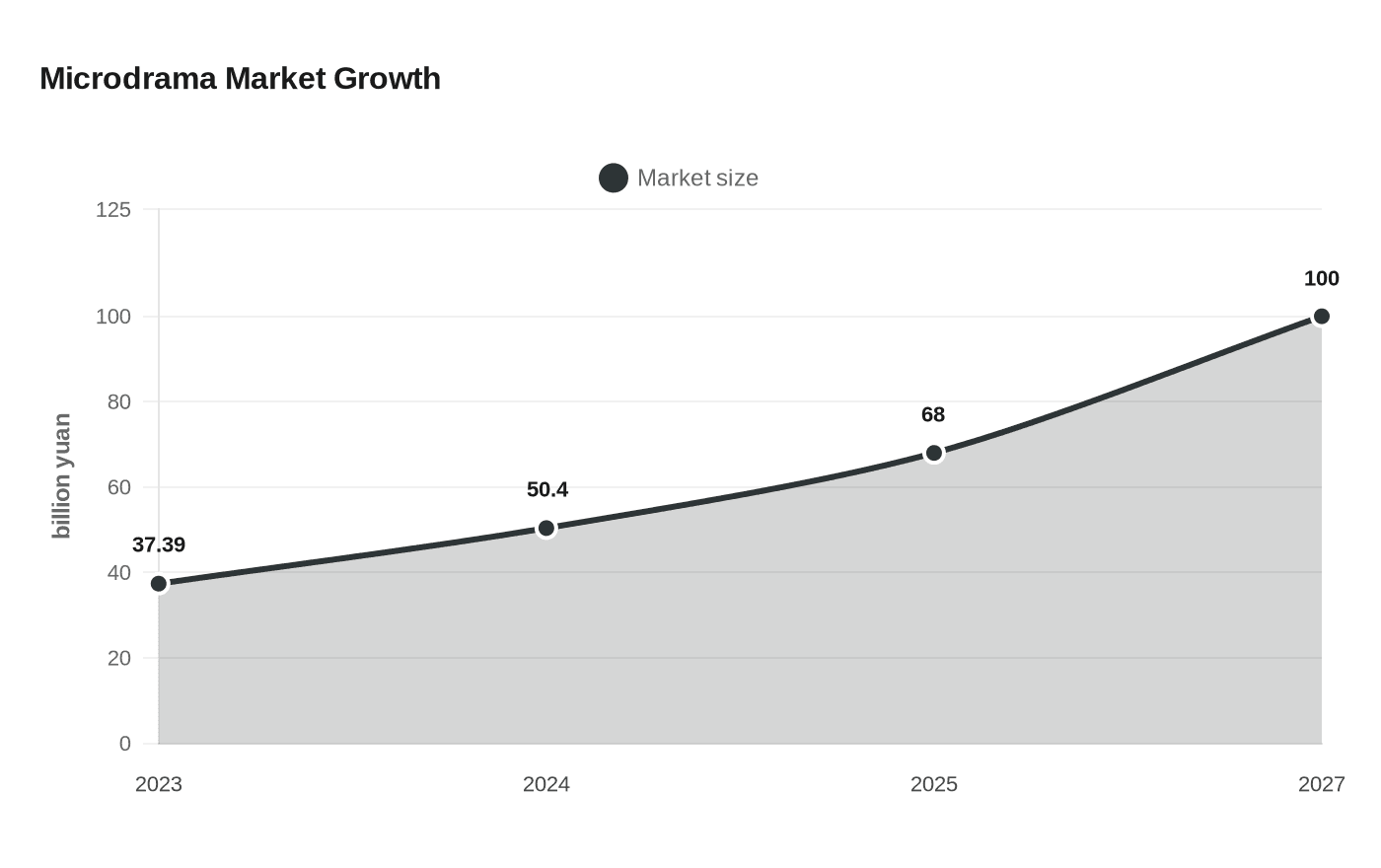
China’s microdrama industry has become a test case for how artificial intelligence can industrialize culture at scale. AI tools are now being used to speed scripting, character design, translation, dubbing and visual production in a market that was estimated at 50.4 billion yuan in 2024, bigger than mainland film box office revenue for the first time.
That expansion has been dramatic even by China’s standards. One industry report put the market at 37.39 billion yuan in 2023, up 267.65 percent from a year earlier, and projected it would top 68 billion yuan in 2025. State media and trade coverage have also said the sector could exceed 100 billion yuan by 2027, a sign that short-form vertical storytelling has moved from a niche mobile product into a mainstream entertainment business built for platforms such as Douyin.
The stakes go well beyond content. Estimates cited by Peking University’s National School of Development put direct employment in the sector at about 690,000 people in 2025, with 2.03 million jobs overall. That makes the shift to AI a labor issue as much as a creative one, because the same systems that accelerate output also threaten to squeeze the production ecosystem that now surrounds the format.
China has moved quickly to institutionalize the change. In April 2025, officials launched a large-scale intelligent translation and production center for short dramas at the Malanshan Audio and Video Laboratory in Hunan, signaling state support for AI-enabled content creation. DataEye, a leading industry data platform, estimated that AI-generated comic-style microdramas accounted for 16.8 billion yuan in market share in 2025, with more than 10,000 such titles produced that year.
The model is already reaching beyond mainland China. State media said Chinese short-drama apps were expected to generate 1.5 billion U.S. dollars in overseas revenue in the first eight months of 2025, up 194.9 percent year on year, underscoring how rapidly the format is being exported.
For U.S. streaming services and creator platforms, the Chinese experience offers a warning and a preview. If speed, personalization and cost-cutting outrank traditional production values, the pressure to automate will spread from scripting to postproduction and localization, reshaping who gets hired, how fast content turns over and what audiences are trained to expect. Experts have cautioned that AI-generated videos still show clear gaps in understanding human behavior, suggesting the industry may be entering a new phase in which scale is no longer enough and quality becomes the next battleground.
This article was produced by Prism’s automated news system from verified source data, official records, and press releases, then run through automated quality and moderation checks before publishing. The system is built and supervised by the people who set the standards it runs under. Read our full AI policy.
Did this article answer your question?