Aid Flotilla Nuestra América Delivers Food, Solar Panels and Medicine to Havana
The 75-foot shrimp boat Maguro docked in Havana before dawn Tuesday, delivering 14 tons of food, medicine, solar panels and bicycles as Cuba endures its seventh nationwide blackout since 2024.

The Maguro departed last week from the port of Progreso in Mexico and entered Havana Harbor early Tuesday, delivering 14 tons of food, medicine, solar panels and bicycles. The 75-foot shrimp boat made its ceremonial arrival shortly after sunrise, though it had already quietly docked in darkness hours before. About 30 people were aboard the vessel, which arrived as part of the "Nuestra América," or "Our America," convoy.
The first boat in a humanitarian aid flotilla arrived in Cuba to support the island amid a worsening U.S. energy blockade that is deepening its economic and energy crises. Organizers had originally expected the Maguro to dock on Saturday, but adverse weather conditions in the Caribbean forced the delay. Two more ships remain en route and were expected to arrive in coming days.
The convoy drew direct inspiration from the Global Sumud Flotilla, which attempted to bring aid to Gaza in October 2025. Primarily organized by Progressive International, the coalition also includes the People's Health Movement, MediCuba, and Global Health Partners, with political parties across Latin America participating, including Mexico's governing Morena Party. Prominent participants include former British Labour leader Jeremy Corbyn, Irish musical group Kneecap, U.S. labor leader Chris Smalls, and Colombian Senator Clara López. More than 650 participants from 33 countries arrived on the island last weekend as part of the flotilla and were greeted by President Miguel Díaz-Canel.
On January 29, U.S. President Donald Trump, through Executive Order 14380, imposed an oil blockade on Cuba, threatening sanctions against any country that directly or indirectly supplies oil to Cuba. Cuba's Deputy Minister of Energy and Mines Argelio Abad Vigo stated last week that the island, which produces only about 40 percent of the fuel it needs, has gone for three months without access to vital supplies of diesel, fuel oil, petrol, jet fuel, and liquefied petroleum gas. The human toll has been severe: the country has suffered seven nationwide blackouts since 2024, two of them in the days immediately preceding the Maguro's arrival.
Convoy organizers said the solar power would be directed primarily to hospitals and clinics that would otherwise be left with no electricity. Without fuel, refrigerating food becomes impossible, transportation comes to a standstill, and water pumps stop working. Dialysis patients cannot receive treatment.
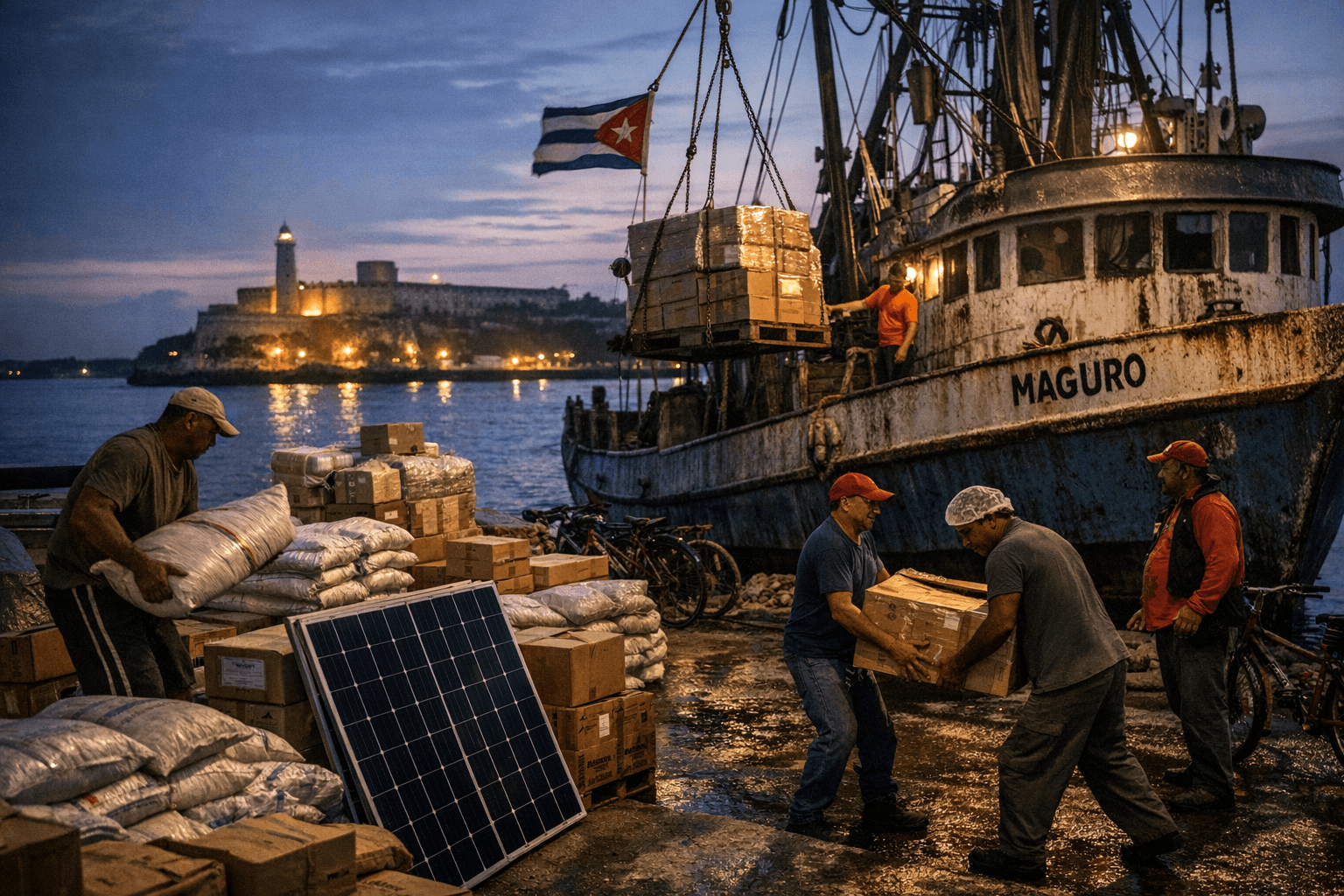
The sea delivery is one piece of a broader air-and-sea mission. The first aid shipments arrived by plane last week from Europe, Latin America and the United States, with the full operation reported to be bringing some 50 tons of aid to Cuba in total. A delegation from Milan, Italy, brought more than four tons in medical supplies, with another half ton from a Brazilian delegation, while much of the incoming food came from the United Kingdom, Ireland, Argentina, Mexico, Turkey and elsewhere.
Organizers named the convoy after an essay by Cuban writer and philosopher José Martí. The arrival drew competing reactions. Havana resident Lisandra Sánchez expressed relief, saying in Spanish: "We are grateful to all these brothers and sisters who are helping us with whatever aid they can provide us during this situation we are now facing in the country." Participant Olivia DiNucci urged further action: "And yes, people should keep donating and keep sending aid; that is the immediate need, it's the immediate material needs of the Cuban people as the blockade continues."
Not everyone was moved. Havana resident Carlos was skeptical, saying the aid was unlikely to make a material difference and would not resolve "the structural internal problems of the country." In South Florida, the city of Hialeah organized a "Free Cuba" rally Tuesday evening in support of toppling Cuba's current government, reflecting the deep divisions within Cuban exile communities over whether the flotilla helps ordinary Cubans or serves the political interests of the Cuban state.
A February YouGov poll found that 46 percent of Americans disapprove of the energy blockade, while 28 percent support it; a small plurality of 29 percent said the U.S. approach toward Cuba was too harsh. The Nuestra América Convoy arrived just days before Cuba is expected to receive its first shipment of Russian oil, a development that, if it materializes, could begin to ease a crisis that no single flotilla, however symbolically powerful, can resolve on its own.
This article was produced by Prism’s automated news system from verified source data, official records, and press releases, then run through automated quality and moderation checks before publishing. The system is built and supervised by the people who set the standards it runs under. Read our full AI policy.
Did this article answer your question?


