Air China Restores Beijing-Pyongyang Flights After Six-Year Suspension
Air China's flight CA121 touched down in Pyongyang Monday, ending a six-year aviation blackout between the two capitals that began with COVID-19 closures.
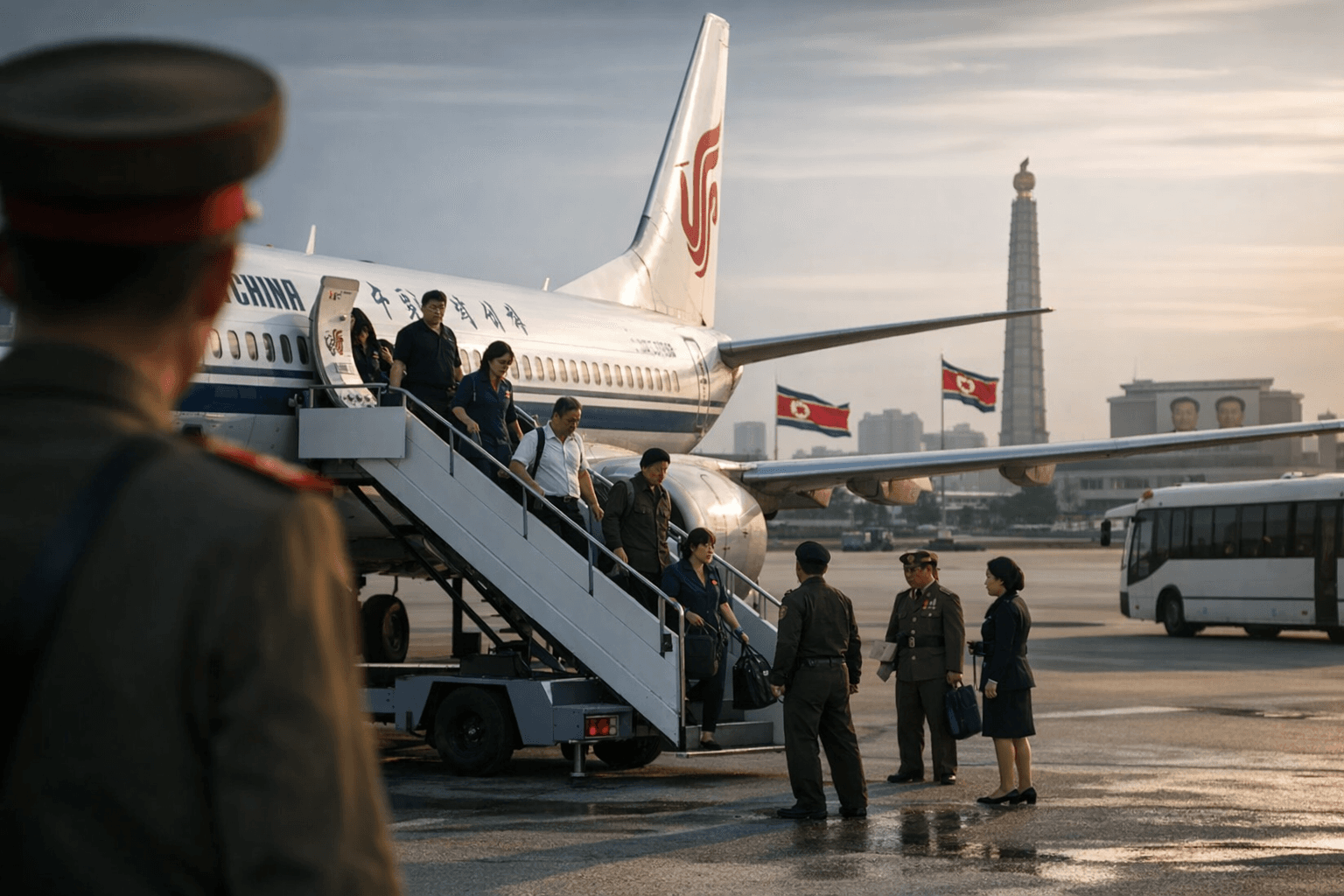
Flight CA121 lifted off from Beijing Capital International Airport at 8:05 a.m. Monday aboard a Boeing 737-700 and landed at Pyongyang's Sunan International Airport shortly after 11 a.m. local time, ending a commercial aviation gap between China and North Korea that had stretched across six years and a pandemic.
Air China resumed passenger service to Pyongyang for the first time in six years on Monday, following the suspension of regular flights during the pandemic. The weekly route, operating every Monday under flight numbers CA121 and CA122, marks the most significant restoration of regular commercial aviation between the two capitals since Pyongyang sealed its borders at the onset of COVID-19 in early 2020.
The return flight, CA122, departs Pyongyang at noon and lands back in Beijing just before 1 p.m., giving the route a clean day-trip schedule that will primarily serve diplomats and executives with business interests in the North. Air China confirmed the restart on March 14, 2026, with its reservation system showing CA121/122 operating every Monday through May 18 before scaling back to two Monday rotations in June.
The announcement came only days after cross-border passenger trains resumed between the two capitals, marking the most significant relaxation of North Korea's pandemic-era border controls since early 2020. Pyongyang sealed its land, sea and air frontiers at the onset of COVID-19 and expelled tourists and most diplomats. Limited charter flights and humanitarian cargo traffic were permitted from late 2022, but scheduled passenger services remained suspended.
The sequencing matters. Trains through the border city of Dandong restarted first this month, reconnecting the overland corridor that handles the bulk of bilateral trade. The Air China resumption layers a faster, higher-profile link on top of that ground connection, giving Beijing and Pyongyang a transport architecture that looks increasingly like normalcy.
The restored route is vital for diplomats and Chinese companies active in the DPRK, though capacity will remain limited and entry formalities for travelers are expected to remain strict. China is North Korea's largest trading partner and dominant diplomatic partner, and faster logistics can accelerate the movement of consumer and industrial goods constrained but not fully blocked under existing sanctions frameworks.
Observers in Seoul, Tokyo and Washington will parse the timing carefully. North Korea has in recent years expanded its strategic ties with Russia, and the restoration of regular Chinese air access arrives at a moment when the regional alignment around Pyongyang is under scrutiny. Whether the flight schedule expands beyond Monday-only service, and whether it is accompanied by high-level diplomatic visits or new trade agreements, will determine whether Monday's departure signals a genuine reopening or simply a controlled easing after years of self-imposed isolation.
This article was produced by Prism’s automated news system from verified source data, official records, and press releases, then run through automated quality and moderation checks before publishing. The system is built and supervised by the people who set the standards it runs under. Read our full AI policy.
Did this article answer your question?