Air sampling and sniffer dogs could detect trafficked parrots at ports
University of Adelaide researchers say detection dog Stan identified concealed wildlife products, including animal pelts, from container air filters with approximately 98% accuracy.
Detection dog Stan picked up the scent of concealed wildlife products — including animal pelts — from air filters attached to shipping-container vents with approximately 98% accuracy, researchers say. The work was developed as part of a four-year Ph.D. project conducted in collaboration with the shipping company CMA CGM and aims to make it easier to screen sealed containers without opening cargo.
University of Adelaide researchers described a portable air-extraction device that fits onto a standard container vent and "draws air through a filter to collect a sample." The research team wrote, "To bridge this gap, we investigated air sampling as a way to screen containers for wildlife without opening them, damaging cargo, or disrupting port operations." The collected filter is then taken to a controlled area and presented to a trained detection dog for indication.
The team emphasises the operational logic: "Our approach brings the scent to the dog, allowing many more containers to be screened efficiently and safely," the University of Adelaide researchers wrote. The device is described in the reporting as low cost, portable and scalable, and the researchers say those attributes make it "well suited for use in high-risk ports and border crossings worldwide." The project partner CMA CGM is identified in the reporting as the world's third largest shipping company.
Detection performance has been reported as high in the controlled trials. One outlet reported that the dog Stan "picked up concealed wildlife products – including animal pelts – with 98 per cent accuracy," while other summaries described the result as "nearly 98% accuracy." The researchers caution the study was "conducted under controlled conditions" and noted that "these early results are encouraging." They also said, "We are also exploring machine-based detectors to analyse samples and support the future development of this project," while acknowledging that "initial findings show the dogs still outperform these technologies, which currently remain our most effective approach."
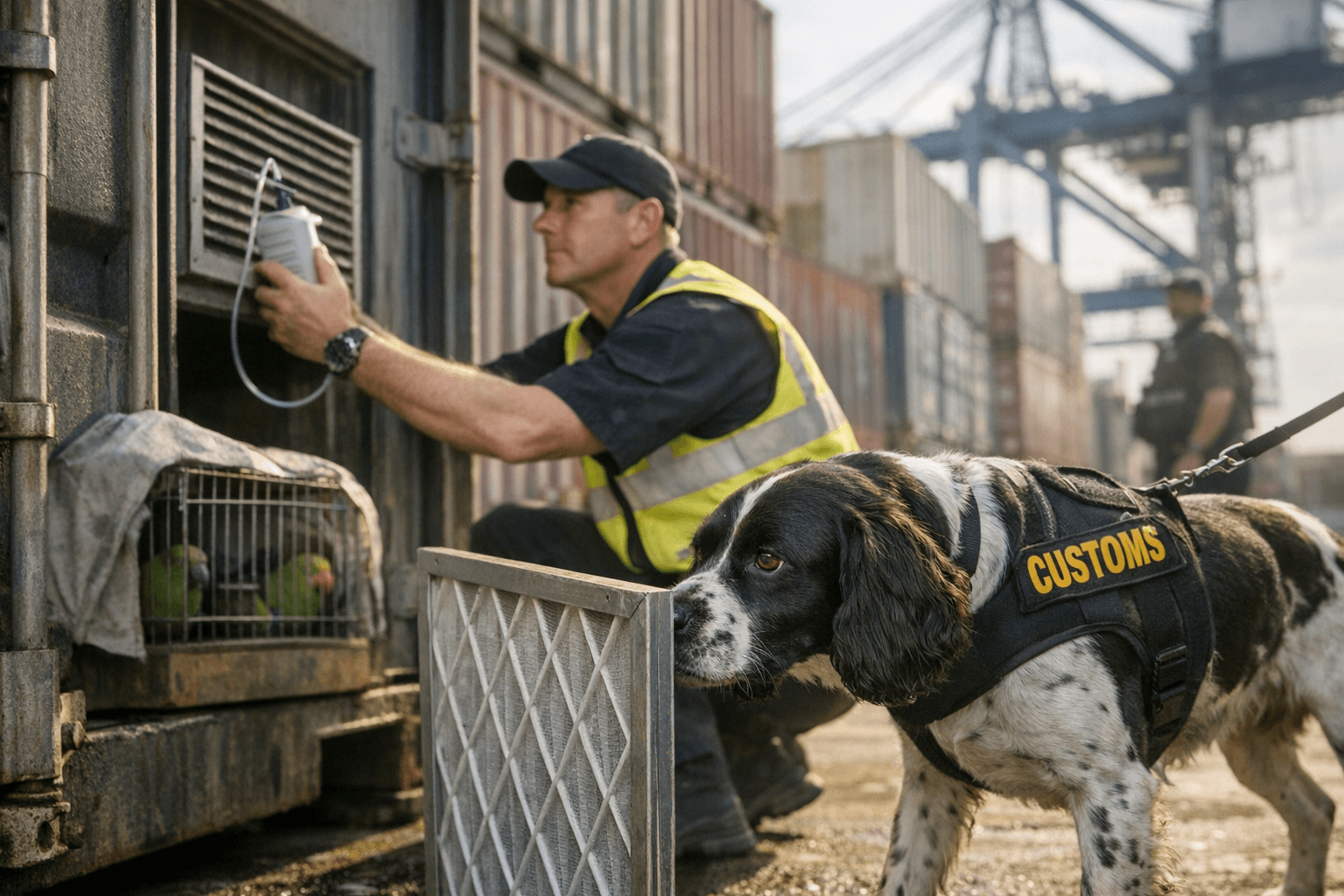
Port authorities face large practical hurdles: containers are sealed, stacked and hard to access, and millions pass through ports each year while only a small percentage are physically inspected. Reporting cited a sector estimate that frames wildlife trafficking as a $20 billion global industry and describes shipping containers as one of its biggest blind spots. The air-sampling plus canine workflow is presented as a way to reduce disruption, eliminate unnecessary container openings, allow screening in safe, controlled settings, and expand the number of containers that can be evaluated.
The researchers say further trials are planned to validate the approach in operational port environments across a broader range of wildlife products. If operational pilots confirm controlled-trial results and logistics with partners such as CMA CGM, the method could be adapted to new target scents and potentially to other forms of trafficking, changing how ports screen for trafficked parrots and other protected species.
Know something we missed? Have a correction or additional information?
Submit a Tip