Airbus chief warns staff of escalating geopolitical risks to operations
Airbus warns employees of rising geopolitical strains that have inflicted "significant" logistical and financial damage and demand rapid adaptation.
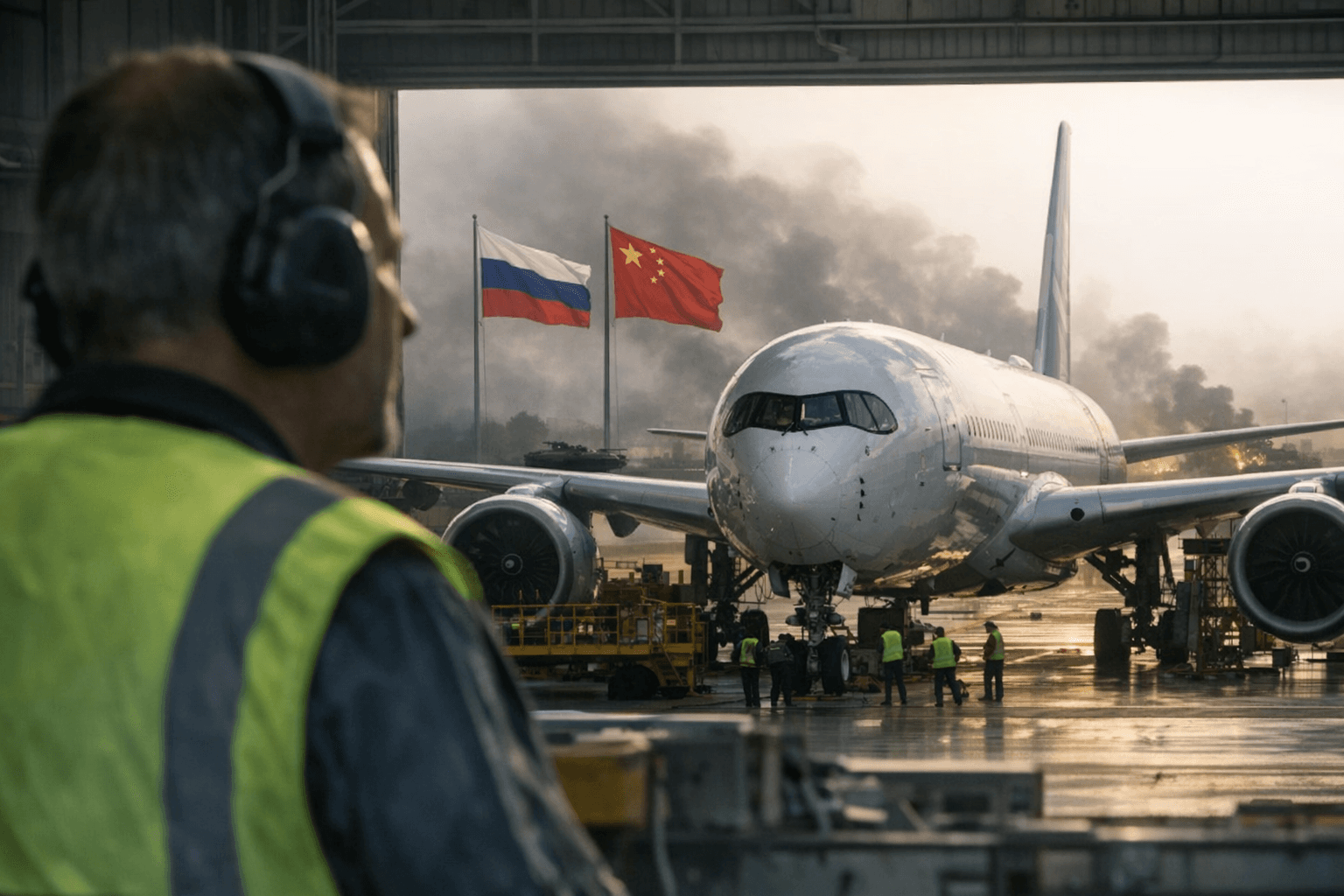
Airbus Chief Executive Guillaume Faury warns employees in an internal letter that the company faces an "unprecedented number of crises" and must be prepared to adapt after recent geopolitical tensions and protectionist measures inflicted "significant" logistical and financial damage on its operations.
The letter frames the latest disruptions as distinct from the pandemic shock and recalls the cumulative effect of trade restrictions, export controls and tighter national security rules that have fragmented supply chains and raised costs for complex manufacturers. For Airbus, which depends on a web of suppliers spanning multiple countries for airframes, avionics and propulsion components, those disruptions have translated into rerouted shipments, stretched lead times and higher logistics bills that are squeezing margins at a time when global aircraft demand was recovering from the pandemic downturn.
Company officials had already signaled earlier production slowdowns in some programmes and the internal note underscores how political friction can quickly turn operational issues into financial consequences. The combination of higher input and transport costs, additional compliance burdens and the need to maintain higher inventories to secure parts creates an earnings headwind that reaches beyond a single quarter. It also complicates planning for forward production ramps and delivery schedules that underwrite both investor valuations and airlines' fleet renewal plans.
Market implications run from near-term margin pressure to longer-term strategic shifts. If protectionist trends persist, manufacturers may accelerate reshoring or regionalization of suppliers, trade observers say, a process that typically increases unit costs even as it reduces some geopolitical exposure. For airlines, higher aircraft acquisition and maintenance costs could slow new orders or push carriers to extend aircraft in service, with knock-on effects for lessors and commercial aircraft finance markets.
Policy responses will matter. Governments seeking to safeguard critical industries face a trade-off between tighter controls and maintaining the integrated supplier networks that drive scale economies in aerospace. Airbus's letter implicitly urges policy makers to weigh those costs, signalling that hurried or fragmented restrictions can do direct damage to industrial capacity and employment across supplier regions.
Strategically, Airbus is likely to widen dual sourcing, increase inventory buffers and accelerate investment in supply chain monitoring and compliance systems. Those moves raise capital needs and could slow unit cost improvements that come from learning curves and higher production rates. Over the longer term, sustained geopolitical fragmentation would tilt global manufacturing toward regional clusters, raise the price of aircraft and equipment, and erode the productivity gains that powered decades of globalization.
For Europe's aerospace sector, the warning is stark: complex, high-value manufacturing remains especially sensitive to geopolitical shifts, and companies, investors and policy makers must adapt in concert. The internal letter makes clear that Airbus views the current environment not as a series of isolated shocks but as a new operating regime in which resilience and strategic flexibility will shape competitiveness.
This article was produced by Prism’s automated news system from verified source data, official records, and press releases, then run through automated quality and moderation checks before publishing. The system is built and supervised by the people who set the standards it runs under. Read our full AI policy.
Know something we missed? Have a correction or additional information?
Submit a Tip