Airbus orders staff to cut spending 10% amid supply chain strain
Airbus told thousands of employees to trim non-industrial spending 10% as supply-chain snarls and engine delays squeezed jetliner margins. Deliveries, not production, are the pressure point.

Airbus has ordered thousands of employees to cut non-industrial spending by 10% as persistent supply-chain problems and global uncertainty continue to pressure its jetliner business. The move applies to the commercial aircraft division and group headquarters, and it is meant to restrain overheads, outside contractors and other costs that can be reduced without immediately slowing output.
The directive comes on top of Airbus’s existing LEAD cost-saving program, signaling a broader push to protect profitability while the company works through bottlenecks in parts, engines and supplier quality. Airbus is not telling factories to produce less for now, but the spending clampdown shows how much margin pressure remains in the aircraft business even after the post-pandemic travel rebound.
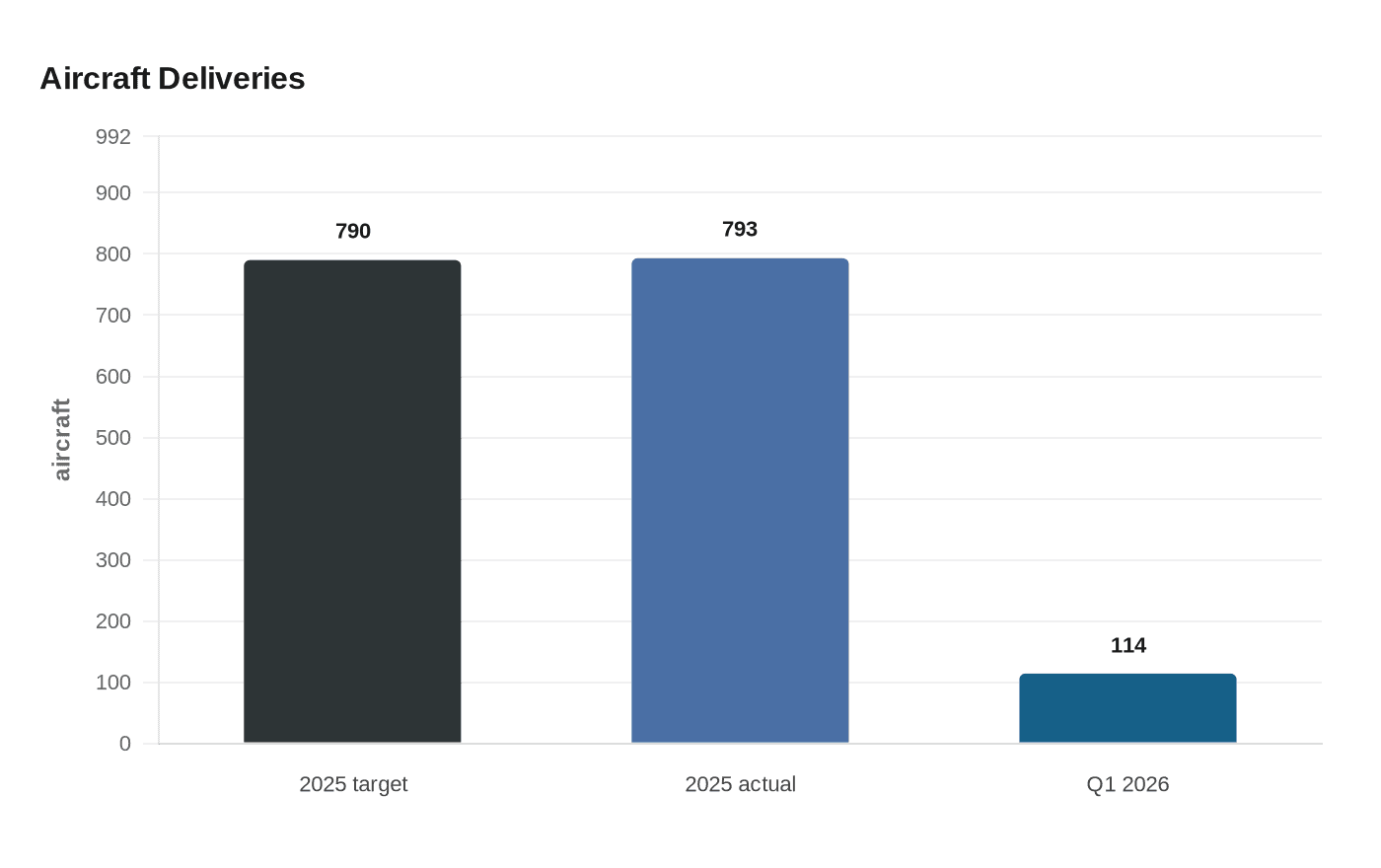
The cost drive lands against a difficult operational backdrop. Airbus delivered 114 commercial aircraft in the first quarter of 2026, down from 136 a year earlier, and reported revenues of €12.7 billion, adjusted EBIT of €300 million and free cash flow before customer financing of minus €2.5 billion. Guillaume Faury said the operating environment remained “dynamic and complex,” and Airbus said its commercial aircraft production was being affected by shortages of Pratt & Whitney engines.
Those shortages matter far beyond Airbus’s balance sheet. Commercial aircraft deliveries determine when airlines can retire older jets, open new routes and raise capacity. If supply problems persist, carriers can face tighter fleet availability, and that can ripple into ticket prices and network growth, especially on busy short-haul routes where Airbus’s A320 Family dominates. Any prolonged delay also gives Boeing more room to compete for airline orders and deliveries at a time when both manufacturers are still trying to normalize production.
Airbus’s own numbers show the scale of the strain. In full-year 2025, it delivered 793 commercial aircraft, generated €73.4 billion in revenues and posted adjusted EBIT of €7.1 billion. Its commercial aircraft backlog reached a record 8,754 aircraft at year-end 2025, then stood at 9,037 aircraft at the end of March 2026, a reminder that demand remains strong even as execution stays difficult.
The company had already lowered its 2025 delivery target to around 790 aircraft in December after a supplier quality issue on fuselage panels disrupted A320 Family delivery flow. It has also been locked in a widening dispute with Pratt & Whitney over delayed engine deliveries, with Airbus seeking damages and Faury saying in February that the company was prepared to enforce its contractual rights. Airbus’s 2026 guidance assumes no further disruption to trade, the global economy, air traffic, supply chains or internal operations, a narrow path that makes the new spending cuts look less like belt-tightening than another sign of a fragile industrial recovery.
This article was produced by Prism’s automated news system from verified source data, official records, and press releases, then run through automated quality and moderation checks before publishing. The system is built and supervised by the people who set the standards it runs under. Read our full AI policy.
Did this article answer your question?

