Airlines race to upgrade in-flight Wi-Fi as Starlink beats Amazon Leo
Starlink grabbed 11 airline customers in 2026 so far as in-flight Wi-Fi sank to last place in airline satisfaction, pressuring rivals and passengers alike.
Fast in-flight Wi-Fi has moved from a bonus to a competitive weapon, and airlines are spending heavily to get there first. In a market where quality of in-flight Wi-Fi ranked 21st out of 21 airline service measures in 2025, carriers are betting that better connectivity can win wealthier travelers, lift loyalty and defend margins.
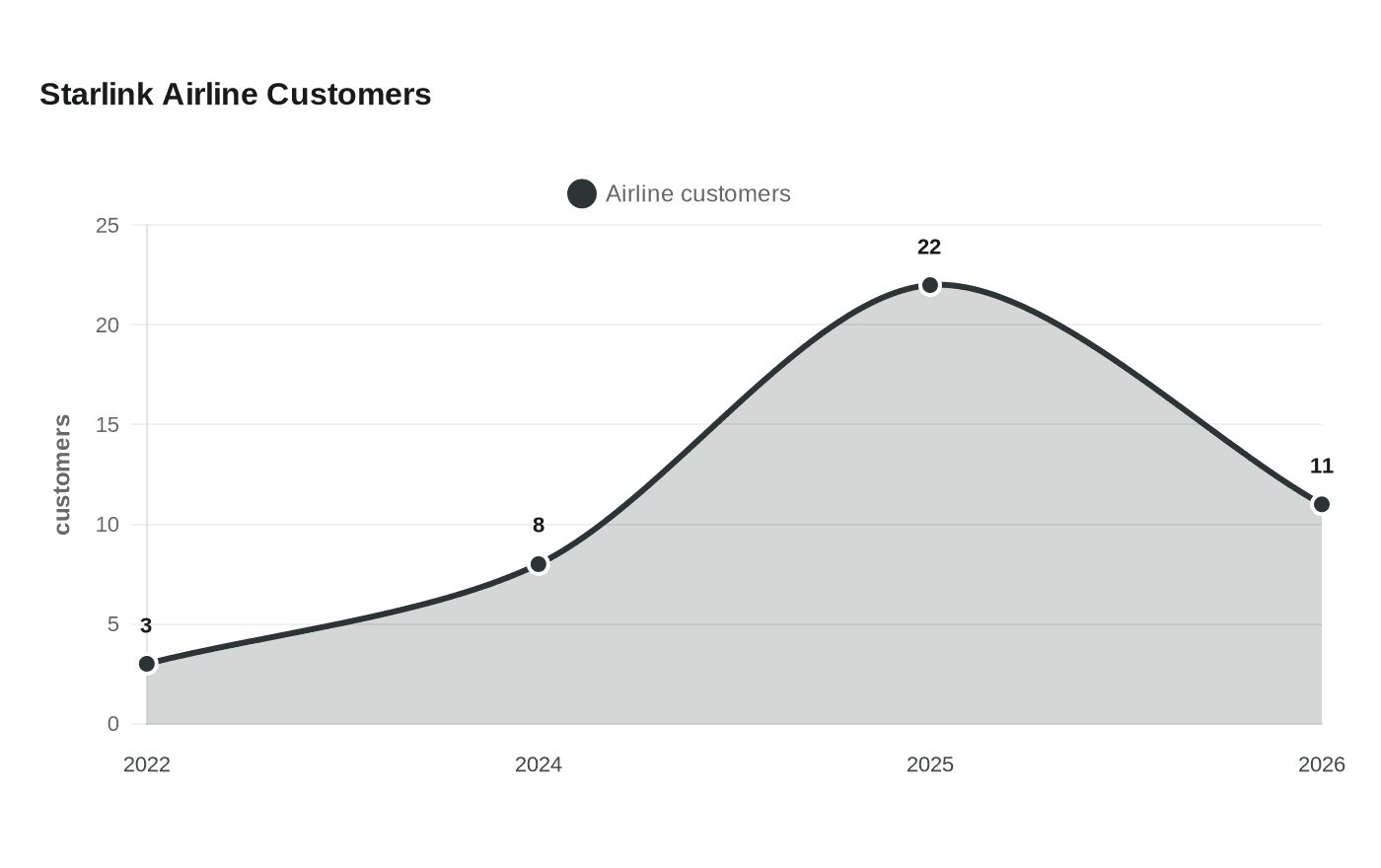
Starlink has taken the early lead. The satellite network added 11 airline customers globally so far in 2026, after 22 in 2025, 8 in 2024 and just 3 in 2022, according to Valour Consultancy figures cited in industry reporting. That momentum matters because Starlink operates around two-thirds of all satellites in space, giving it a scale advantage as airlines look for service that works across dense domestic networks and long-haul routes alike.
The economics are forcing the issue. Installing satellite broadband systems can cost airlines hundreds of millions of dollars across large fleets, but premium products are increasingly driving revenue. Decius Valmorbida of Amadeus called the technology a “game changer” and said every airline would rush to offer some version of it. The fight is no longer just about free movies and messaging; it is about whether connectivity becomes part of the base fare, a paid upgrade or a loyalty perk that helps sell the next ticket.
Southwest Airlines chose Starlink for speed to market. The carrier said on February 11 that the first Starlink-equipped aircraft would enter service by the end of June 2026, with rollout across its network of 11 countries. American Airlines followed with a plan to outfit more than 500 narrowbody aircraft beginning in the first quarter of 2027. Those decisions show how quickly airlines are treating Wi-Fi as a core product, not an optional extra.

Amazon Leo is still trying to close the gap. Delta Air Lines and Amazon Leo signed an agreement on March 31 to bring satellite Wi-Fi to 500 Delta aircraft starting in 2028. JetBlue Airways said on September 4, 2025 that it would be the first airline in the world to sign on with Amazon’s Project Kuiper, with rollout beginning in 2027 and expected to finish in 2028. The timing leaves Amazon with a later launch schedule while Starlink is already landing contracts.
Not every carrier is convinced the math works. Ryanair chief executive Michael O’Leary rejected Starlink on cost and aerodynamic-drag grounds, arguing the antennas would make the economics unattractive for a low-cost airline. That debate goes to the heart of the shift now under way: passengers are beginning to expect fast, reliable Wi-Fi, but airlines still have to decide whether the bill is absorbed in fares, bundled into premium tiers or passed through in new charges.
This article was produced by Prism’s automated news system from verified source data, official records, and press releases, then run through automated quality and moderation checks before publishing. The system is built and supervised by the people who set the standards it runs under. Read our full AI policy.
Know something we missed? Have a correction or additional information?
Submit a Tip