Alberta separatists submit nearly 302,000 signatures for referendum push
Alberta separatists said they submitted 301,620 signatures, clearing the threshold for a referendum push that now faces verification, court challenges and a long legal road.

Alberta separatists have moved their breakup campaign from protest politics into a formal test of provincial law, after organizers said they submitted 301,620 signatures, far above the 178,000 needed to force a referendum question toward the ballot.
The total, reported on May 4, signals that separatist sentiment in Alberta remains deep enough to produce a serious organizing effort, even if independence remains far from imminent. Under Alberta’s citizen initiative rules, Elections Alberta must verify the signatures by random statistical sampling at a 95% confidence level before any referendum can advance. If the names hold up, the question could reach a provincewide vote as early as October, though the result would not be binding.
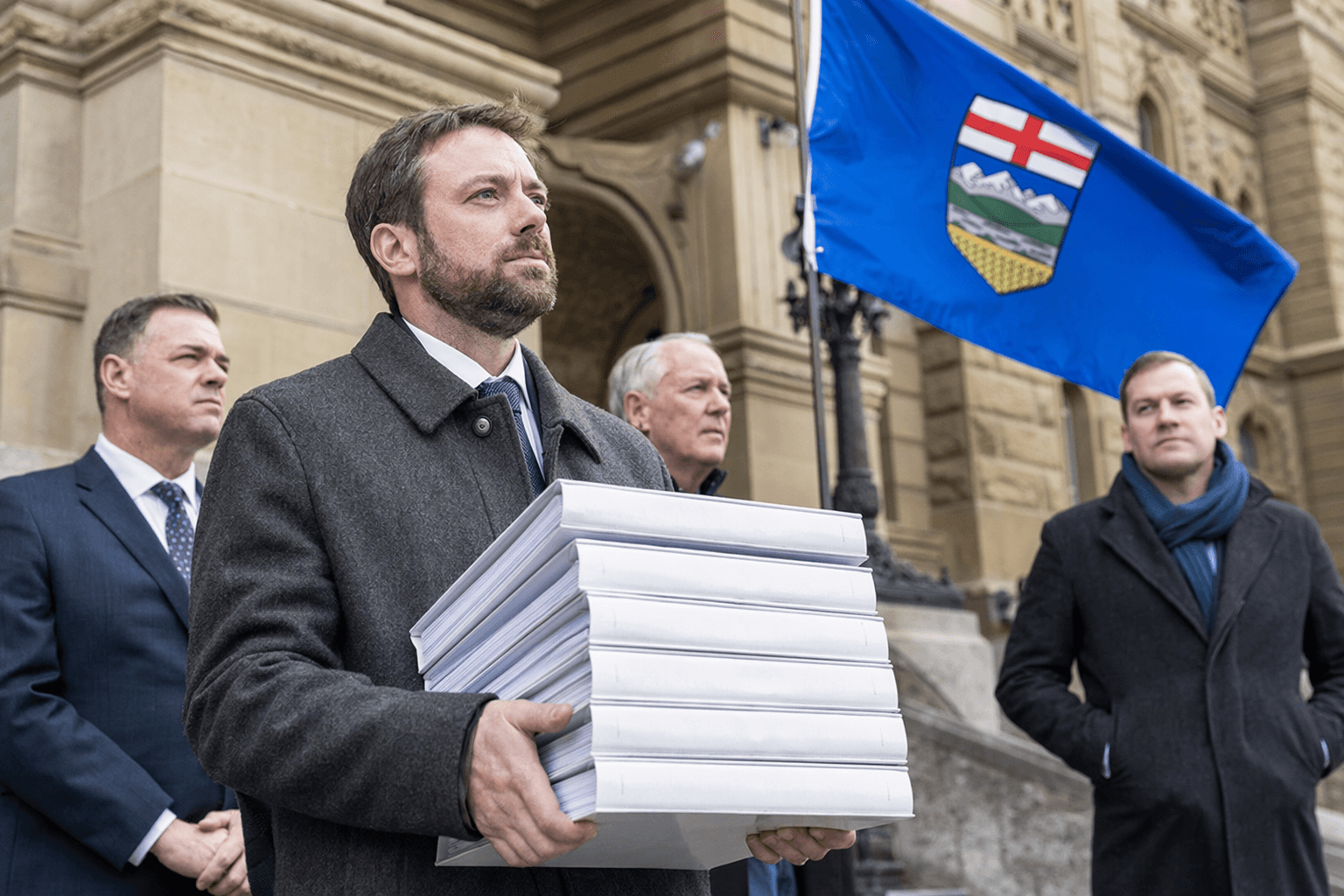
That distinction matters. Alberta law allows a stand-alone referendum on a date set in the order, and the province has already scheduled one for October 19, 2026 on other issues. But even a successful separatist vote would not create a legal path to independence on its own. The Supreme Court of Canada’s 1998 Quebec Secession Reference said unilateral secession is not lawful, and the federal Clarity Act of 2000 requires the House of Commons to decide whether any question and any result are clear enough to trigger negotiations.

Premier Danielle Smith has tried to walk a narrow line through the dispute. She has said she would move forward if enough names were gathered and verified, while also saying she does not personally support Alberta leaving Canada. That leaves her government balancing an increasingly loud base in the province against the reality that separatism remains a constitutional and political dead end without broader agreement from Ottawa, Parliament and Canadians outside Alberta.

The campaign also sits inside a larger fight over who gets a say in Alberta’s future. A court stay issued in April paused certification and verification steps while First Nations challenges proceed, with Athabasca Chipewyan First Nation welcoming the ruling and framing the case as one about the rule of law and the Constitution. Sturgeon Lake Cree Nation and other First Nations have argued the process cannot move ahead without treaty-consent issues being addressed, and Alberta’s own legislation says referendum questions cannot threaten existing treaty rights.
That legal fight gives the signature drive a broader significance than a simple separatist stunt. It has become a stress test of federal cohesion in a province where grievances over energy policy, fiscal arrangements and Ottawa-West tensions have hardened over years. Even if the referendum never happens, the scale of the petition shows that Alberta separatism still has enough political depth to shape debates over resource development, autonomy and the terms of Confederation.
This article was produced by Prism’s automated news system from verified source data, official records, and press releases, then run through automated quality and moderation checks before publishing. The system is built and supervised by the people who set the standards it runs under. Read our full AI policy.
Did this article answer your question?

